
Have you ever stopped to think about what’s lurking on your kitchen sponge? You use it every day to clean dishes, wipe counters, and tackle spills—but can your sponge really be cleaned itself?
If you’ve wondered whether kitchen sponges can be sanitized, you’re not alone. The truth might surprise you, and it’s important for your health and home hygiene. Keep reading to discover simple, effective ways to keep your sponges germ-free and why it matters more than you think.

Credit: www.yahoo.com
Why Kitchen Sponges Harbor Germs
Your kitchen sponge is one of the most used tools in your home. But have you ever wondered why it often smells bad or feels grimy even after rinsing? The truth is, kitchen sponges create the perfect environment for germs to thrive.
Moisture And Bacteria Growth
Sponges stay wet for long periods, especially if left on the sink or in a damp holder. This constant moisture creates a breeding ground for bacteria.
Plus, the porous texture traps food particles and grease, feeding the bacteria. Imagine leaving crumbs in a dark, damp corner—germs love it just as much as you might dislike it.
Common Germs Found
Sponges often carry germs like E. coli, Salmonella, and Staphylococcus. These bacteria can come from raw meat juices, unwashed dishes, or even dirty hands.
Studies show that kitchen sponges can harbor more bacteria than a toilet seat. That’s a surprising fact that should make you rethink your sponge habits.
Risks Of Using Dirty Sponges
Using a dirty sponge spreads germs across your dishes and countertops. This can cause foodborne illnesses or allergic reactions in sensitive individuals.
Do you really want to risk your family’s health with something so small? Regularly cleaning or replacing your sponge can reduce these risks significantly.
Methods To Sanitize Kitchen Sponges
Keeping your kitchen sponge clean is crucial since it harbors bacteria and food particles. Sanitizing your sponge regularly can help reduce germs and keep your kitchen safer. Here are practical methods you can try using common household items and appliances.
Microwave Cleaning
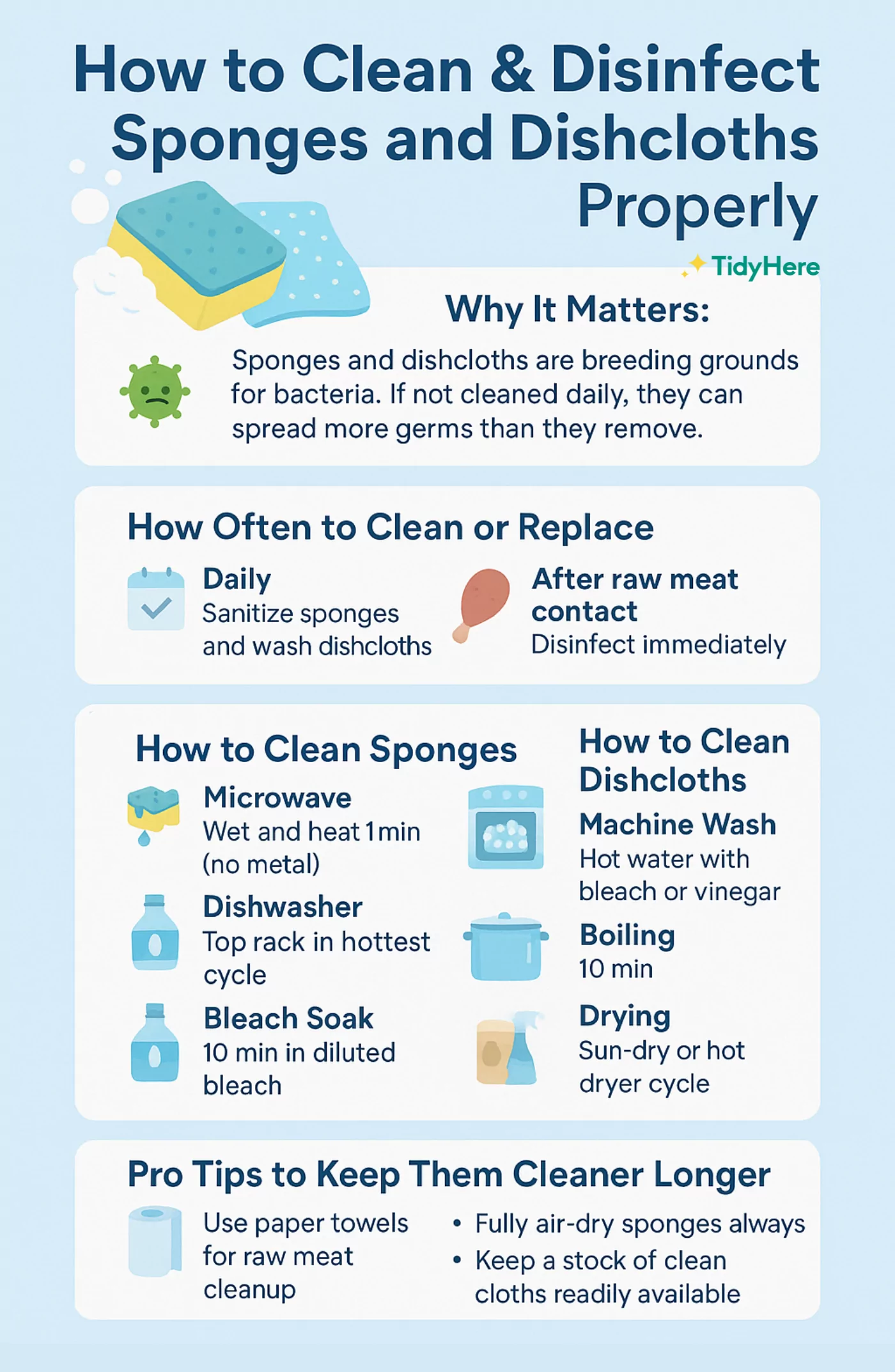
Microwaving your sponge is a quick way to kill bacteria. First, soak the sponge in water to avoid any fire risk. Then, place it in the microwave and heat on high for about one to two minutes.
Be careful when removing the sponge—it will be hot. This method works well if you remember to do it daily. Have you tried it and noticed how much fresher your sponge feels afterward?
Dishwasher Sanitizing
Your dishwasher can double as a sanitizer for kitchen sponges. Place the sponge on the top rack and run it through a full cycle with the heat dry option. The combination of hot water and heat helps kill germs effectively.
This method is convenient if you already run your dishwasher daily. Just make sure your sponge is dishwasher-safe to avoid damage.
Bleach Soak Technique
Bleach is a powerful disinfectant for kitchen sponges. Mix about 3/4 cup of bleach in one gallon of water and soak the sponge for five minutes. After soaking, rinse the sponge thoroughly under running water.
This approach is highly effective but requires caution to avoid skin irritation. Have you ever wondered if using bleach regularly might shorten your sponge’s lifespan?
Vinegar And Baking Soda Method
Combining vinegar and baking soda creates a natural, non-toxic way to sanitize your sponge. Start by soaking the sponge in full-strength white vinegar for five minutes. Then sprinkle baking soda on the sponge and scrub gently before rinsing.
This method not only sanitizes but also helps remove odors. It’s a great option if you prefer avoiding harsh chemicals but still want a clean sponge.
Best Practices For Sponge Maintenance
Kitchen sponges are essential for cleaning, but they can harbor germs. Proper maintenance ensures they remain effective and hygienic. Follow these best practices for sponge maintenance to keep your kitchen clean and safe.
Regular Replacement Schedule
Sponges should be replaced regularly to prevent bacteria buildup. Aim to replace them every two weeks. If a sponge starts to smell or fall apart, replace it immediately. Mark the date of first use to track sponge life easily.
Proper Drying Techniques
Moisture encourages bacteria growth. After use, rinse the sponge thoroughly with clean water. Squeeze out excess water and place it in a well-ventilated area. Ensure it's not left in a damp sink or confined space. Use a sponge holder that allows air circulation.
Separate Sponges For Different Tasks
Using separate sponges for different tasks prevents cross-contamination. Assign specific sponges for dishes, counters, and other tasks. Use color-coded sponges to easily differentiate their purposes. Store them separately to maintain hygiene.
Credit: medium.com
Alternatives To Traditional Sponges
Traditional kitchen sponges often harbor bacteria and can wear out quickly, making you wonder if there’s a better option. Luckily, several alternatives offer durability, ease of cleaning, and even eco-friendly benefits. Let’s look at some choices that might fit your kitchen routine better and keep your cleaning tools fresher.
Silicone Scrubbers
Silicone scrubbers are flexible and resistant to odors, unlike traditional sponges. Their non-porous surface doesn’t trap food particles, which means fewer bacteria hideouts. You can easily rinse and sanitize them by tossing them in the dishwasher or boiling water.
They last longer, saving you money over time. Plus, silicone scrubbers come in various shapes and textures, helping you tackle different kitchen messes. Have you tried one and noticed how it feels compared to regular sponges?
Reusable Cloths
Reusable cloths made from microfiber or cotton are highly absorbent and quick-drying. You can wash them in your washing machine, which keeps them hygienic and ready for the next use. Switching to cloths also cuts down on waste since you’re not throwing out sponges every few days.
They’re versatile too—you can use them for wiping counters or washing dishes without switching tools. What’s your experience with cloths: do they make cleaning quicker or more tedious?
Natural Fiber Sponges
Natural fiber sponges, such as those made from cellulose or loofah, offer a biodegradable option that breaks down more easily in the environment. They tend to dry faster than synthetic sponges, reducing the chance for bacteria to grow. These sponges often have a rougher texture, which helps scrub stuck-on food effectively.
While they need to be replaced regularly, their eco-friendly nature appeals to many who want to reduce plastic use. Have you considered how your cleaning tools impact the planet? Natural fiber sponges might be the small change that adds up.
Signs It's Time To Replace Your Sponge
Knowing when to replace your kitchen sponge is key to keeping your kitchen clean and safe. Sponges can harbor bacteria even after sanitizing. Watch for signs that your sponge has outlived its usefulness. Replacing it at the right time helps prevent germs from spreading.
Persistent Odor
A strong, bad smell that won't go away means bacteria buildup. Rinsing or sanitizing won’t fix this. A smelly sponge can contaminate your dishes. Toss it out once the odor lingers after cleaning.
Visible Wear And Tear
Look for cracks, tears, or holes in the sponge. These spots trap food and germs. A sponge falling apart cannot clean properly. Replace it as soon as you see damage.
Unusual Discoloration
Dark or strange stains signal mold or mildew growth. Discoloration means your sponge is unsafe to use. Do not ignore these signs. Swap it for a fresh one immediately.
Credit: tidyhere.com
Frequently Asked Questions
Can Kitchen Sponges Be Effectively Sanitized?
Yes, kitchen sponges can be sanitized using microwave, dishwasher, or bleach methods. Regular sanitizing reduces bacteria and extends sponge life.
How Often Should I Sanitize Kitchen Sponges?
Sanitize kitchen sponges at least once a week. Frequent sanitizing helps prevent harmful bacteria buildup and keeps sponges safe for use.
Does Microwaving Kill All Bacteria In Sponges?
Microwaving kills most bacteria if the sponge is wet and heated for 1-2 minutes. However, it may not eliminate all germs completely.
Are Dishwasher Cycles Safe For Sponge Sanitizing?
Yes, running sponges through a dishwasher’s hot cycle with detergent effectively sanitizes them. This method is convenient and kills many bacteria.
Conclusion
Kitchen sponges can be cleaned to reduce germs. Regular sanitizing helps keep them safer to use. Microwaving or soaking in bleach are common methods. Still, sponges wear out fast and can hide bacteria. Replace sponges often to avoid health risks.
Clean sponges only help for a short time. Keep your kitchen fresh by using clean tools. Small steps make a big difference in hygiene. Stay safe and enjoy cooking with clean sponges.