
Is your double kitchen sink clogged and causing frustration every time you try to wash dishes? You’re not alone, and the good news is you don’t need to call a plumber just yet.
With the right approach and a simple tool—a plunger—you can clear that clog quickly and get your sink draining smoothly again. In this guide, you’ll discover step-by-step how to tackle the problem yourself, saving time, money, and hassle. Keep reading, and you’ll be amazed at how easy it is to bring your kitchen sink back to life!
Tools Needed
Unclogging a double kitchen sink needs the right tools for success. Having the proper equipment makes the task easier and faster. Some tools are essential, while others help improve the process.
Gathering all tools before starting saves time and effort. Focus on a good plunger and some helpful supplies. These items help clear the blockage without causing damage.
Choosing The Right Plunger
- Use a cup plunger with a flat bottom for kitchen sinks.
- A flange plunger works best for toilets, not sinks.
- Pick a plunger with a sturdy handle for good grip.
- Make sure the rubber cup is flexible and creates a tight seal.
- Choose a medium-sized plunger to cover the drain fully.
Additional Supplies
- Rubber gloves to protect your hands from dirt and germs.
- A bucket to catch any water spills or leaks.
- A wet cloth or sponge to wipe up excess water.
- Dish soap to help break down grease inside the pipes.
- Old towels or rags to keep the area dry and clean.
Credit: flohawks.com
Preparing The Sink
Preparing your double kitchen sink properly can make plunging much more effective. Before you start, taking a few simple steps to get the sink ready will save you frustration and time. This preparation helps create the right pressure and prevents common issues that might block your success.
Clearing Visible Debris
Look inside both sink basins and remove any food scraps, grease build-up, or objects that might block the drain. Use gloves to pull out stuck pieces or flush small particles down with hot water. Clearing visible debris ensures your plunger can focus on the clog deeper in the pipes, rather than just pushing around surface blockages.
Think about the last time you tried plunging without clearing debris—did it feel like you were fighting a losing battle? Clearing what you can see first makes plunging more powerful and prevents pushing gunk further down the drain.
Sealing The Drain Openings
With a double sink, you have two drain openings to manage. To create effective suction, you need to seal one drain while plunging the other. You can use a wet cloth or a sink stopper to block the unused drain.
Without sealing the other side, the plunger won’t build enough pressure to dislodge the clog. Have you noticed how a plunger loses its force if air escapes? Sealing the openings traps air and water, giving you the push needed to clear the blockage.
Plunging Techniques
A plunger creates pressure to loosen clogs in double kitchen sinks. Position it over the drain and pump firmly to clear blockages. Repeat as needed until water flows smoothly.
Plunging techniques are crucial when faced with the stubborn task of unclogging a double kitchen sink. You might think it's just about pushing and pulling, but there's a bit more finesse to it. By understanding and mastering these techniques, you can save yourself the hassle and expense of calling a plumber. Let's dive into the key aspects of plunging effectively.
Creating A Tight Seal
A tight seal is essential for effective plunging. Start by placing the plunger directly over the drain, ensuring it covers the opening completely. Fill the sink with enough water to submerge the plunger cup, as this helps create the necessary suction. Block the other sink drain with a wet cloth or a stopper. This prevents air from escaping and allows the plunger to focus all its power on the clog.
Proper Plunging Motions
Once you've created a seal, it's all about the right motion. Grip the plunger handle firmly and begin plunging with steady, vigorous strokes. Push down firmly and pull up quickly without breaking the seal. Repeat this motion several times, maintaining a consistent rhythm to build up pressure. After several plunges, release the plunger and check if the water drains. If not, don't give up; sometimes persistence pays off. Adjust your technique slightly and try again. Have you ever felt the satisfaction of hearing that distinct gurgling sound as the clog finally gives way? With these techniques, you could become the hero of your kitchen.

Credit: www.youtube.com
Handling Both Basins
Handling both basins in a double kitchen sink is key to clearing clogs effectively. Each basin connects to the same drain pipe, so pressure needs balance. Plunging one side without blocking the other often fails to build enough suction. Properly managing both sides helps target the blockage and speeds up drainage.
Blocking The Second Sink
Start by covering the drain of the unused basin. Use a wet cloth or a sink stopper to seal it tightly. This prevents air from escaping and focuses pressure on the clogged side. A loose seal reduces plunging power and wastes effort.
Make sure the stopper fits well around the drain opening. Avoid pushing too hard or damaging the sink surface. A firm, gentle block helps keep suction strong while you plunge.
Alternating Between Sides
Sometimes, the blockage affects both basins. Switch the plunger between sinks to loosen debris from each side. This back-and-forth action can break up stubborn clogs that block water flow.
Alternate plunging for 10 to 15 seconds per basin. This ensures both drains get cleared evenly. Keep the second basin blocked during plunging. Repeat the process until water drains freely from both sides.
When To Use Hot Water
Knowing when to use hot water during the process of unclogging a double kitchen sink with a plunger can make a significant difference in how quickly the blockage clears. Hot water helps to loosen grease and food particles stuck in the pipes, but using it at the wrong time might worsen the clog. Understanding the right moment to introduce hot water will save you time and frustration.
Benefits Of Hot Water Rinse
Hot water can dissolve grease and fats that solidify inside your sink’s pipes. When you pour hot water after plunging, it helps wash away loosened debris more effectively.
Using hot water also prevents future clogs by flushing out residue buildup. It’s like giving your pipes a quick clean after clearing the blockage.
Think about the last time you noticed slow drainage after washing greasy dishes. A hot water rinse could have helped break down that grease and kept your drain flowing smoothly.
Safety Precautions
Be cautious not to use boiling water if your pipes are PVC or older metal, as it can damage them. Instead, use water that is hot but not boiling.
Avoid pouring hot water immediately if you suspect a solid object is stuck, as it could harden certain materials, making the clog worse.
Always test the temperature before pouring, and never force hot water if the clog is severe. Sometimes, it’s better to call a professional than risk pipe damage.
Alternative Quick Fixes
Alternative quick fixes can help clear a clogged double kitchen sink without much effort. These options work well when a plunger alone does not solve the issue. They use common household items or easy-to-find products to break down clogs fast.
Using Baking Soda And Vinegar
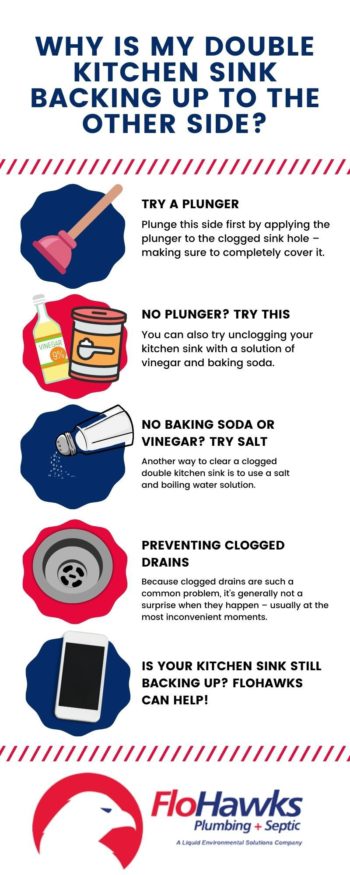
Baking soda and vinegar create a natural chemical reaction that helps dissolve clogs. Start by pouring about half a cup of baking soda into the drain. Follow this with half a cup of vinegar. You will see fizzing and bubbling as they work to break up the blockage.
Let the mixture sit for 15 to 30 minutes. Then, flush the drain with hot water. This process helps clear grease and small debris. It is safe for most pipes and eco-friendly.
Chemical Drain Cleaners
Chemical drain cleaners can clear tough clogs quickly. These products contain strong ingredients that dissolve hair, grease, and other build-ups. Always read the label carefully before using.
Wear gloves and keep the area ventilated. Pour the recommended amount into the clogged drain. Allow it to sit for the time suggested on the package. Then, rinse with plenty of hot water.
Use chemical cleaners sparingly. Frequent use can damage pipes over time. They work best for stubborn blockages that other methods cannot fix.
Preventing Future Clogs
Preventing future clogs in your double kitchen sink is just as important as unclogging it. Taking simple, consistent actions can save you time, money, and the hassle of dealing with stubborn blockages. Let’s dive into practical ways to keep your drains flowing smoothly and avoid the headache of repeat clogs.
Routine Maintenance Tips
Keeping your drains clear starts with regular care. Run hot water through both sides of your sink after each use to help wash away grease and small debris before they build up.
Once a week, pour a mixture of baking soda and vinegar down the drain. It naturally breaks down residue and keeps odors away without harsh chemicals.
Don’t forget to clean the sink strainer daily. Removing food scraps before they enter the drain reduces the chances of blockages forming deep inside the pipes.
Avoiding Common Mistakes
Are you tempted to pour grease or coffee grounds down your sink? Stop. These substances harden inside pipes, creating tough clogs over time.
Using the wrong plunger or too much force can damage your pipes. Use a sink plunger designed for kitchen drains and apply steady, controlled pressure.
Also, avoid chemical drain cleaners regularly. They can eat away pipe material and worsen problems in the long run.
By paying attention to these habits, you’ll protect your plumbing and keep your double sink draining like new. What small change can you make today to prevent the next clog?

Credit: www.reddit.com
Frequently Asked Questions
How Do You Use A Plunger On A Double Kitchen Sink?
To plunge a double sink, block one drain with a wet cloth. Fill both sinks with water. Plunge the clogged drain firmly until water drains freely.
Can A Plunger Fix All Double Sink Clogs?
A plunger works well for minor clogs in double sinks. Severe blockages may require a drain snake or professional help for full clearing.
Why Should I Block One Drain When Plunging?
Blocking one drain prevents air escape and increases pressure. This creates a stronger suction, helping to dislodge the clog effectively in the targeted drain.
How Long Does It Take To Unclog A Double Sink?
Unclogging with a plunger usually takes 5 to 10 minutes. Persistent clogs might require multiple attempts or additional tools for complete clearing.
Conclusion
Unclogging a double kitchen sink with a plunger is simple and quick. Start by sealing the other drain to create pressure. Use steady, strong plunges to break the clog. Repeat if needed until water flows freely. This method saves time and money compared to calling a plumber.
Keep a plunger handy for future blockages. Regular cleaning helps prevent clogs from forming. Now, you can handle sink clogs with confidence and ease. No need to wait or stress. Just grab your plunger and get the water flowing again.