
Your kitchen sponge works hard every day, scrubbing away dirt and grime. But have you ever stopped to think about what’s living inside it?
If you don’t sanitize your sponge regularly, harmful bacteria can build up quickly, turning it into a breeding ground for germs. You might be spreading more than just food stains without even realizing it. Want to keep your kitchen clean and your family safe?
Keep reading to discover simple, effective ways to sanitize your kitchen sponge and make sure it’s truly doing its job.

Credit: www.youtube.com
Why Sanitize Your Sponge
Sanitizing your kitchen sponge keeps your kitchen safer and cleaner. Sponges trap food particles and moisture, creating a perfect place for germs. These germs can spread to dishes, countertops, and even your hands. Regular cleaning reduces the risk of illness and bad smells.
Risks Of A Dirty Sponge
A dirty sponge can spread harmful bacteria in your kitchen. It can cause food poisoning and other infections. Germs multiply quickly in wet sponges. Using a contaminated sponge can transfer germs to your food and surfaces. This increases the chance of getting sick.
Common Germs Found
Kitchen sponges often carry many types of germs. These include:
- Salmonella, which causes food poisoning
- E. coli, linked to severe stomach illness
- Staphylococcus, which can cause skin infections
- Fungi and mold, leading to bad odors and allergies
Cleaning your sponge regularly helps remove these germs. It keeps your kitchen healthier and your food safer.

Credit: tidyhere.com
Effective Sanitizing Methods
Keeping your kitchen sponge clean is crucial to prevent the spread of bacteria and maintain a healthy cooking environment. Several effective sanitizing methods can help you refresh your sponge and extend its usability. These methods are simple, practical, and easy to apply in your daily routine.
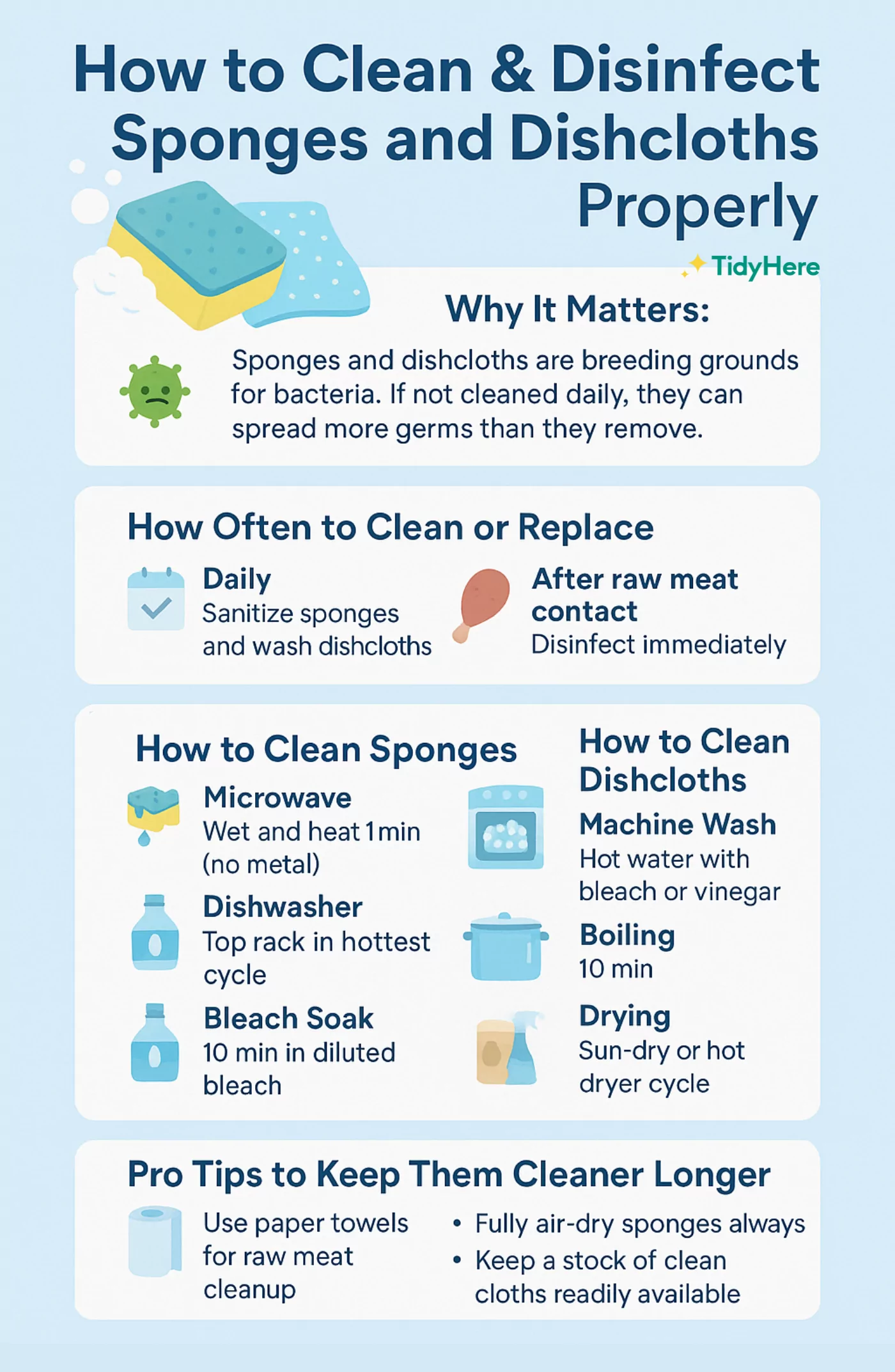
Microwave Technique
The microwave method is a quick way to sanitize your sponge. First, make sure the sponge is wet—dry sponges can catch fire. Place the damp sponge in the microwave and heat it on high for about one to two minutes.
This process kills most germs and bacteria due to the high heat. But remember, be cautious when removing the sponge as it will be hot. Have you tried this before? You might be surprised how fresh your sponge feels afterward.
Dishwasher Approach
Your dishwasher can do more than just clean dishes—it can sanitize your sponge too. Put the sponge in the top rack of your dishwasher and run it through a regular cycle with heated dry.
This method uses hot water and detergent to kill bacteria effectively. It’s a hands-off option that fits well into your usual kitchen cleaning routine. How often do you run a full dishwasher? Maybe adding your sponge is easier than you think.
Bleach Solution
Bleach is a powerful sanitizer for tough bacteria. Mix one tablespoon of bleach with one gallon of water in a bowl. Soak your sponge in this solution for five minutes.
After soaking, rinse the sponge thoroughly with clean water to remove any bleach residue. This method is especially useful if your sponge smells bad or looks dirty. Are you comfortable handling bleach carefully? It’s a small step for a big cleaning boost.
Vinegar Soak
Vinegar is a natural and less harsh alternative for sanitizing. Pour white vinegar into a bowl and soak your sponge for about five minutes. Vinegar’s acidity helps break down bacteria and odors.
After soaking, rinse the sponge well with water. This method is gentle but still effective enough for regular sponge maintenance. Have you noticed vinegar’s cleaning power in your kitchen before? It’s worth trying on your sponge too.
Step-by-step Sponge Cleaning
Sanitize a kitchen sponge by soaking it in a mixture of water and bleach or vinegar. Rinse thoroughly and let it dry completely to kill germs and bacteria. Repeat this regularly to keep your sponge clean and safe to use.
Cleaning your kitchen sponge is more crucial than you might think. Sponges are notorious for harboring bacteria, which can lead to cross-contamination. By following a simple step-by-step sponge cleaning process, you can ensure your kitchen remains a safe and healthy environment. Let's dive into the details.
Preparation Tips
Before you start the sanitizing process, gather everything you'll need. This includes a microwave, white vinegar, and a clean, dry area for drying. Make sure your sponge is free from large food particles. Rinse it under warm water to remove any visible debris. Having a clean starting point ensures the sanitizing process is more effective.
Sanitizing Process
There are several ways to sanitize your sponge, but one of the most effective is using the microwave. Soak the sponge in a bowl of water mixed with a tablespoon of white vinegar. Place the wet sponge in the microwave and heat it on high for one to two minutes. Be careful when removing it, as it will be hot. Alternatively, you can place the sponge in a pot of boiling water for five minutes. Both methods effectively kill bacteria and germs.
Drying And Storage
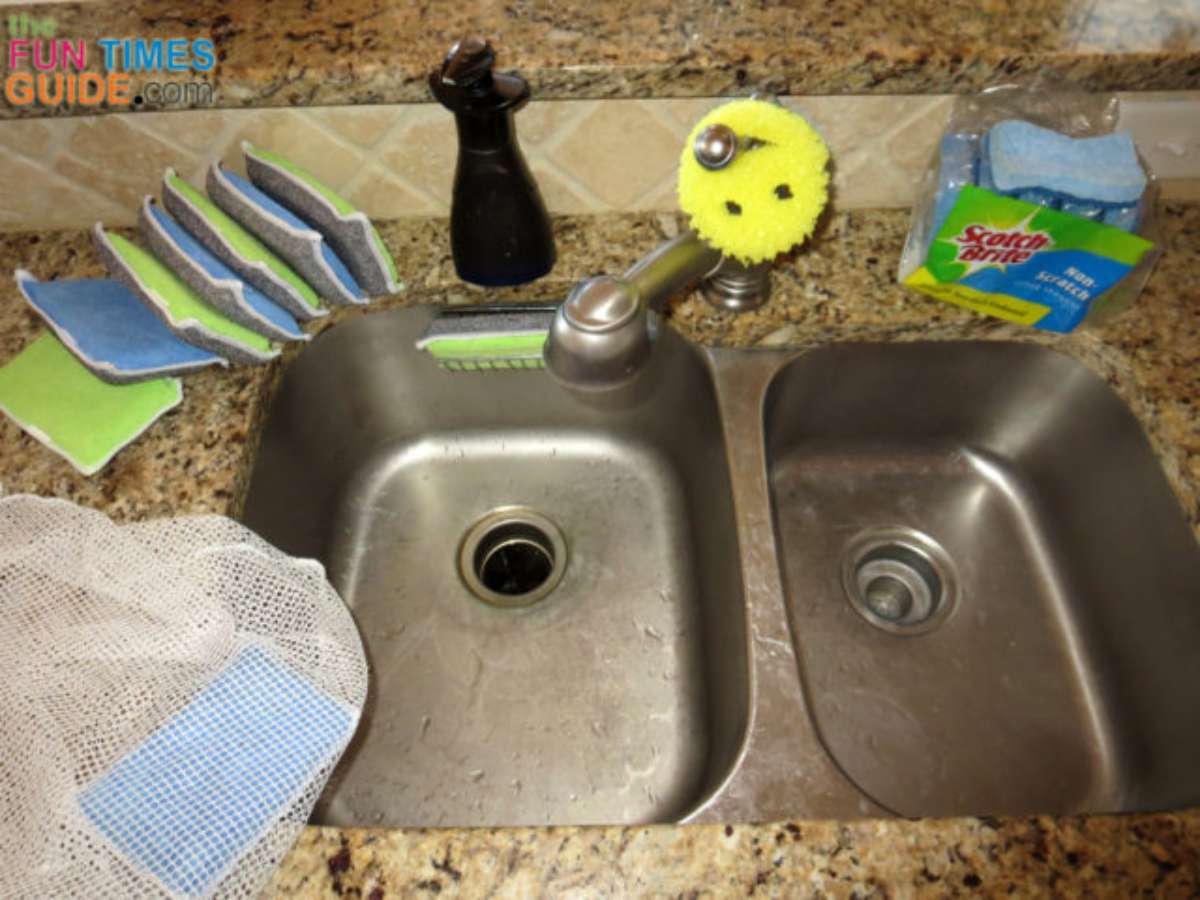
Once sanitized, it's crucial to dry your sponge properly to prevent bacteria growth. Squeeze out excess water and place the sponge on a clean, dry rack. Ensure it's in a well-ventilated area to speed up the drying process. Avoid storing it under the sink or in enclosed spaces, as these areas can promote mold growth. Consider having a few sponges on rotation, allowing each one ample time to dry thoroughly between uses. Remember, a clean sponge not only extends its life but also keeps your kitchen hygienic. How do you ensure your kitchen tools are as clean as they should be?
Credit: household-tips.thefuntimesguide.com
When To Replace Your Sponge
Knowing when to replace your kitchen sponge is just as important as sanitizing it. Over time, sponges can harbor harmful bacteria even after cleaning. Paying attention to the condition of your sponge can protect your health and keep your kitchen cleaner.
Signs Of Wear
Look closely at your sponge’s surface. If you see cracks, tears, or fraying edges, it’s time to toss it. A worn sponge won’t clean effectively and can trap dirt and germs.
Notice any strange smells that don’t go away after rinsing or sanitizing? That’s a clear warning sign. Sponges that smell bad usually carry bacteria that can spread to your dishes and surfaces.
Recommended Replacement Frequency
Even if your sponge looks fine, replacing it regularly is a smart move. Experts suggest swapping out kitchen sponges every one to two weeks.
If you use your sponge heavily, like washing lots of dishes daily, consider replacing it weekly. Light users might stretch that to two weeks, but don’t push it beyond that.
Have you ever forgotten to replace a sponge and noticed an unpleasant odor? That’s your body’s way of telling you to act faster next time. Keeping a schedule for sponge replacement can prevent nasty surprises.
Alternative Cleaning Tools
Using a kitchen sponge is common, but it often harbors bacteria despite regular cleaning. Switching to alternative cleaning tools can reduce this risk and keep your kitchen healthier. These options offer durability and hygiene benefits that might surprise you.
Silicone Scrubbers
Silicone scrubbers are a smart choice if you want something easy to clean and long-lasting. Unlike traditional sponges, silicone doesn’t absorb water, so it dries quickly and avoids mold growth.
You can simply rinse it with soap and water or toss it in the dishwasher for a thorough clean. Have you noticed how much quicker silicone scrubbers dry compared to regular sponges? That alone can help cut down on nasty smells.
Reusable Cloths
Reusable cloths made from microfiber or cotton are gentle on surfaces and versatile for many kitchen tasks. You can wash them in your washing machine, ensuring they stay fresh without much effort.
They work well for wiping counters, cleaning dishes, and even scrubbing pots if used with a bit of elbow grease. Think about how often you toss these cloths in the laundry—doesn’t that make sanitizing easier?
Natural Sponges
Natural sponges, like those made from cellulose or sea sponge, are biodegradable and less likely to harbor harmful bacteria. They dry faster and can be sanitized by soaking in vinegar or a mild bleach solution.
These sponges offer a softer touch and are perfect if you want an eco-friendly alternative. Would switching to natural sponges make your kitchen feel cleaner and more sustainable?
Maintaining A Germ-free Kitchen
Keeping your kitchen free from germs is essential for health and safety. A clean kitchen prevents food contamination and illness. Sponges often carry bacteria if not cleaned properly. Regular care helps reduce germs and keeps your kitchen safe. Understanding how to sanitize sponges supports a germ-free environment.
Regular Cleaning Habits
Clean your kitchen sponge daily to reduce bacteria. Rinse it thoroughly with hot water after each use. Squeeze out excess water to prevent moisture buildup. Store the sponge in a dry, well-ventilated area. Replace sponges every one to two weeks for best hygiene.
- Microwave damp sponge for one minute to kill germs.
- Soak sponge in a bleach solution for five minutes.
- Run sponge through the dishwasher on a hot cycle.
Proper Sponge Usage
Use different sponges for dishes and counters. Avoid using the same sponge on raw meat surfaces. Never use a sponge on both food and garbage areas. Wash hands before and after using a sponge. Avoid leaving sponges in sinks or damp places.
Frequently Asked Questions
How Often Should I Sanitize My Kitchen Sponge?
You should sanitize your kitchen sponge daily to kill bacteria. Regular cleaning prevents harmful germs from spreading. Use microwave, dishwasher, or bleach methods for effective sanitization.
What Is The Safest Way To Sanitize A Kitchen Sponge?
Microwaving a damp sponge for 1-2 minutes is safe and effective. Ensure the sponge contains no metal parts. This method kills most bacteria quickly without chemicals.
Can I Use Bleach To Sanitize A Kitchen Sponge?
Yes, dilute bleach solution (1 tablespoon bleach per gallon water) works well. Soak the sponge for 5 minutes, then rinse thoroughly to remove bleach residue.
Does Putting A Sponge In The Dishwasher Sanitize It?
Yes, placing a sponge on the dishwasher’s top rack during a hot cycle sanitizes it. The high heat kills bacteria and removes odors effectively.
Conclusion
Sanitizing your kitchen sponge keeps your kitchen cleaner and safer. Regular cleaning stops germs from spreading. Use simple methods like microwaving or soaking in vinegar. Replace your sponge often to avoid bad smells and bacteria build-up. Clean sponges help keep dishes and surfaces healthy.
Small habits make a big difference in kitchen hygiene. Start sanitizing your sponge today for a fresher kitchen tomorrow.