
Your kitchen sponge is one of the dirtiest items in your home, even dirtier than your toilet seat. But did you know that using a dirty sponge can spread harmful bacteria and make your kitchen less safe?
If you want to keep your family healthy and your kitchen fresh, learning how to properly sanitize your sponge is a must. You’ll discover simple, effective ways to clean your sponge quickly and easily. Keep reading to protect your home and avoid common mistakes that many people make without even realizing it.
Credit: household-tips.thefuntimesguide.com
Why Sanitize Your Sponge
Keeping your kitchen sponge clean is more important than you might think. This small tool can become a breeding ground for bacteria if not sanitized regularly. Understanding why you need to sanitize your sponge can help you protect your health and maintain a hygienic kitchen environment.
Risks Of A Dirty Sponge
A dirty sponge can spread harmful germs across your kitchen surfaces. It often holds moisture and food particles that create the perfect environment for bacteria to grow rapidly.
Using a contaminated sponge can lead to cross-contamination, transferring germs from raw meat or dirty dishes to your countertops and utensils. This increases the risk of foodborne illnesses for you and your family.
Have you ever noticed a bad smell coming from your sponge? That smell is a sign that harmful bacteria are thriving and multiplying.
Common Germs Found
Your kitchen sponge can harbor a variety of germs, including:
- Escherichia coli (E. coli):Often found in raw meat residue, it can cause severe stomach cramps and diarrhea.
- Salmonella:Commonly linked to poultry, it can lead to food poisoning symptoms like fever and vomiting.
- Staphylococcus aureus:This germ can cause skin infections and food poisoning.
- Campylobacter:Frequently found in raw chicken, it causes gastrointestinal infections.
Knowing these dangers, do you still want to risk using a sponge without sanitizing it regularly? Taking a few minutes to clean your sponge can save you from potential health issues and keep your kitchen safer.

Credit: www.youtube.com
Simple Methods To Sanitize
Keeping your kitchen sponge clean is essential because it can easily become a breeding ground for bacteria. Fortunately, you don’t need fancy products or complicated routines to sanitize it effectively. Here are some simple and practical methods you can try at home to make sure your sponge stays fresh and safe to use.
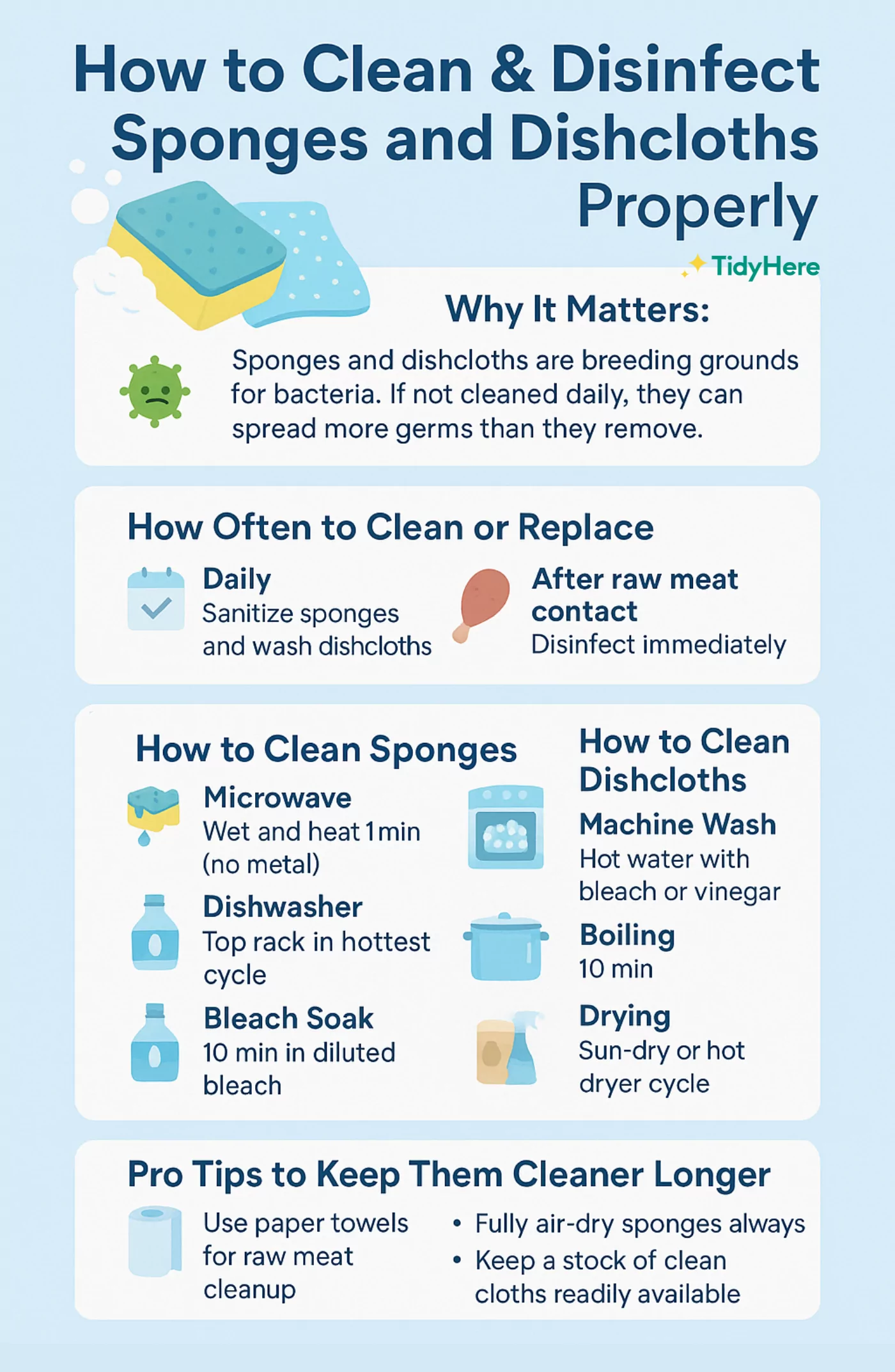
Microwave Technique
This is a quick and effective way to sanitize your kitchen sponge using just your microwave. First, make sure the sponge is wet—dry sponges can catch fire. Place the damp sponge in the microwave and heat it on high for about one to two minutes.
Be careful when removing it because it will be hot. This method kills most germs and bacteria fast. Have you ever been surprised by how much bacteria hide in something as common as a sponge?
Dishwasher Cleaning
If you run your dishwasher regularly, you can use it to clean your sponge too. Place the sponge on the top rack and run it through a full cycle with your usual dishwasher detergent. The high heat and detergent work together to sanitize it well.
This method is convenient if you want to multitask, cleaning dishes and your sponge at the same time. It’s also gentler on sponges compared to microwaving, which might wear them out faster.
Boiling Water Method
Boiling your sponge is another effective technique that requires nothing more than a pot and water. Simply drop the sponge into boiling water and let it sit for five minutes. This kills bacteria and refreshes the sponge.
Remember to use tongs to remove the sponge carefully. Boiling is especially useful if you don’t have a microwave or dishwasher handy. Would you have thought that something as basic as boiling could keep your sponge so clean?
Natural Cleaning Alternatives
Sanitize a kitchen sponge naturally by soaking it in a vinegar and water solution. Microwaving a damp sponge for one minute also kills many germs safely. These simple steps help keep your sponge clean and reduce bacteria buildup.
Keeping your kitchen sponge clean is crucial for maintaining a healthy home environment. While commercial cleaning products are effective, they often contain harsh chemicals. Thankfully, there are natural alternatives that are not only eco-friendly but also gentle on your hands and wallet. Let's dive into two simple and effective methods to sanitize your kitchen sponge using everyday items found in your pantry.
Vinegar Soak
White vinegar is a fantastic natural disinfectant. To sanitize your sponge, simply immerse it in a bowl of vinegar for about 5 minutes. The acidity in the vinegar will kill bacteria and eliminate odors. After soaking, rinse the sponge thoroughly with water. You might be surprised at how refreshed it feels, almost like it's brand new. This method is not only effective but also leaves your kitchen smelling fresh and clean.
Baking Soda Scrub
Baking soda is another powerful cleaning agent. Sprinkle a generous amount of baking soda directly onto your damp sponge. Scrub it against itself or on a surface to ensure the baking soda penetrates throughout. Baking soda's natural abrasiveness will help remove any stubborn grime and germs. Rinse the sponge under warm water until all the baking soda is gone. You'll notice your sponge is not only cleaner but also free from any unpleasant smells. By using these simple, natural methods, you can maintain a clean kitchen without relying on chemical-laden products. Have you tried these techniques before, or do you have your own natural sponge-cleaning hack? Share your thoughts and experiences!
How Often To Sanitize
Knowing how often to sanitize your kitchen sponge is key to keeping your kitchen safe and fresh. Sponges can harbor bacteria quickly, so setting a routine helps prevent unwanted germs from spreading. But how often is often enough? Let’s break it down.
Daily Maintenance
Sanitizing your sponge daily is a smart habit if you use it multiple times a day. A quick rinse with hot water and a few seconds in the microwave or dishwasher can kill most bacteria. I started doing this every evening and noticed my sponge stayed fresher and didn’t smell as bad.
Here are some easy daily steps you can take:
- Rinse your sponge thoroughly after each use
- Wring out excess water to reduce moisture
- Microwave the damp sponge for 1-2 minutes or run it through the dishwasher's sanitize cycle
Replacing Your Sponge
Even with regular sanitizing, sponges don’t last forever. It’s important to replace them frequently to avoid bacteria buildup. Most experts suggest swapping your sponge every 1 to 2 weeks, depending on use.
Think about how often you clean greasy dishes or raw meat surfaces—these factors mean you should replace your sponge sooner. Keeping a reminder on your phone or calendar helps me remember to toss the old sponge before it becomes a health hazard.
Tips For Keeping Sponges Cleaner Longer
Keeping your kitchen sponges cleaner for longer saves you time and reduces the risk of spreading germs. It’s not just about how you sanitize them but also how you store and use them daily. Small changes in your routine can make a big difference in sponge hygiene.
Proper Storage
Where you keep your sponge matters more than you might think. Avoid leaving it wet and crumpled on the sink, as moisture encourages bacterial growth.
Instead, place your sponge in a well-ventilated holder or on a dish rack where it can dry quickly. I once switched to a simple sponge caddy with drainage holes, and my sponge stayed fresher much longer.
Using Multiple Sponges
Using one sponge for everything increases contamination risks. Try having separate sponges for different tasks like washing dishes, wiping counters, and cleaning the sink.
This approach reduces cross-contamination and extends the life of each sponge. Labeling them or using different colors can help you keep track easily.
Avoid Cross-contamination
Do you ever use the same sponge to clean raw meat spills and then wipe your cutting board? This practice can spread harmful bacteria around your kitchen.
Be intentional about what each sponge touches. Rinse sponges thoroughly after use and sanitize them regularly to keep your kitchen safe and your sponges lasting longer.
:max_bytes(150000):strip_icc()/hydrogen-peroxide-uses-home-4174809-05-3c126f03778d46f4858d75c2780429a9.jpg)
Credit: www.thespruce.com
Frequently Asked Questions
How Often Should I Sanitize My Kitchen Sponge?
You should sanitize your kitchen sponge daily to prevent bacteria buildup. Frequent cleaning reduces germs and keeps your kitchen hygienic. Regular sanitization extends the sponge's usability and maintains a safe cooking environment.
What Is The Best Method To Sanitize A Kitchen Sponge?
Microwaving a damp sponge for 1-2 minutes is the best sanitizing method. It effectively kills most bacteria and viruses. Alternatively, soaking in bleach solution or running through a dishwasher also works well.
Can I Use Bleach To Sanitize My Kitchen Sponge?
Yes, soak the sponge in a diluted bleach solution for 5 minutes. This method kills harmful bacteria and disinfects effectively. Rinse thoroughly with water afterward to remove bleach residue before use.
Does Microwaving A Sponge Damage It?
Microwaving a damp sponge briefly does not usually damage it. However, avoid microwaving dry sponges, as they can catch fire. Ensure the sponge is wet and monitor the process carefully.
Conclusion
Sanitizing your kitchen sponge keeps your dishes clean and safe. Regular cleaning stops germs from spreading in your kitchen. Use simple methods like microwaving or soaking in vinegar. Replace sponges often to avoid bad smells and bacteria buildup. Clean sponges last longer and work better.
Taking small steps helps keep your kitchen healthy. A clean sponge means a safer home for your family. Remember, a little care goes a long way.