
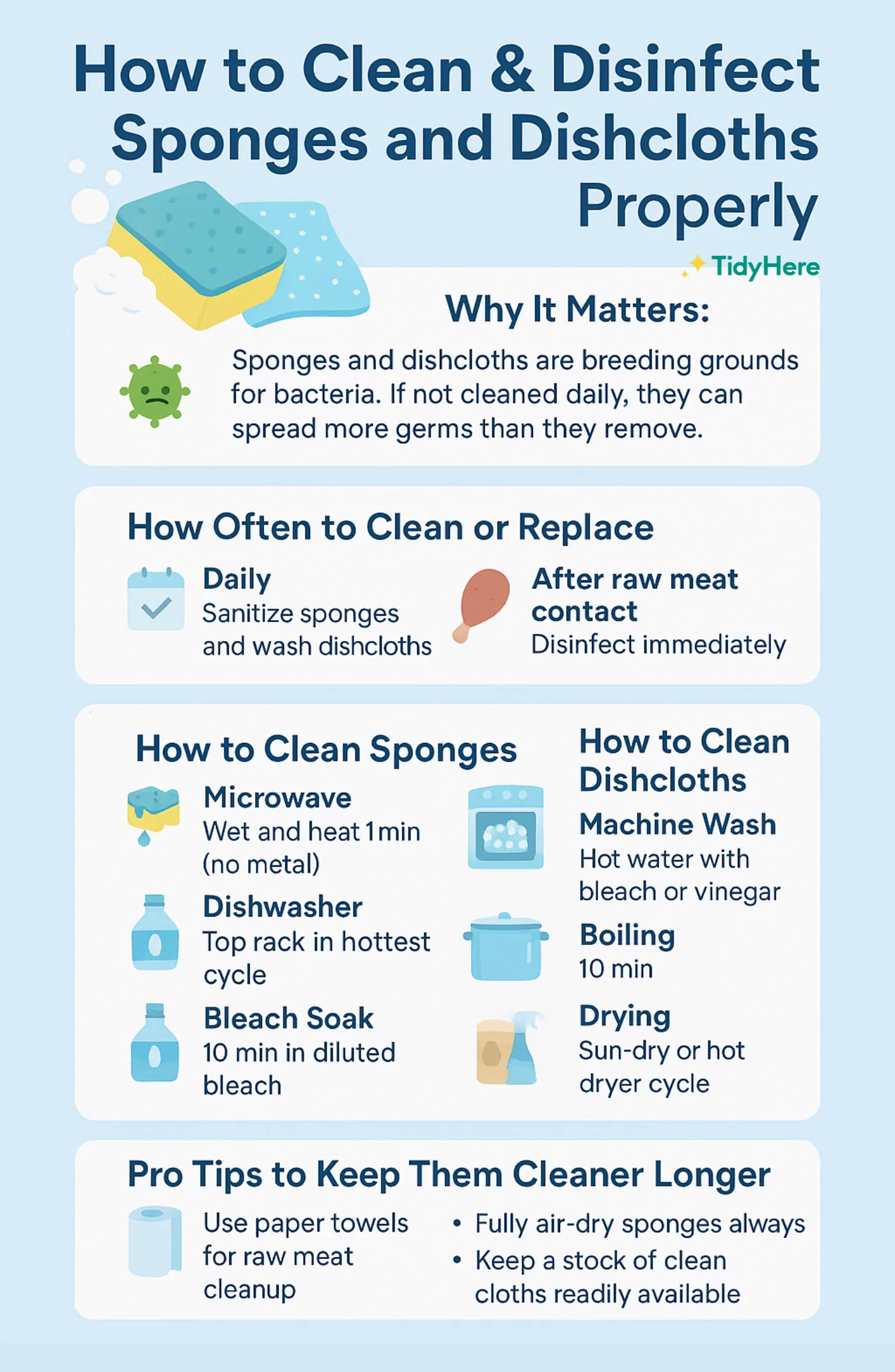
Your kitchen sponge is one of the dirtiest items in your home, but you probably don’t think about how often you should clean it. If you want to keep your kitchen truly clean and protect your family from harmful germs, knowing how to sanitize your sponge is a must.
You’ll discover simple and effective ways to make your sponge safe to use again. Keep reading—you’ll be surprised how easy it is to keep your kitchen fresh and healthy!

Credit: tidyhere.com
Why Sanitize Kitchen Sponges
Sanitizing kitchen sponges is important for a clean and safe kitchen. Sponges often hold food particles and moisture. These conditions help bacteria grow fast. Cleaning sponges regularly keeps your kitchen healthier.
Health Risks Of Dirty Sponges
Dirty sponges carry many germs and bacteria. These germs can cause stomach bugs and infections. They spread to dishes, counters, and hands easily. Using a dirty sponge can make you sick.
Bacteria like Salmonella and E. coli thrive in sponges. These bacteria cause food poisoning. People with weak immune systems face bigger risks.
Frequency Of Cleaning
Sponges need cleaning after each day of use. This stops bacteria from building up. If you use a sponge a lot, sanitize it twice daily.
Replace sponges every one to two weeks. Old sponges hold more germs even if cleaned. Regular cleaning and replacement keep your kitchen safe.
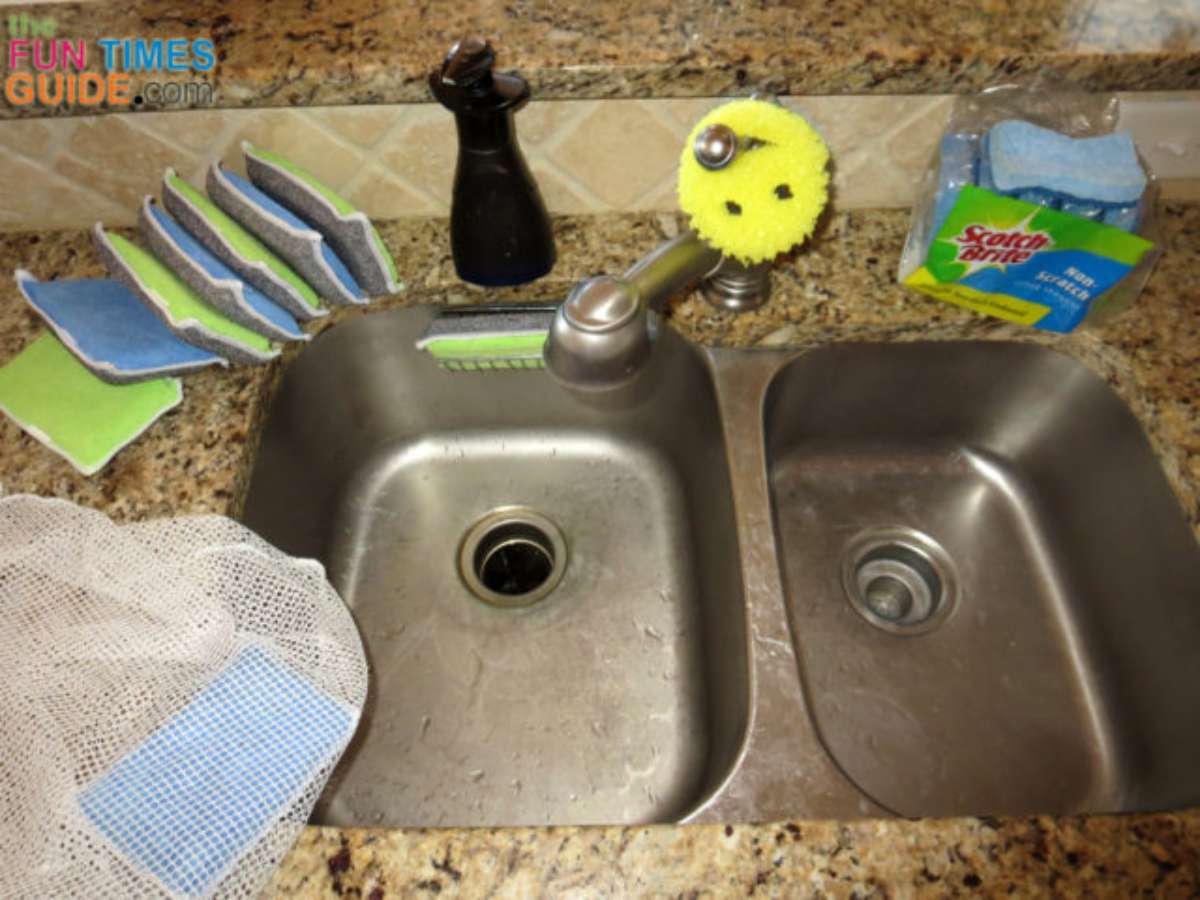
Credit: household-tips.thefuntimesguide.com
Microwave Method
The microwave method is a quick and effective way to sanitize a kitchen sponge. This process uses heat to kill bacteria and germs that grow on damp sponges. It is simple and uses items already in your kitchen. Follow these steps carefully for the best results.
Preparation Steps
- Rinse the sponge thoroughly with clean water.
- Make sure the sponge is wet, not dry.
- Remove any food debris or particles stuck in the sponge.
- Place the sponge in a microwave-safe bowl or cup filled with water.
Microwaving Instructions
- Put the sponge and water container in the microwave.
- Set the microwave on high power.
- Heat the sponge for 1 to 2 minutes.
- Allow the sponge to cool before removing it from the microwave.
Safety Tips
- Always keep the sponge wet to avoid fire risk.
- Use a microwave-safe container to hold the sponge.
- Let the sponge cool before handling to prevent burns.
- Do not microwave sponges with metallic parts or scrubbing pads.
Dishwasher Method
Place the kitchen sponge on the top rack of the dishwasher. Run a full cycle with heated dry to kill germs and bacteria. This simple way keeps your sponge clean and safe to use.
Keeping your kitchen sponge sanitized is crucial for a clean and healthy kitchen. Surprisingly, your dishwasher can be an effective tool for this task. By harnessing the heat and water power of your dishwasher, you can easily clean and sanitize your sponge without much hassle. Let's dive into how you can do this efficiently.
Setting Up The Sponge
Before placing the sponge in the dishwasher, ensure it’s free of any food particles. You can quickly rinse it under running water and give it a good squeeze. Position the sponge in the top rack of your dishwasher. This placement ensures that it gets maximum exposure to water and detergent without obstructing other items. You might wonder if any special arrangement is needed. Simply place it alongside your dishes, and let the dishwasher do the work.
Best Dishwasher Cycle
The choice of dishwasher cycle can make a difference. Opt for the hottest cycle available, often labeled as "sanitize" or "heavy-duty." This high-temperature setting not only cleans but also kills bacteria effectively. Have you ever noticed how your dishes come out steaming hot? That's the same intense heat that will eliminate germs on your sponge. Using the dishwasher method regularly can extend the life of your sponge while maintaining its cleanliness. Why not make it a part of your routine? Just think—each time you run a load, you're also sanitizing your kitchen sponge.
Bleach Solution
Using a bleach solution is a simple and effective way to sanitize a kitchen sponge. It kills most germs and bacteria quickly. This method helps keep your sponge clean and safe for daily use.
Mixing The Solution
Start by mixing one tablespoon of bleach with one gallon of water. Use a clean container to avoid contamination. Stir the solution gently to blend the bleach evenly.
Soaking Time
Place the sponge fully into the bleach solution. Let it soak for about five minutes. Avoid soaking longer to prevent damage to the sponge fibers.
Rinsing Process
Remove the sponge from the solution carefully. Rinse it under running water until the bleach smell fades. Squeeze out excess water before using or storing.
Vinegar Soak
The vinegar soak is an easy way to clean and sanitize your kitchen sponge. It uses natural white vinegar to kill germs and remove odors. This method is safe and affordable. It also helps extend the life of your sponge by keeping it fresh. A simple soak in vinegar can reduce bacteria effectively without harsh chemicals.
Using White Vinegar
Choose plain white vinegar for best results. Avoid flavored or colored vinegar. Pour enough vinegar into a bowl to cover the sponge fully. Place the sponge in the bowl and let it soak. The acidity in white vinegar breaks down dirt and kills many bacteria types.
Duration And Effectiveness
Soak the sponge for at least 5 minutes. For stronger cleaning, soak for 30 minutes or more. After soaking, rinse the sponge well with warm water. Squeeze out excess liquid and let it air dry. Regular vinegar soaks can keep your sponge cleaner and reduce bad smells.
Boiling Water Technique
The boiling water technique is a simple and effective way to sanitize your kitchen sponge. This method uses high heat to kill most bacteria and germs hiding in the sponge’s porous surface. It’s quick, requires no special chemicals, and can be done right on your stove.
Boiling Procedure
Start by filling a pot with enough water to fully submerge your kitchen sponge. Bring the water to a rolling boil over high heat. Once boiling, carefully place the sponge into the pot using tongs or a spoon to avoid burns.
Let the sponge boil for about 5 minutes to ensure thorough sanitization. After boiling, remove the sponge with tongs and set it on a clean surface to air dry completely. Drying is crucial because moisture encourages bacteria growth.
Precautions
Be cautious when handling boiling water to prevent burns. Use heat-resistant gloves if needed and avoid splashing hot water. Make sure the sponge is free of metal parts or scrubbing pads that could melt or release toxins when boiled.
Also, avoid boiling sponges too often—repeated exposure to high heat may cause the sponge to degrade faster. Instead, combine boiling with regular replacement for the best hygiene results. Have you ever noticed how a fresh sponge changes your kitchen’s cleanliness?
Preventing Sponge Bacteria
Kitchen sponges are a hotspot for bacteria, making it essential to take steps that prevent their growth. Simply rinsing your sponge isn’t enough to keep it safe and clean. You need strategies that stop bacteria from thriving in the first place.
Proper Storage
Where and how you store your sponge can either invite bacteria or keep them away. Always keep your sponge in a dry, well-ventilated spot. Avoid leaving it sitting in water or inside a closed container where moisture lingers.
After use, squeeze out excess water and place the sponge somewhere it can air dry quickly. A sponge holder with drainage holes works great. Have you noticed how a damp sponge smells worse? That’s bacteria multiplying because of poor storage.
Regular Replacement
Even with good cleaning, sponges don’t last forever. You should replace your kitchen sponge regularly to minimize bacteria buildup. Depending on usage, swapping it out every one to two weeks is a smart move.
Think about how often you use your sponge daily—more use means quicker wear and more bacteria. If you spot an unpleasant odor or see discoloration, don’t wait. Toss it and start fresh. How often do you currently replace your sponge?

Credit: www.youtube.com
Frequently Asked Questions
How Often Should You Sanitize A Kitchen Sponge?
You should sanitize your kitchen sponge daily to prevent bacteria buildup. Regular cleaning reduces germs and keeps your sponge safe for use.
What Is The Best Way To Sanitize A Kitchen Sponge?
Microwaving a damp sponge for two minutes is effective. Alternatively, soaking in bleach or running through the dishwasher kills most bacteria.
Can Vinegar Effectively Sanitize A Kitchen Sponge?
Vinegar has some antibacterial properties but is less effective than bleach or microwaving. It can freshen the sponge but won’t eliminate all germs.
Is It Safe To Microwave A Wet Kitchen Sponge?
Yes, microwaving a wet sponge for two minutes kills bacteria safely. Ensure the sponge is wet to avoid fire hazards during microwaving.
Conclusion
Sanitizing your kitchen sponge keeps your home cleaner and safer. Regular cleaning stops germs from spreading. Use simple methods like microwaving or soaking in vinegar. Replace sponges often to avoid bad smells and bacteria buildup. Clean sponges help your dishes stay truly clean.
Small steps make a big difference in kitchen hygiene. Keep your sponge fresh for a healthier cooking space. Easy habits create a cleaner kitchen every day.