
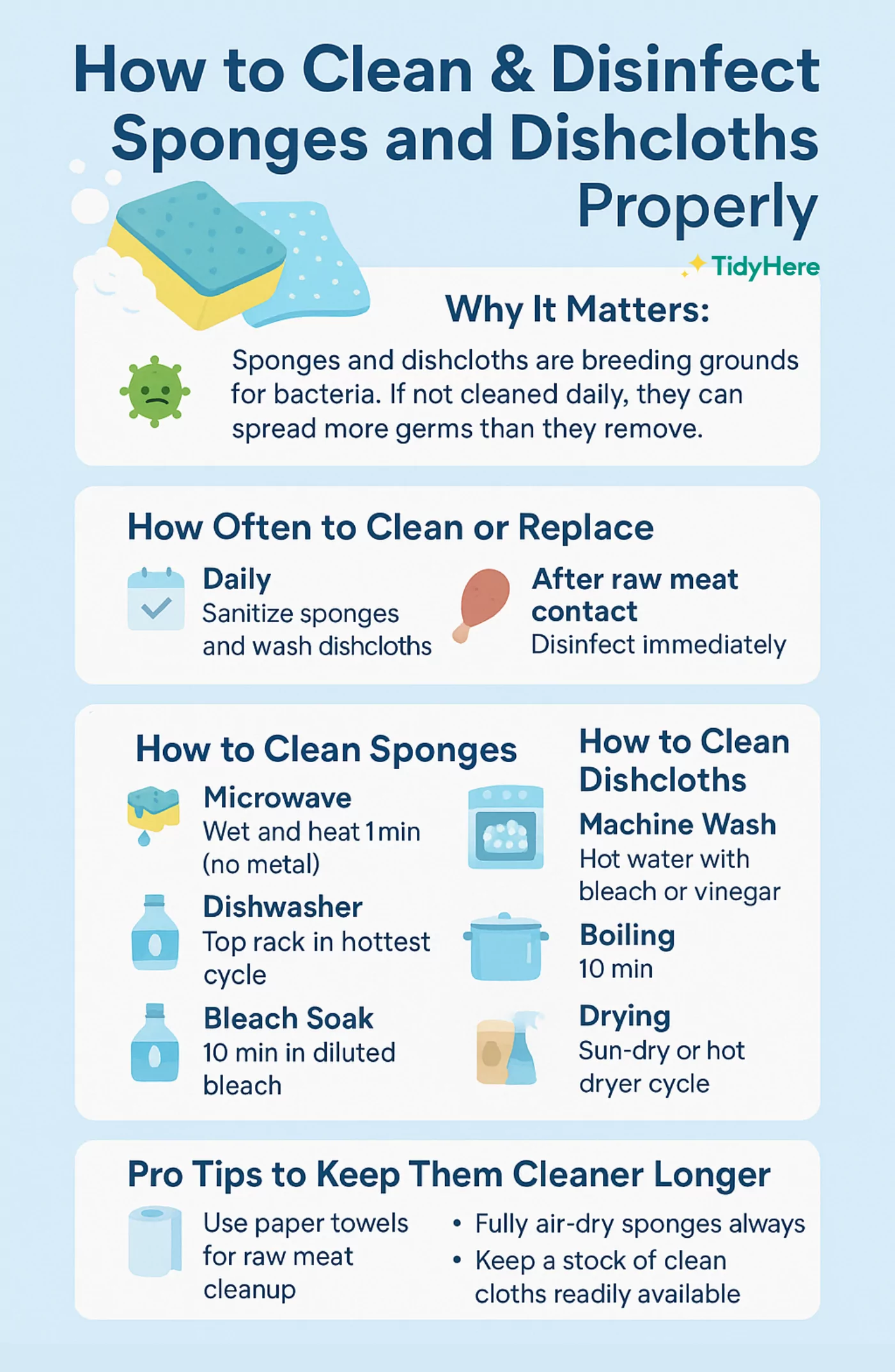
Your kitchen sponge is one of the dirtiest items in your home, even dirtier than your toilet seat. If you’re not sanitizing it regularly, you could be spreading harmful bacteria every time you clean.
But don’t worry—sanitizing your sponge is easier than you think. You’ll discover simple, effective ways to keep your sponge clean and safe. Keep reading to protect your family and make your kitchen a healthier place.
Credit: household-tips.thefuntimesguide.com
Why Sanitize Kitchen Sponges
Kitchen sponges help clean dishes and surfaces every day. They soak up food particles, grease, and liquids. This makes them a perfect place for germs to grow. Sanitizing kitchen sponges keeps your home safe and your sponge fresh. It stops harmful bacteria from spreading and causing illness.
Common Germs In Sponges
Sponges can hold many types of germs. These include:
- Salmonella
- E. coli
- Staphylococcus aureus
- Mold and yeast
These germs grow fast in damp, warm sponges. They hide deep inside the sponge’s pores. This makes cleaning harder without sanitizing.
Health Risks From Dirty Sponges
Dirty sponges can cause serious health problems. Germs can spread to your hands, dishes, and food. This can lead to:
- Food poisoning
- Stomach infections
- Skin rashes
- Respiratory issues
Children, elderly, and people with weak immune systems are at higher risk. Regular sanitizing lowers these dangers and keeps your kitchen safer.
Signs Your Sponge Needs Cleaning
Knowing when your kitchen sponge needs cleaning is key to keeping your kitchen hygienic. Sponges can harbor bacteria quickly, so recognizing the signs can help you act before germs spread. Let’s look at clear indicators that your sponge requires a good sanitize.
Odor And Appearance
Does your sponge smell bad or sour? A strong odor is a clear warning that bacteria and mold are growing inside. Also, check for changes in color or texture—if it looks slimy, faded, or has dark spots, it’s time to clean or replace it.
I once ignored the smell from my sponge until my dishes started smelling off too. That experience taught me to trust these sensory clues immediately.
Frequency Of Use
How often do you use your sponge? If you clean multiple times a day, bacteria multiply faster, meaning your sponge needs more frequent sanitizing. Even if it looks fine, sponges used daily should be cleaned at least every couple of days to stay safe.
Ask yourself: Have you cleaned your sponge this week? If not, don’t wait for visible signs—clean it now to avoid contamination.
Methods To Sanitize Kitchen Sponges
Sanitizing kitchen sponges keeps your kitchen clean and reduces germs. Sponges can hold bacteria from food and surfaces. Regular cleaning helps avoid illness and bad odors. Several easy methods can sanitize sponges effectively.
Microwave Sanitizing
Wet the sponge completely before microwaving. Place it in the microwave on high for one to two minutes. The heat kills bacteria inside the sponge. Use caution when removing the sponge—it will be hot. This method is quick and uses no chemicals.
Dishwasher Cleaning
Put the sponge in the dishwasher’s top rack. Run a full cycle with heat dry on. The heat and detergent clean and sanitize the sponge. This method is convenient if you run the dishwasher daily. It also helps extend the sponge’s life.
Boiling Water Method
Boil a pot of water and submerge the sponge for five minutes. The high temperature kills most germs and bacteria. Remove the sponge carefully and let it dry. This method is simple and uses only water. It works well for sponges without metal parts.
Bleach Solution Soak
Mix one tablespoon of bleach with one gallon of water. Soak the sponge in this solution for five minutes. Rinse well with clean water after soaking. Bleach kills a wide range of bacteria and viruses. Use this method occasionally to avoid damaging the sponge.
Step-by-step Sponge Sanitizing Guide
Sanitizing a kitchen sponge keeps your dishes clean and reduces germs. Heat or soak the sponge in a disinfecting solution to kill bacteria. Regular cleaning helps maintain a safe and fresh kitchen environment.
Keeping your kitchen sponge clean is essential for maintaining a hygienic cooking space. Sponges are notorious for harboring bacteria, but don't worry—sanitizing them is a straightforward process. Follow this step-by-step guide to ensure your kitchen sponge remains fresh and germ-free.
Preparation
Begin by gathering your materials. You'll need a microwave, white vinegar, and a clean bowl. Make sure your sponge is free of food particles before you start. A quick rinse under hot water usually does the trick.
Sanitizing Process
There are several effective ways to sanitize your sponge, but let's focus on the microwave method. 1. Soak your sponge in a bowl of water mixed with a quarter cup of vinegar. This step helps loosen any stubborn grime and prepares the sponge for sanitizing. 2. Place the soaked sponge in the microwave. Heat it on high for one to two minutes. Be cautious when removing the sponge as it will be hot. This method kills most bacteria and leaves your sponge sanitized.
Drying And Storage
After microwaving, allow the sponge to cool before handling. Squeeze out excess water and place it on a drying rack. Make sure it dries completely between uses to prevent bacteria from multiplying. Store your sponge in a well-ventilated area. Avoid leaving it in the sink where it can stay damp. A simple holder can help keep it elevated and dry. Doesn't it feel great to know your sponge is clean and ready to tackle your next dishwashing session? Keeping your kitchen safe starts with small habits like these.
Tips To Extend Sponge Life
Extending the life of your kitchen sponge is not just about saving money—it’s about maintaining a cleaner, healthier kitchen environment. Sponges can harbor bacteria quickly if not cared for properly, but a few simple habits can keep yours fresh and effective for longer. Let’s look at practical tips that make a real difference.
Regular Cleaning Routine
Cleaning your sponge regularly can drastically reduce bacteria buildup. Try rinsing it thoroughly after every use and wring out as much water as possible to keep it dry between uses.
Microwaving a damp sponge for one minute or soaking it in a bleach solution once a week helps kill germs. Have you noticed how often you forget this step? Setting a reminder might keep your sponge in better shape.
Proper Sponge Usage
Using your sponge only for designated tasks prevents cross-contamination. For example, avoid using the same sponge for raw meat juices and countertop cleaning.
Keep separate sponges for dishes, counters, and even the bathroom if needed. This simple switch can significantly extend each sponge’s lifespan and protect your family’s health.
Replacing Sponges Timely
Even with great care, sponges don’t last forever. If your sponge starts to smell bad or fall apart, it’s time to replace it immediately.
Think about how much you use your sponge daily—replacing it every two weeks is a good rule of thumb. Have you tracked how long your sponges really last before they become ineffective?

Credit: www.youtube.com
Alternatives To Traditional Sponges
Traditional kitchen sponges can quickly become breeding grounds for bacteria, even with regular sanitizing. Luckily, there are effective alternatives that not only last longer but also keep your kitchen cleaner. These options might change the way you think about scrubbing and dishwashing.
Silicone Sponges
Silicone sponges resist bacteria better because they dry faster than traditional sponges. Their non-porous surface means food particles don’t get trapped easily, reducing odors and germs. Plus, they’re easy to clean—just pop them in the dishwasher or boil them for a few minutes.
Have you noticed how much longer silicone sponges last? Many users report they can use one for months without it smelling bad or falling apart.
Reusable Cloths
Reusable cloths made from microfiber or cotton are a versatile option. They can be washed frequently at high temperatures, helping to kill germs effectively. Using cloths also means you can dedicate different ones to specific tasks, like wiping counters versus scrubbing dishes, which reduces cross-contamination.
Try keeping a few cloths handy, and rotate them daily. You might find your kitchen feels fresher and cleaner than when using sponges.
Natural Fiber Options
Materials like loofah, coconut fiber, or hemp offer eco-friendly alternatives. These natural fibers break down more easily when discarded and don’t harbor bacteria as much as synthetic sponges. They provide gentle scrubbing power suitable for delicate dishes and cookware.
Switching to natural fibers might also prompt you to rethink how often you replace cleaning tools. Could this be a more sustainable choice for your kitchen routine?
:max_bytes(150000):strip_icc()/hydrogen-peroxide-uses-home-4174809-05-3c126f03778d46f4858d75c2780429a9.jpg)
Credit: www.thespruce.com
Frequently Asked Questions
How Often Should I Sanitize My Kitchen Sponge?
You should sanitize your kitchen sponge daily. Frequent cleaning prevents bacteria buildup and odors. Regular sanitizing keeps your sponge hygienic and safe for kitchen use.
What Is The Best Way To Sanitize A Kitchen Sponge?
Microwaving a damp sponge for 1-2 minutes is an effective method. It kills most bacteria quickly and safely. Alternatively, soaking in bleach or vinegar also works well.
Can I Use The Dishwasher To Sanitize A Sponge?
Yes, placing your sponge in the dishwasher with a heated dry cycle sanitizes it. This method uses high heat to kill germs effectively without damaging the sponge.
Is Boiling A Sponge An Effective Sanitizing Method?
Boiling a sponge for 5 minutes kills most bacteria and germs. It’s a simple and chemical-free way to sanitize your sponge thoroughly.
Conclusion
Sanitizing your kitchen sponge helps keep germs away. Clean sponges last longer and work better. Use simple methods like microwaving or soaking in vinegar. Do this regularly to stop bacteria from growing. A clean sponge means a safer kitchen for your family.
Small efforts make a big difference in hygiene. Keep your kitchen healthy with easy sponge care. Try these tips today and notice the change.