
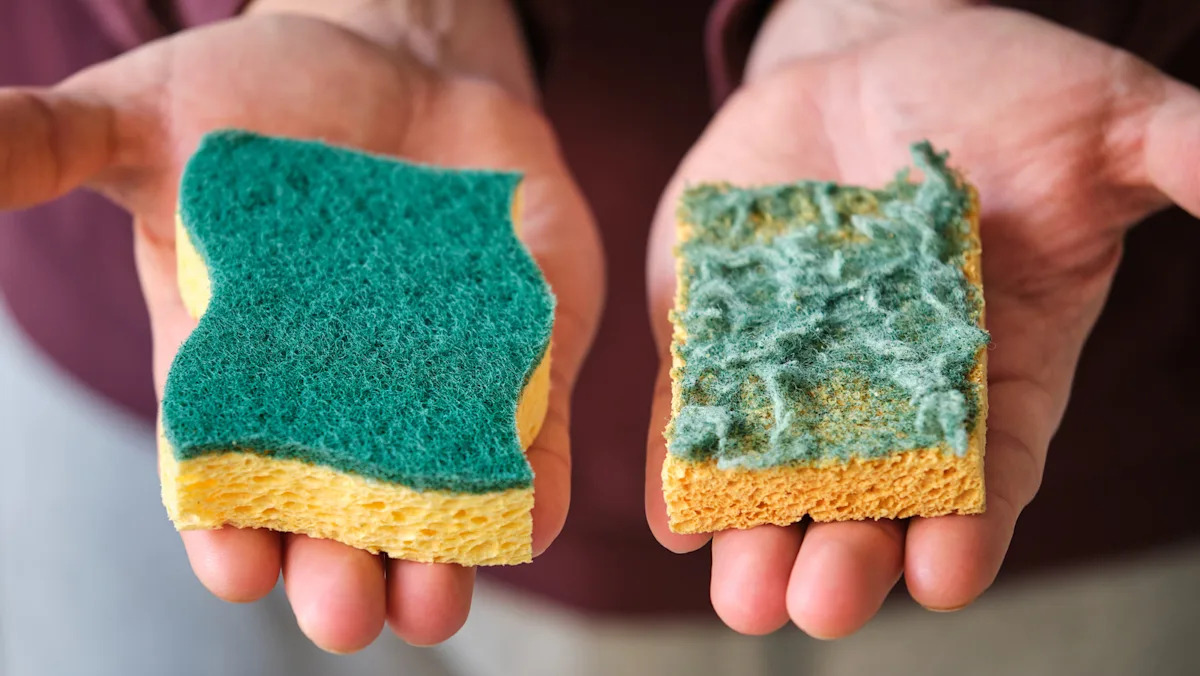
Have you ever stopped to think about how long you should keep your kitchen sponge? It might seem like a small detail, but the truth is, your sponge could be hiding more bacteria than you realize.
Using an old, worn-out sponge can put your health at risk and make your kitchen less clean than you think. You’ll discover the best practices for when to toss your sponge and how to keep your kitchen truly fresh. Keep reading—your health and hygiene depend on it!

Credit: amazonascrub.com
Sponge Lifespan
Understanding the lifespan of a kitchen sponge helps keep your kitchen clean and safe. Sponges collect food particles and moisture, creating a perfect place for bacteria. Knowing how long to keep a sponge prevents the spread of germs and maintains hygiene.
Average Duration
Most kitchen sponges last about one to two weeks. This depends on how often you use them and what tasks you perform. Heavy use or cleaning raw meat surfaces shortens their life. For light use, sponges might last a bit longer, but regular replacement is best for safety.
Signs To Replace
Look for these signs to know when to toss your sponge:
- Unpleasant odor that won’t go away
- Visible mold or mildew spots
- Fraying or breaking apart
- Persistent stains that don’t rinse out
- Spongy texture becomes slimy or sticky
These signs mean bacteria have built up and the sponge is no longer safe to use. Replace it immediately to avoid contamination.
Health Risks
Keeping a kitchen sponge longer than necessary can lead to serious health risks. Sponges are perfect breeding grounds for harmful germs because they stay moist and collect food particles. Understanding these risks can help you decide when it’s time to replace your sponge.
Bacteria Growth
Sponges trap food bits and stay damp, creating an ideal environment for bacteria to multiply quickly. Harmful bacteria like Salmonella and E. coli can thrive inside a sponge and cause foodborne illnesses.
Even if your sponge looks clean, it can still harbor invisible germs. Have you ever noticed a bad smell from your sponge? That’s a clear sign of bacterial buildup.
To protect your health, replace your kitchen sponge every one to two weeks. Regularly sanitizing it with hot water or a bleach solution can slow bacteria growth but won’t eliminate it completely.
Cross Contamination
Using the same sponge to clean different surfaces or types of food can spread germs around your kitchen. If you wipe raw meat juices and then clean your countertop without changing or sanitizing the sponge, you risk contaminating other foods.
Think about your last meal prep: Did you wash the sponge after touching raw chicken? If not, harmful bacteria may have spread to your cutting board, utensils, or even fresh vegetables.
To avoid cross contamination, use separate sponges or cloths for different tasks. Labeling them or storing them separately can help you keep track and protect your family from preventable illnesses.
Cleaning Techniques
Kitchen sponges should be replaced every one to two weeks to avoid bacteria build-up. Regular cleaning helps, but sponges wear out quickly and harbor germs. Replace often for a safer, cleaner kitchen.
A kitchen sponge is a small yet mighty tool in our daily cleaning routine, but it's also notorious for harboring bacteria. To maintain a healthy kitchen, it's crucial to clean your sponge regularly. Here are some effective cleaning techniques that you can easily incorporate into your routine.
Microwave Method
Harness the power of your microwave to sanitize your sponge. Start by soaking the sponge in water—this is essential to prevent it from catching fire. Once it's thoroughly soaked, place it in the microwave for about one minute. The heat kills most bacteria lurking within. Have you ever noticed how a hot cup of tea can lift your spirits on a cold day? Just like that warmth, the microwave method ensures your sponge is warm and ready to tackle germs. But remember, this method works best on sponges without metal components.
Dishwasher Cleaning
If you already run your dishwasher daily, this method is a breeze. Simply toss your sponge into the top rack alongside your dishes. The heat and detergent from the wash cycle will do the work for you, leaving your sponge fresh and clean. Ever thought about multitasking while your dishes get cleaned? Let your sponge join the party! This method is not only efficient but also eco-friendly, as it uses resources you already employ. Plus, it’s a great way to keep your sponge odor-free.
Bleach Soak
For those who prefer a chemical approach, a bleach soak might be your go-to. Mix a tablespoon of bleach with a gallon of water. Submerge the sponge for five minutes, then rinse thoroughly. Have you considered the power of a deep clean? Just like a thorough scrub of your bathroom, a bleach soak ensures your sponge is not just clean but sanitized. This method is particularly effective for those stubborn odors that sometimes linger. Cleaning your kitchen sponge is a simple task with significant benefits. Which method will you try today?
Storage Tips
Proper storage of your kitchen sponge extends its life and keeps it sanitary. Sponges hold moisture and bacteria, so drying and placing them correctly matters. Follow these tips to keep your sponge fresh and safe for daily use.
Drying Methods
Dry your sponge quickly after use to stop bacteria growth. Squeeze out water well. Air drying is best. Place the sponge where air flows freely.
- Use a sponge holder with holes or slits to allow airflow.
- Stand the sponge upright or on its side to expose more surface area.
- Avoid leaving the sponge flat in the sink or on a wet surface.
- Microwaving or boiling the sponge can dry and sanitize it but do this carefully.
Proper Placement
Choose a spot away from sinks and damp areas. Avoid closed containers that trap moisture. Keep the sponge near where you use it but in a dry place.
- Use a rack or hook above the sink for easy access and airflow.
- Keep the sponge away from food prep areas to reduce contamination.
- Change the sponge regularly to maintain cleanliness.
Alternatives To Sponges
Kitchen sponges can harbor germs and wear out quickly. Many people seek safer and longer-lasting options. Alternatives to traditional sponges offer better durability and hygiene. They also help reduce waste in the kitchen.
Dishcloths
Dishcloths are soft, absorbent, and easy to wash. They dry faster than sponges, reducing bacteria growth. Use separate cloths for dishes and counters. Replace them regularly to keep your kitchen clean.
Scrubbers
Scrubbers come in various materials like nylon or stainless steel. They are great for tough stains and burnt food. Scrubbers dry quickly and last longer than sponges. Choose one that fits your cleaning needs.
Silicone Sponges
Silicone sponges resist bacteria and dry very fast. They do not absorb water or food particles. Cleaning them is simple—just rinse or put them in the dishwasher. Silicone sponges last for months without losing shape.

Credit: www.yahoo.com
Frequency Of Replacement
Knowing how often to replace your kitchen sponge is crucial for keeping your kitchen hygienic. The frequency depends largely on how often and intensively you use it. Let’s look at different scenarios to help you decide when it’s time to toss that sponge.
Daily Use
If you use your kitchen sponge every day, especially for cleaning dishes and wiping counters, it can harbor bacteria quickly. Replacing it at least once a week is a good rule of thumb.
I once ignored this advice and kept a sponge for over two weeks. The smell got bad, and I noticed food particles stuck inside. That experience showed me how fast sponges can become a breeding ground for germs.
To keep your sponge fresher longer, you can:
- Rinse it thoroughly after each use
- Squeeze out excess water
- Microwave it for 1 minute to kill bacteria (make sure it’s wet!)
Infrequent Use
For those who use their kitchen sponge less often, the replacement timeline can be stretched out a bit. However, even occasional use can lead to bacteria buildup if the sponge stays damp and unused for days.
If your sponge sits in the sink or a damp holder without drying completely, replace it every two to three weeks. Drying your sponge completely between uses can help extend its life.
Ask yourself: Is your sponge smelling fresh? Is it visibly worn or falling apart? If the answer is no or yes, it’s time to replace it, regardless of how often you use it.

Credit: food52.com
Frequently Asked Questions
How Often Should I Replace My Kitchen Sponge?
Replace your kitchen sponge every 1 to 2 weeks. Frequent replacement prevents bacteria buildup and odors. Sponges used daily wear out faster. Regularly changing sponges keeps your kitchen hygienic and safe from germs.
Can I Disinfect A Kitchen Sponge Instead Of Replacing It?
Yes, you can disinfect sponges with microwave or bleach. However, disinfection only reduces bacteria temporarily. Regular replacement is still necessary for safety. Disinfecting helps extend sponge life but doesn't eliminate all germs.
What Signs Indicate It's Time To Discard A Sponge?
Discard your sponge if it smells bad, feels slimy, or falls apart. Visible stains and persistent odors mean bacteria growth. These signs show the sponge is no longer safe for kitchen use.
Does Sponge Material Affect Replacement Frequency?
Yes, natural sponges may last longer than synthetic ones. However, both types need replacement every 1 to 2 weeks. Material affects durability but not the risk of bacteria. Always replace sponges based on usage and condition.
Conclusion
Keeping your kitchen sponge fresh helps keep your kitchen clean. Replace it every one to two weeks. Sponges can hold many germs and bacteria. Regular changes stop bad smells and keep dishes safe. Rinse and dry your sponge after each use.
This simple habit makes a big difference. Clean kitchens feel better and stay healthier. Remember, a small change helps your home stay safe. Don’t wait until the sponge looks old or smells bad. Act now for a cleaner, healthier kitchen every day.