
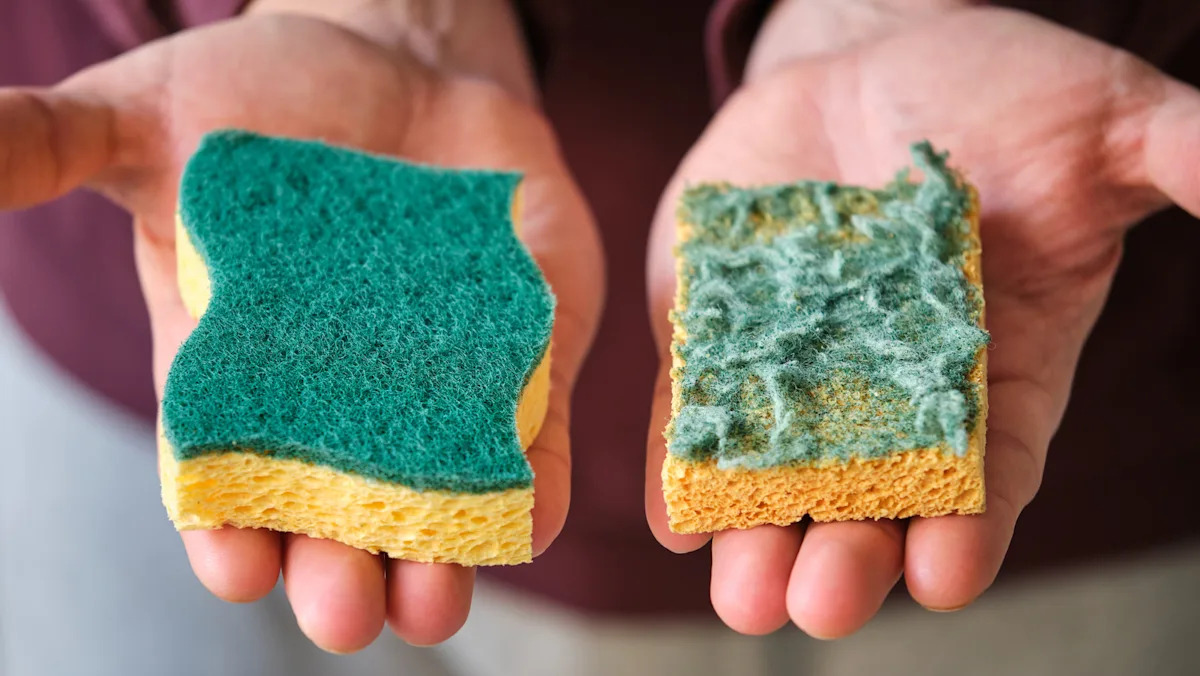
Have you ever wondered just how much water your kitchen sponge can hold? It might seem like a simple tool, but your sponge works hard every day soaking up spills, washing dishes, and keeping your kitchen clean.
Understanding its water-holding capacity can help you make smarter choices when it comes to cleaning and even saving water. Keep reading to discover surprising facts about your kitchen sponge that will change the way you use it—and why this small item plays a bigger role than you think.
Sponge Material And Structure
The material and structure of a kitchen sponge are key to how much water it can hold. Different sponges use varied materials, affecting their ability to absorb water. The design, such as pore size and density, also plays a big role. Understanding these factors helps explain why some sponges soak up more water than others.
Types Of Kitchen Sponges
- Cellulose sponges are made from wood fibers. They absorb water well and are biodegradable.
- Foam sponges have a synthetic make-up. They tend to hold less water but dry faster.
- Natural sea sponges come from the ocean. They have large pores and can hold a lot of water.
- Microfiber sponges use tiny synthetic fibers. They absorb water quickly and trap dirt efficiently.
Porosity And Absorption
Porosity refers to the number and size of holes in the sponge. More pores mean more space to hold water. Larger pores absorb water quickly but may release it easily. Smaller pores hold water tightly but take longer to soak up.
High porosity sponges can hold more water but might be less durable. Low porosity sponges hold less water but last longer. The balance between porosity and absorption affects sponge performance.
Impact Of Sponge Size
Bigger sponges usually hold more water due to increased volume. Thickness also matters; thicker sponges store more liquid inside. Small sponges absorb less water but dry faster after use.
Size impacts how easy the sponge is to handle and clean. Choose a size based on the cleaning task and water capacity needed.

Credit: food52.com
Water Absorption Capacity
Understanding the water absorption capacity of a kitchen sponge can change how you use it every day. This capacity determines how much liquid the sponge can hold before it starts dripping or losing effectiveness. Knowing this helps you choose the right sponge and maintain it better for your cleaning tasks.
Average Water Retention
On average, a typical kitchen sponge can hold about 20 to 25 times its weight in water. This means a sponge weighing just 10 grams can soak up around 200 to 250 milliliters of water. However, this value varies depending on the sponge's size and material density.
I once tested an old sponge in my kitchen and noticed it barely absorbed half the water it used to hold when new. This simple test showed me how much sponge wear affects water retention over time.
Factors Affecting Absorption
- Material Composition:Natural cellulose sponges generally absorb more water than synthetic ones.
- Pore Size:Larger pores can hold more water but might release it more quickly.
- Age and Usage:Older sponges lose their absorption ability as their structure breaks down.
- Cleaning and Drying:Proper drying between uses helps maintain absorption by preventing bacterial growth and material degradation.
Have you noticed how some sponges dry out faster than others? This often ties back to pore size and material makeup, influencing how much water the sponge holds and how quickly it releases it.
Comparison With Other Materials
| Material | Water Absorption (times its weight) | Common Use |
|---|---|---|
| Cellulose Sponge | 20-25 | Kitchen cleaning |
| Microfiber Cloth | 7-10 | Surface wiping |
| Synthetic Sponge | 10-15 | Dishwashing |
| Cotton Towel | 10-15 | Drying dishes |
Comparing materials helps you decide which tool fits your cleaning needs. While cellulose sponges hold more water, microfiber cloths excel at lifting dirt with less water. What combination of materials do you use for your kitchen tasks?
Testing Water Holding Ability
Testing the water holding ability of a kitchen sponge can be quite fascinating. You might be surprised by how much water a seemingly simple sponge can absorb. Understanding this can help you make better decisions about which sponge to use for different cleaning tasks.
Common Methods Used
There are several ways to test a sponge's ability to hold water. One popular method involves completely submerging the sponge in water until it stops absorbing. You can also try squeezing the sponge under a running tap to see how much water it retains after a few seconds.
Another common approach is to weigh the dry sponge, soak it, and then weigh it again. The difference in weight gives a clear indication of the water absorbed. Each method offers a unique perspective on how sponges work in different conditions.
Real-life Absorption Scenarios
Have you ever noticed how a sponge behaves differently in various cleaning scenarios? When cleaning up a spill, the sponge might absorb quickly due to the surface tension of the liquid. On the other hand, when wiping a countertop, the sponge's absorption might be slower.
Understanding these scenarios helps you anticipate how much water a sponge can hold before it needs to be wrung out. This knowledge can make your cleaning routine more efficient and less frustrating.
Measuring Techniques
For those who love precision, measuring the exact amount of water a sponge can hold can be quite satisfying. Start by using a measuring cup to track the volume of water the sponge absorbs. You can also try measuring the water left behind after wringing out the sponge.
Another technique is to use a graduated cylinder to capture the exact amount of water released from the sponge. These methods not only satisfy curiosity but can also help you choose the right sponge for specific tasks.

Credit: www.amazon.com
Surprising Uses Of Sponge Water Capacity
Kitchen sponges are more than just cleaning tools; their water-holding ability opens doors to many surprising uses. Understanding how much water a sponge can hold helps you make the most out of this everyday item. Let’s look at some practical ways you can benefit from your sponge's impressive water capacity.
Gardening And Plant Care
Did you know a kitchen sponge can help keep your plants hydrated? Place a damp sponge at the bottom of a plant pot to slowly release moisture. This keeps the soil consistently moist without overwatering.
You can also use a sponge to water seedlings gently. Instead of pouring water directly, dab the sponge on the soil surface. This prevents disturbing fragile roots while ensuring they get enough water.
Cleaning Efficiency
The sponge’s ability to hold water means you can clean larger surfaces with less effort. When soaked, it stores plenty of liquid detergent, helping you tackle stubborn stains quickly.
Try wringing out your sponge just enough to keep it damp but not dripping. This balance improves scrubbing power and reduces the chance of streaks on glass or counters.
Emergency Water Storage
Have you ever been caught without a water bottle during a hike or outdoor trip? A clean, well-saturated sponge can act as a temporary water reservoir.
Store water inside a sponge within a sealed container to keep it from spilling. It’s a simple way to carry a small amount of water for emergency use without bulky bottles.
Tips To Maximize Sponge Efficiency
Maximizing your kitchen sponge’s efficiency saves time and reduces waste. Simple habits can keep your sponge absorbent and clean longer. Follow these tips to get the most from each sponge.
Proper Sponge Maintenance
Rinse your sponge thoroughly after every use. Remove all food particles to prevent bacteria growth. Squeeze out excess water but avoid twisting or tearing. Regularly disinfect by microwaving damp sponges for one minute or soaking in vinegar. Replace sponges often to maintain hygiene and performance.
Avoiding Over-saturation
Keep your sponge damp, not dripping wet. Over-saturation reduces its ability to absorb water effectively. Store sponges in a well-ventilated area to dry quickly. Avoid leaving sponges in standing water or a wet sink. This practice helps the sponge hold more water when needed.
Extending Sponge Lifespan
Use sponges for specific tasks like washing dishes or wiping counters. Avoid harsh chemicals that break down sponge material. Rotate sponges regularly to prevent wear in one area. Trim rough edges to reduce shedding. Proper care helps your sponge last longer and work better.

Credit: parade.com
Frequently Asked Questions
How Much Water Does A Kitchen Sponge Typically Hold?
A kitchen sponge can hold about 20 to 30 times its dry weight in water. This means a standard sponge absorbs roughly 40 to 60 milliliters of water, depending on its size and material.
What Factors Affect A Sponge’s Water-holding Capacity?
Material type, size, and sponge density mainly influence water retention. Natural sponges hold more water than synthetic ones. Also, newer sponges absorb more than worn-out ones.
How Can I Maximize My Kitchen Sponge's Water Absorption?
To increase absorption, soak the sponge fully before use. Avoid squeezing it dry immediately after wetting. Store it damp for better retention but avoid excessive drying.
Why Does A Kitchen Sponge Lose Water Retention Over Time?
Repeated use and washing break down sponge fibers. This reduces its ability to hold water effectively. Regular replacement ensures optimal absorption and hygiene.
Conclusion
A kitchen sponge can hold a surprising amount of water. It soaks up liquid quickly because of its tiny holes. Knowing this helps with cleaning and drying tasks. Use the sponge wisely to avoid wasting water. Remember to rinse it well after use.
This keeps the sponge fresh and ready to absorb again. Small details like these make daily chores easier. A simple sponge is more useful than it seems.