
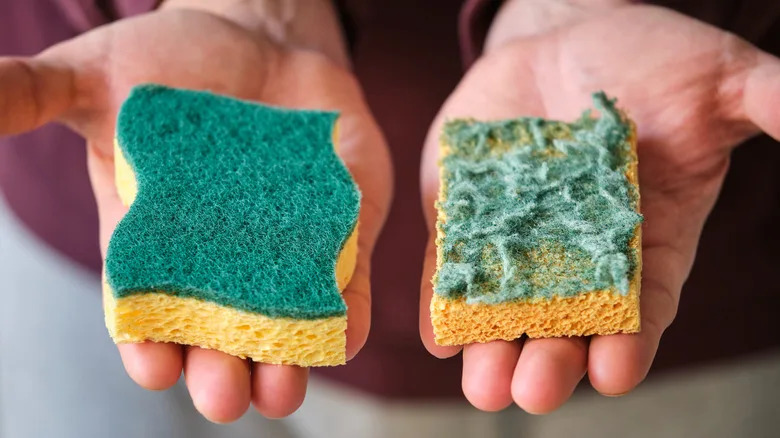
Your kitchen sponge is one of the busiest tools in your home. You use it every day to clean dishes, wipe counters, and tackle spills.
But have you ever stopped to think about how often you should throw it away? If you keep using the same sponge for too long, it can become a hotspot for germs that might affect your health. You’ll discover the simple signs to watch for and learn exactly when it’s time to toss your sponge.
Keep reading to protect your kitchen and keep your home fresh and safe.

Credit: www.yahoo.com
Kitchen Sponge Lifespan
Kitchen sponges are essential for cleaning but do not last forever. They gather germs and wear out over time. Knowing the typical lifespan helps keep your kitchen safe and clean.
Most kitchen sponges last about one to two weeks. This short time frame is because sponges stay moist and trap food particles. These conditions help bacteria grow quickly. Regularly replacing your sponge prevents bad smells and contamination.
Signs It’s Time To Replace
- Foul odor that does not go away after washing
- Visible mold or dark spots on the sponge surface
- Sponge feels slimy or unusually soft
- Frayed edges or pieces falling apart
- Stains that cannot be cleaned off
Factors Affecting Durability
- Frequency of use: More use means faster wear
- Type of cleaning tasks: Harsh scrubbing wears sponge quicker
- Moisture level: Constant wetness speeds up decay
- Material quality: Higher-quality sponges last longer
- Cleaning method: Proper sanitizing can extend life

Credit: www.taste.com.au
Risks Of Using Old Sponges
Using an old kitchen sponge can cause serious health problems. Sponges stay wet and warm, making a perfect home for germs. These germs multiply quickly, which can lead to infections. It is important to know the risks before you keep using an old sponge.
Bacterial Growth
Kitchen sponges collect food particles and moisture. This creates a great place for bacteria to grow. Bacteria like Salmonella and E. coli can live in sponges. These bacteria can cause stomach pain, diarrhea, and vomiting. The longer you use a sponge, the more bacteria it holds.
Cross-contamination Dangers
Old sponges spread germs from one surface to another. Using the same sponge for dishes and countertops can transfer bacteria. This can contaminate food and cooking tools. Cross-contamination can cause food poisoning and other illnesses. Throwing away sponges often helps stop the spread of harmful germs.
Cleaning Sponges Safely
Cleaning sponges can harbor germs quickly. Keeping them safe to use is vital for your health. Regular cleaning helps reduce bacteria buildup and unpleasant odors. It also extends the life of your sponge. Learning how to clean sponges safely prevents cross-contamination in your kitchen. This keeps your cooking area cleaner and safer.
Effective Sanitizing Methods
Several ways can sanitize your kitchen sponge effectively:
- Microwave the sponge for one to two minutes while wet to kill bacteria.
- Soak the sponge in a mixture of bleach and water for five minutes.
- Place the sponge in the dishwasher on the top rack during a hot cycle.
- Boil the sponge in hot water for five minutes to disinfect it.
Always ensure the sponge is wet before microwaving to avoid fire hazards. Use gloves when handling bleach solutions for safety.
Frequency Of Cleaning
Cleaning your sponge every day or every other day is best. This prevents bacteria from growing rapidly. If your sponge smells bad or looks worn, replace it immediately. Some experts suggest throwing away kitchen sponges every one to two weeks. Sponges that clean raw meat surfaces need more frequent cleaning or disposal.
Regular cleaning and timely replacement keep your kitchen healthier. It also helps maintain good hygiene while cooking.
Alternatives To Traditional Sponges
Kitchen sponges can harbor bacteria quickly, so replacing them often is important. Natural alternatives like cellulose sponges or silicone scrubbers last longer and clean well without trapping germs. These options help keep your kitchen cleaner and safer.
Switching out your traditional kitchen sponge can lead to a cleaner, more sanitary kitchen. With alternatives that last longer and resist bacteria, you can save both time and effort. Let's explore some options that might just become your new kitchen favorites.
Silicone Scrubbers
Silicone scrubbers are a fantastic alternative to your regular sponge. They are durable, flexible, and easy to clean. Simply toss them in the dishwasher, and they're ready to tackle your next round of dirty dishes. Their non-porous material doesn't harbor bacteria as easily, so they remain fresher longer. Plus, they come in vibrant colors and fun shapes, making kitchen chores a bit more enjoyable. Have you ever tried using one?
Brushes And Cloths
Brushes and cloths offer versatility and effectiveness in your kitchen cleaning routine. Brushes with sturdy bristles can handle tough, stuck-on grime without scratching surfaces. Microfiber cloths are excellent for wiping down counters and appliances, leaving them streak-free. They are washable and reusable, reducing waste and saving you money. By choosing these alternatives, you reduce the frequency of replacing your cleaning tools. What changes will you make for a cleaner kitchen?
Storage Tips To Extend Sponge Life
Proper storage can keep your kitchen sponge usable longer. It stops germs from growing and avoids bad smells. Small habits help maintain sponge hygiene and extend its life.
Drying Techniques
Always let your sponge dry fully after use. A damp sponge grows bacteria fast. Place it in a spot with good air flow. Using a sponge holder with drainage holes works well. Avoid leaving sponges in the sink or closed containers. Sunlight can help dry and sanitize your sponge too.
Avoiding Bacterial Hotspots
Keep your sponge away from areas with lots of germs. Avoid placing it near the trash or dirty dishes. Clean your sponge regularly by microwaving or soaking in vinegar. Replace sponges often to stop bacteria buildup. Use separate sponges for different tasks to reduce cross-contamination.

Credit: www.taste.com.au
Frequently Asked Questions
How Often Should I Replace My Kitchen Sponge?
Replace your kitchen sponge every 1 to 2 weeks. Frequent replacement prevents bacteria buildup and maintains hygiene in your kitchen.
Can I Disinfect A Kitchen Sponge Instead Of Throwing It Away?
Yes, you can disinfect sponges using microwave or bleach methods. However, regular replacement is still essential for food safety.
What Are The Signs To Throw Away A Kitchen Sponge?
Throw away sponges that smell bad, look worn, or feel slimy. These signs indicate harmful bacteria growth and reduced cleaning efficiency.
Does Using A Kitchen Sponge Longer Increase Health Risks?
Yes, using a sponge too long increases bacteria growth, causing potential food contamination and health risks. Regular replacement minimizes this risk.
Conclusion
A kitchen sponge collects many germs quickly. Replace it every one to two weeks. This keeps your kitchen clean and safe. Using an old sponge spreads bacteria and illness. Clean hands and surfaces need fresh sponges. Small steps like this improve home hygiene.
Remember, a fresh sponge helps protect your family. Don't wait too long to throw it away. Simple habits make a big difference in health. Keep your kitchen sponge fresh for better cleaning.