
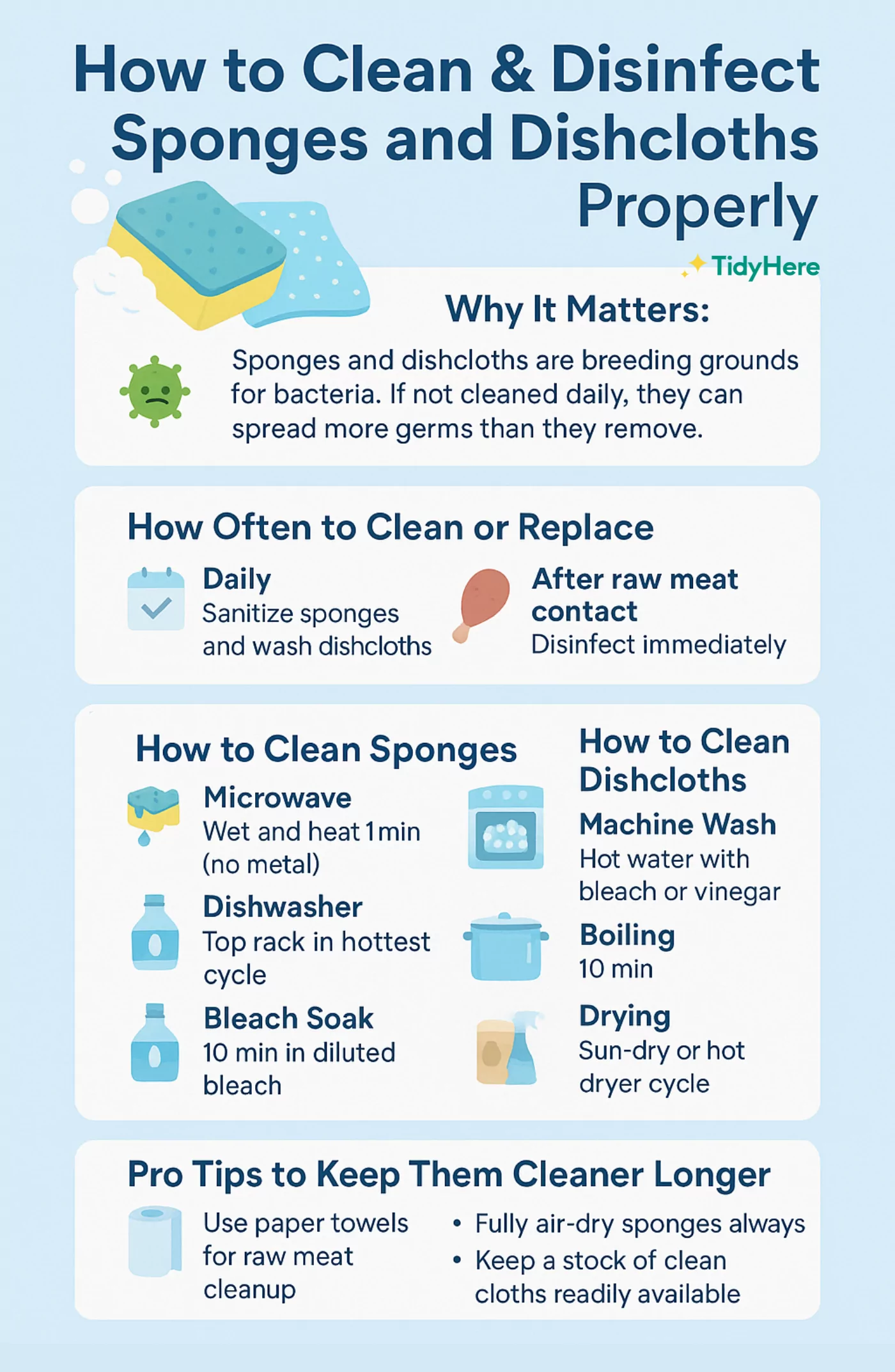
Your kitchen sponge is one of the busiest tools in your home, working hard to keep your dishes clean. But did you know it can also be a hotspot for germs and bacteria?
If you’re not cleaning and disinfecting your sponge properly, you might be spreading those harmful microbes instead of getting rid of them. In this post, you’ll discover simple, effective ways to clean and disinfect your kitchen sponges. By following these easy steps, you can protect your family’s health and keep your kitchen fresh.
Keep reading to learn how to make your sponge safe to use again!
Why Clean Kitchen Sponges
Kitchen sponges are a common tool for cleaning, but they can hold a lot of germs. Dirt and bacteria build up on sponges quickly. This makes it important to clean them often. Regular cleaning helps keep your kitchen safe. It also stops bad smells and keeps the sponge working well longer.
Cleaning sponges is simple and saves money. It protects your family from harmful germs. A clean sponge means a healthier kitchen and less chance of food contamination.
Health Risks Of Dirty Sponges
Dirty sponges carry many germs and bacteria. These can cause food poisoning and infections. Bacteria like E. coli and Salmonella often live on sponges. They spread to dishes and surfaces easily.
Using a dirty sponge can lead to stomach problems and sickness. Germs spread fast in the kitchen. Cleaning sponges reduces these health risks.
Signs Your Sponge Needs Cleaning
- Foul or sour smell coming from the sponge
- Visible dirt or food particles stuck inside
- Sponge feels slimy or overly soft
- Discoloration or dark spots on the surface
- Last cleaned more than a few days ago
Notice these signs early and clean the sponge. Replace sponges that look worn out or damaged. Clean sponges help keep your kitchen fresh and safe.
Best Cleaning Methods
Keeping kitchen sponges clean is key to a healthy kitchen. Dirty sponges can spread germs and cause bad smells. Use effective cleaning methods to kill bacteria and extend sponge life.
Choose a method that fits your routine. Each way has its own benefits and is simple to do at home. Here are the best ways to clean and disinfect your kitchen sponges.
Microwave Disinfection
Wet the sponge completely before microwaving. Heat it on high for about one to two minutes. The microwave kills most bacteria and germs fast. Be careful when removing the sponge; it will be hot. This method works best for synthetic sponges only.
Boiling Water Technique
Place the sponge in boiling water for five minutes. Boiling kills many germs and softens food particles stuck inside. Use tongs to remove the sponge safely. Let it cool before use. This method is easy and requires no special tools.
Dishwasher Cleaning
Put the sponge on the top rack of your dishwasher. Run a full cycle with hot water and detergent. The dishwasher’s heat and soap clean and disinfect the sponge well. This method saves time and works for multiple sponges at once.
Using Bleach Solution
Mix ¾ cup of bleach with one gallon of water. Soak the sponge in the solution for five minutes. Rinse thoroughly with clean water after soaking. Bleach kills almost all bacteria and germs. Use this method once a week for deep cleaning.
Natural Cleaning Alternatives
Kitchen sponges can hold many germs. Soaking them in vinegar or microwaving while damp kills bacteria naturally. Regular cleaning keeps your kitchen safe and fresh.
Cleaning kitchen sponges with natural methods is both effective and eco-friendly. These alternatives use everyday household items, making them accessible and safe. They not only disinfect but also help extend the sponge's life. Let's explore these simple and natural cleaning methods.
Vinegar Soak
Vinegar is a powerful natural disinfectant. To clean your sponge, follow this method: - Fill a bowl with warm water. - Add one cup of white vinegar. - Submerge the sponge in the solution. - Let it soak for 5 to 10 minutes. - Rinse the sponge with cold water. This method removes bacteria without harsh chemicals. It's a gentle yet effective cleaning solution.
Lemon Juice Treatment
Lemon juice has natural antibacterial properties. This makes it perfect for sponge cleaning. - Squeeze the juice of one lemon into a bowl. - Add enough water to cover the sponge. - Soak the sponge for 5 minutes. - Rinse thoroughly with water. This treatment leaves your sponge fresh and clean. Plus, it gives a pleasant citrus scent.
Baking Soda Scrub
Baking soda is a versatile cleaning agent. It neutralizes odors and scrubs away grime. - Dampen the sponge with water. - Sprinkle a generous amount of baking soda. - Scrub the sponge to work in the baking soda. - Rinse it under running water. This method effectively cleans and deodorizes your kitchen sponge. Use it regularly to maintain a fresh sponge.
:max_bytes(150000):strip_icc()/hydrogen-peroxide-uses-home-4174809-05-3c126f03778d46f4858d75c2780429a9.jpg)
Credit: www.thespruce.com
Frequency Of Cleaning
Keeping kitchen sponges clean is essential for a healthy kitchen. Sponges collect germs quickly. Cleaning them often stops bacteria growth and odors. Knowing how often to clean your sponge helps keep your kitchen safe and fresh. Regular care extends the life of your sponge and protects your family from harmful bacteria.
Daily Maintenance Tips
Rinse your sponge well after each use. Squeeze out excess water to keep it dry. Store sponges in a dry place to slow bacteria growth. Use hot water and soap to wash the sponge daily. Microwave the sponge for one minute when wet to kill germs. Replace this with soaking in vinegar or bleach for five minutes once a day.
When To Replace Your Sponge
Change your sponge every one to two weeks. If it smells bad or falls apart, throw it away. Sponges with tears or discoloration need replacing. Using old sponges can spread bacteria and make cleaning harder. Keep a supply of fresh sponges ready for quick replacement.
Preventing Sponge Contamination
Preventing sponge contamination is key to keeping your kitchen clean and safe. Sponges often hold bacteria and food particles. This can spread germs across surfaces and dishes. Taking simple steps can reduce contamination and keep sponges fresher longer.
Proper Sponge Storage
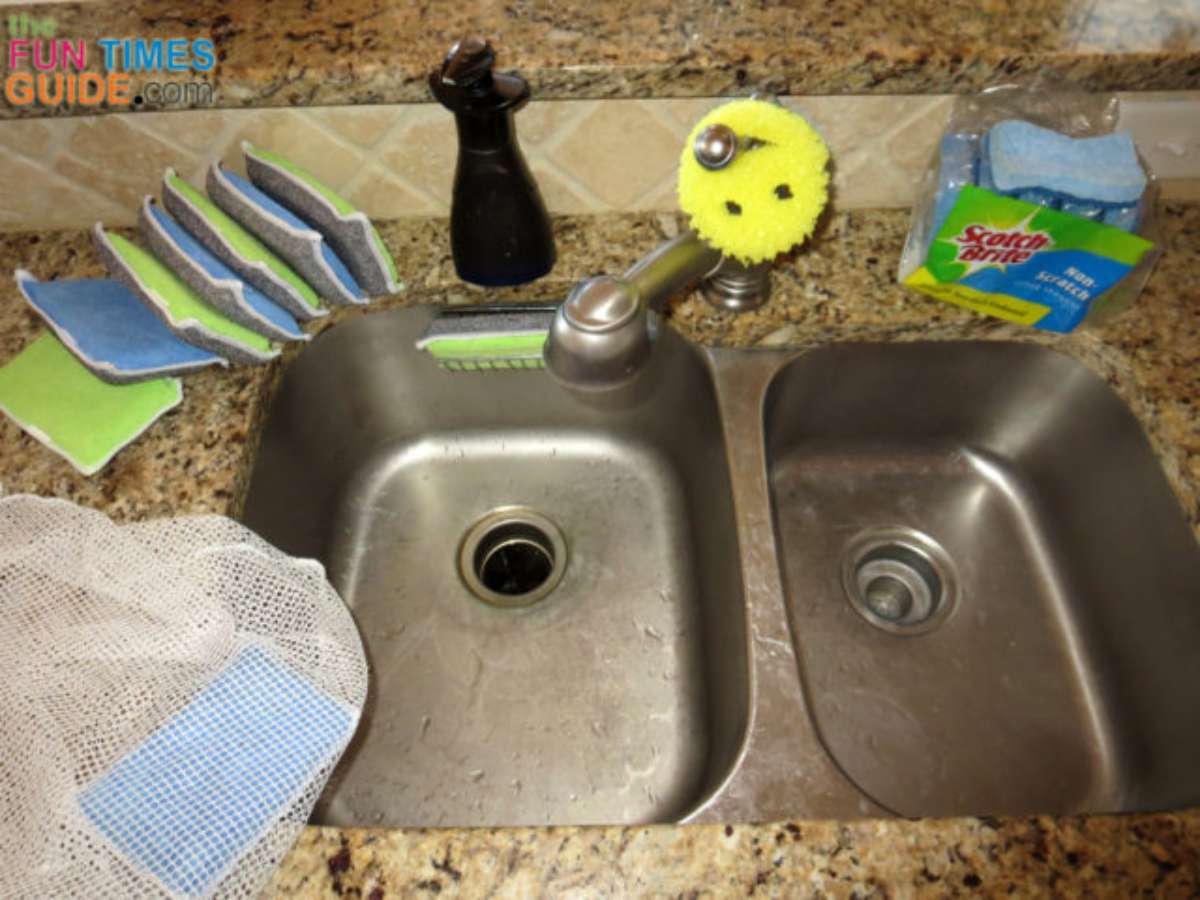
Store sponges in a dry place to stop bacteria growth. Wet sponges breed germs quickly. Use a holder that lets water drain away. Avoid closed containers where moisture stays trapped. Change sponge storage spots often to keep them clean.
Using Separate Sponges For Different Tasks
Keep one sponge for dishes and another for counters. Using separate sponges lowers cross-contamination risks. Label or color-code sponges to remember their tasks. Replace sponges regularly, especially if used for raw meat areas. This practice protects your family from harmful bacteria.

Credit: tidyhere.com
Credit: household-tips.thefuntimesguide.com
Frequently Asked Questions
How Often Should I Clean Kitchen Sponges?
Clean kitchen sponges at least once a week to remove bacteria. Frequent cleaning prevents odor and cross-contamination. Replace sponges every 2-4 weeks for best hygiene. Regular disinfection keeps your kitchen safer and more sanitary.
What Is The Best Method To Disinfect Sponges?
Microwaving damp sponges for 1-2 minutes kills most bacteria effectively. Alternatively, soak sponges in a bleach solution for 5 minutes. Both methods sanitize sponges without damaging them. Always ensure sponges are wet before microwaving to avoid fire.
Can I Use A Dishwasher To Clean Sponges?
Yes, placing sponges in the dishwasher’s top rack is effective. Use a hot water cycle with detergent for thorough cleaning. This method kills germs and removes food particles. Make sure sponges are dishwasher-safe before cleaning this way.
Why Should I Avoid Leaving Sponges Wet?
Wet sponges create a breeding ground for bacteria and mold. Always squeeze out excess water after use. Store sponges in a dry, ventilated area to prolong lifespan. Dry sponges reduce unpleasant odors and improve kitchen hygiene.
Conclusion
Keeping kitchen sponges clean is important for health. Regularly wash and disinfect sponges to stop germs. Use simple methods like microwaving or soaking in bleach. Replace sponges often to avoid bacteria buildup. Clean sponges help keep your kitchen safe and fresh.
Small steps make a big difference in hygiene. Remember, a clean sponge means a cleaner kitchen. Take care of your sponges to protect your family.