
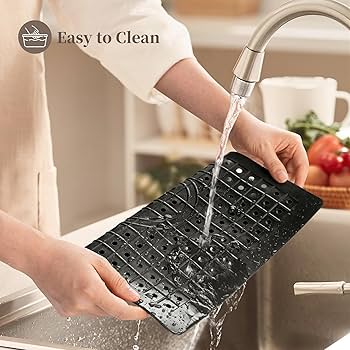
Your kitchen sink mat works hard every day, catching drips and keeping your sink clean. But have you ever stopped to think about what’s hiding on it?
Over time, grease, food particles, and bacteria build up, turning your mat into a hotspot for germs. Cleaning it might seem like a hassle, but it doesn’t have to be. You’ll discover simple and effective ways to clean your kitchen sink mats, making your kitchen healthier and fresher.
Keep reading, and you’ll learn easy steps that save you time and protect your family’s well-being.

Credit: www.amazon.com
Why Clean Sink Mats Matter
Clean sink mats keep your kitchen safe and healthy. They stop dirt and germs from building up under dishes. A dirty mat can spread bacteria that cause food poisoning. Regular cleaning helps avoid this risk.
Cleaning also keeps the mat looking fresh. A clean mat lasts longer and works better. It prevents bad smells and slippery surfaces that can cause accidents. Simple care makes your kitchen more pleasant.
Prevents Bacteria And Mold Growth
Sink mats often stay wet, a perfect place for bacteria and mold. These can harm your health and cause allergies. Cleaning removes moisture and food particles that feed germs.
Maintains Kitchen Hygiene
Dirty sink mats spread germs to dishes and utensils. Clean mats reduce cross-contamination. This keeps your kitchen cleaner and safer for cooking.
Extends Mat Lifespan
Food scraps and dirt break down mat material over time. Cleaning stops damage and keeps the mat strong. This saves money by delaying replacement.
Prevents Unpleasant Odors
Trapped food and moisture cause bad smells from the sink. Cleaning removes these odor sources. Your kitchen smells fresh and inviting.
Improves Safety
Wet or dirty mats can be slippery. Clean mats provide better grip for dishes and hands. This reduces the chance of slips and falls.
Common Sink Mat Materials
Kitchen sink mats protect your sink and dishes from scratches and damage. They come in various materials, each with unique features. Knowing the type of mat helps in proper cleaning and maintenance. Below are the most common materials used for sink mats.
Rubber Mats
Rubber mats are flexible and durable. They grip the sink surface well to prevent slipping. Cleaning is simple with warm, soapy water. Avoid harsh chemicals that can damage rubber. These mats dry quickly and resist mold growth.
Silicone Mats
Silicone mats are soft and heat resistant. They can handle hot pots and pans without melting. Silicone is easy to clean and usually dishwasher safe. They resist stains and do not absorb water. This makes them hygienic and long-lasting.
Plastic Mats
Plastic mats are lightweight and affordable. They often have holes for water drainage. Cleaning requires mild soap and a soft brush. Avoid abrasive scrubbers that can scratch the surface. Plastic mats may wear out faster but are easy to replace.
Tools And Supplies Needed
Gather a soft brush, mild detergent, warm water, and a clean cloth. These simple tools help remove dirt and grime easily. Prepare a basin or sink to soak the mats for a thorough clean.
Cleaning kitchen sink mats might seem straightforward, but having the right tools and supplies can make all the difference. You'll not only save time but also ensure your mats are thoroughly clean and free from harmful bacteria. Let's dive into the essentials you'll need to get the job done effectively.
Essential Cleaning Tools
To tackle the grime on your kitchen sink mats, start with a sturdy scrub brush. Choose one with firm bristles to effectively remove residue and stains. A toothbrush can be handy for reaching into crevices and corners. Next, gather a sponge or a microfiber cloth. These are perfect for wiping down and rinsing off the mats. A microfiber cloth is particularly excellent as it absorbs more water and doesn't leave lint behind.
Cleaning Supplies
You'll need a good dish soap. Opt for one that has a degreaser for tackling stubborn grease spots. It's gentle on the mats but tough on grime. White vinegar is another must-have. It's a natural disinfectant that helps eliminate odors and bacteria. Mix it with water in equal parts for an effective cleaning solution. Baking soda is your go-to for stubborn stains and odors. Its mild abrasiveness works wonders in lifting grime without scratching the surface.
Additional Items
A bucket is essential for mixing your cleaning solutions and rinsing your mats. Ensure it's large enough to submerge the mats for a thorough soak. Don't forget gloves to protect your hands from hot water and cleaning solutions. Choose a pair that's durable yet flexible enough to allow movement. Lastly, keep a drying rack or a clean towel ready. After cleaning, it's crucial to allow your mats to air dry completely to prevent mold and mildew. By equipping yourself with these tools and supplies, you'll make cleaning your kitchen sink mats a breeze. What other tools do you find indispensable when cleaning? Share your thoughts and experiences!

Credit: www.amazon.com
Daily Cleaning Tips
Daily cleaning helps keep kitchen sink mats fresh and safe. Dirt and food particles can build up quickly. Cleaning every day stops germs and bad smells. It also extends the mat’s life and keeps your sink area tidy.
Remove Debris After Each Use
Shake the mat gently to remove crumbs and small food pieces. Wipe it with a damp cloth to clear any sticky spots. This quick step prevents grime from hardening.
Rinse With Warm Water
Rinse the mat under warm water to wash away soap and dirt. Warm water loosens grease and helps keep the mat clean. Do this daily to stop buildup.
Use Mild Soap For Spot Cleaning
Apply a small amount of mild dish soap on a sponge. Gently scrub any stains or spots on the mat. Rinse well to avoid soap residue.
Dry The Mat Properly
Always dry the mat after cleaning to prevent mold and mildew. Hang it or place it flat in a well-ventilated area. Make sure it is completely dry before placing it back.
Inspect For Damage
Check the mat for cracks or tears during daily cleaning. Replace it if damage is visible to avoid bacteria growth. A clean, intact mat protects your sink better.
Deep Cleaning Methods
Kitchen sink mats collect dirt, grime, and bacteria over time. Deep cleaning removes buildup and restores freshness. These methods are simple and effective. They keep mats hygienic and extend their lifespan.
Soaking In Vinegar Solution
Fill a basin with equal parts water and white vinegar. Submerge the sink mat fully in the solution. Let it soak for 30 minutes to an hour. Vinegar breaks down mineral deposits and kills germs. After soaking, scrub gently with a soft brush. Rinse thoroughly with clean water. Air dry the mat before placing it back in the sink.
Using Baking Soda Paste
Make a paste with baking soda and a small amount of water. Apply the paste evenly over the mat’s surface. Baking soda helps remove stains and neutralizes odors. Let the paste sit for 15 to 20 minutes. Scrub the mat with a soft brush to lift dirt. Rinse well with warm water. Dry the mat completely to prevent mildew growth.
Dishwasher Cleaning
Check if the sink mat is dishwasher safe. Place the mat on the top rack of the dishwasher. Use a regular cycle with mild detergent. The hot water and steam clean deep into the mat’s grooves. Remove the mat once the cycle finishes. Let it air dry fully before use. This method saves time and uses less effort.
Dealing With Stubborn Stains
Stubborn stains on kitchen sink mats can be a real challenge. These mats often collect food particles, grease, and grime that simple rinsing can't remove. Tackling these tough spots requires a bit more effort and the right approach to restore your mat's cleanliness and hygiene.
Using Baking Soda And Vinegar For Tough Stains
Baking soda and vinegar create a natural cleaning duo that works wonders on stubborn stains. Sprinkle baking soda generously over the stained areas of your mat. Then, spray or pour white vinegar on top to create a fizzing reaction that lifts grime.
Let it sit for 10-15 minutes before scrubbing gently with a soft brush. This method breaks down grease without harsh chemicals, making it safe and effective for regular use. Have you tried this combination on your mats yet?
Applying Dish Soap And Warm Water
Dish soap is designed to cut through grease, making it a great option for stained sink mats. Mix a few drops of dish soap with warm water in a basin or sink. Soak your mat for 15-20 minutes to loosen the dirt embedded in the grooves.
After soaking, use a sponge or brush to scrub the mat gently. Rinse thoroughly to remove soap residue and check if stains remain. This simple process often removes stains that look impossible to clean.
Using A Toothbrush For Detail Cleaning
Sometimes stains hide in the small crevices of your mat. A toothbrush can reach spots that larger brushes miss. Dip the toothbrush in your cleaning solution—whether it's baking soda paste or soapy water—and scrub those tight areas carefully.
This focused scrubbing can dramatically improve the mat’s appearance without damaging the material. Do you have a worn-out toothbrush handy for this purpose? It’s a perfect tool that often gets overlooked.
Drying And Preventing Future Stains
After cleaning, it’s crucial to dry your mat completely to prevent mold and mildew buildup. Hang it over the sink or lay it flat in a well-ventilated area. Keeping your mat dry can reduce the chance of stubborn stains developing again.
Consider rinsing your mat regularly after heavy use to stop stains from setting in. What small habit could you add to your kitchen routine to keep your sink mat looking fresh?
Drying And Maintaining Mats
Properly drying and maintaining your kitchen sink mats is key to keeping them clean and extending their lifespan. Wet mats can become breeding grounds for mold and unpleasant odors. Taking a few extra minutes to dry them thoroughly and maintain their condition will save you from frequent replacements and keep your kitchen hygienic.
How To Dry Kitchen Sink Mats Effectively
After washing your mats, shake off excess water gently. Avoid wringing them as this can damage the material.
Lay the mats flat on a clean, dry towel or hang them over a drying rack. Make sure they are in a well-ventilated area with good air circulation.
Sunlight can help speed up drying and reduce bacteria, but avoid prolonged exposure to direct sun as it might cause fading or warping.
Simple Tips To Maintain Your Sink Mats
- Regular Cleaning:Wash your mats weekly to prevent grime buildup and reduce bacteria growth.
- Inspect for Damage:Check for cracks or tears regularly. Damaged mats can trap dirt and harbor germs.
- Rotate Mats:If you have multiple mats, switch them out every few weeks to allow each one to dry completely and rest.
Signs Your Sink Mat Needs Replacement
Have you noticed persistent odors despite thorough cleaning? This often signals deep-seated mold or bacteria.
Also, if the mat feels sticky or has visible cracks, it’s time to replace it. Using a damaged mat can undermine your cleaning efforts.
Keeping an eye on these signs helps you maintain a truly clean and safe kitchen environment.

Credit: www.amazon.com
Preventing Odors And Bacteria
Preventing odors and bacteria in kitchen sink mats is crucial for a fresh and healthy kitchen. These mats often stay damp and collect food particles, creating a perfect place for germs and smells. Proper cleaning and care stop these problems before they start.
Regular Rinsing And Drying
Rinse the sink mat after each use to remove food scraps and soap. Shake off excess water and hang the mat to dry completely. Dry mats prevent bacteria growth and reduce bad smells.
Use Mild Cleaning Solutions
Clean the mat with a mild detergent or baking soda paste. Avoid harsh chemicals that can damage the mat. Gentle cleaners remove dirt and kill germs safely.
Deep Cleaning With Vinegar
Soak the mat in a mixture of white vinegar and water. Vinegar kills bacteria and neutralizes odors naturally. Let it soak for 15-20 minutes, then rinse well.
Regular Inspection For Damage
Check the mat often for cracks or tears. Damaged mats hold more bacteria and odors. Replace old mats to keep your kitchen hygienic.
Frequently Asked Questions
How Often Should I Clean Kitchen Sink Mats?
Clean kitchen sink mats weekly to prevent bacteria buildup. Frequent cleaning keeps mats hygienic and odor-free, extending their lifespan.
What Is The Best Way To Wash Kitchen Sink Mats?
Hand wash mats with warm soapy water or use a gentle cycle in the washing machine. Always air dry mats completely.
Can I Use Bleach To Clean Sink Mats Safely?
Yes, dilute bleach can disinfect sink mats. Avoid strong bleach concentrations to prevent mat damage and discoloration.
How Do I Remove Tough Stains From Sink Mats?
Apply baking soda paste or vinegar directly on stains. Let it sit, then scrub gently with a soft brush before rinsing.
Conclusion
Keeping kitchen sink mats clean helps stop germs and bad smells. Regular washing keeps mats fresh and lasts longer. Use gentle soap and warm water for best results. Let mats dry completely before putting them back. A clean mat makes your kitchen safer and nicer.
Simple care saves you time and effort later. Try these easy steps to keep your sink mat spotless. Clean mats mean a cleaner, happier kitchen every day.