

Is your kitchen sponge smelling worse than last week’s leftovers? If you think just rinsing it under water will do the trick, think again.
A smelly sponge can harbor harmful bacteria and make your whole kitchen feel less fresh. But don’t worry—you don’t need to throw it away or buy a new one every time it starts to stink. You’ll discover simple, effective ways to clean your kitchen sponges and keep them smelling fresh longer.
Ready to say goodbye to that unpleasant odor and keep your kitchen cleaner? Let’s dive in.
Causes Of Sponge Odors
Understanding why your kitchen sponge starts to smell is the first step toward keeping it fresh and clean. The unpleasant odor usually comes from tiny living things and leftover food particles trapped inside. Let’s look closer at what causes these smells so you can tackle them effectively.
Bacteria And Mold Growth
Your sponge is a perfect home for bacteria and mold because it stays damp for long periods. These microorganisms multiply quickly in the warm, moist environment, producing unpleasant odors that can linger in your kitchen. Have you noticed that the smell often gets worse the longer you use the same sponge?
Regularly cleaning your sponge helps, but it's important to dry it completely between uses. Otherwise, you give bacteria and mold the chance to keep growing. Remember, a smelly sponge isn’t just annoying—it can also spread germs.
Food Residue And Moisture
After scrubbing dishes or wiping counters, bits of food get trapped deep inside the sponge's pores. Combined with moisture, these leftovers start to rot, creating a foul smell. You might think rinsing your sponge with water is enough, but often it's not.
Using hot water and soap to wash the sponge or microwaving it can help break down food residue. Think about the last time you noticed a bad smell—did you clean your sponge thoroughly or just rinse it quickly? Small changes in how you care for your sponge can make a big difference.
Daily Sponge Care
Daily sponge care is essential to keep your kitchen sponge fresh and odor-free. Small habits can make a big difference in preventing bacteria buildup and bad smells. You might be surprised how simple actions like rinsing and drying your sponge correctly can extend its life and improve kitchen hygiene.
Rinsing And Squeezing Properly
After using your sponge, rinse it thoroughly with hot water to wash away food particles and soap. Make sure to rinse until the water runs clear to remove hidden debris that can cause odors.
Next, squeeze out as much water as possible. The wetter your sponge stays, the faster bacteria grow. I used to just rinse and leave my sponge damp, which made it smell terrible within a day.
Try to press from different angles to get rid of trapped moisture inside the sponge’s pores. Your sponge should feel damp but not dripping wet when you finish.
Air Drying Techniques
Once your sponge is rinsed and squeezed, let it air dry completely before the next use. Leaving it in a wet sink or a closed container traps moisture and encourages bacteria growth.
Place your sponge in a spot with good airflow, such as a dish rack or a sponge holder with drainage holes. Elevating it on a small stand or wire rack helps air circulate around it faster.
Have you noticed how a sponge left on the countertop dries faster than one in the sink? That’s why choosing the right drying spot can cut down on smell dramatically.
Effective Cleaning Methods
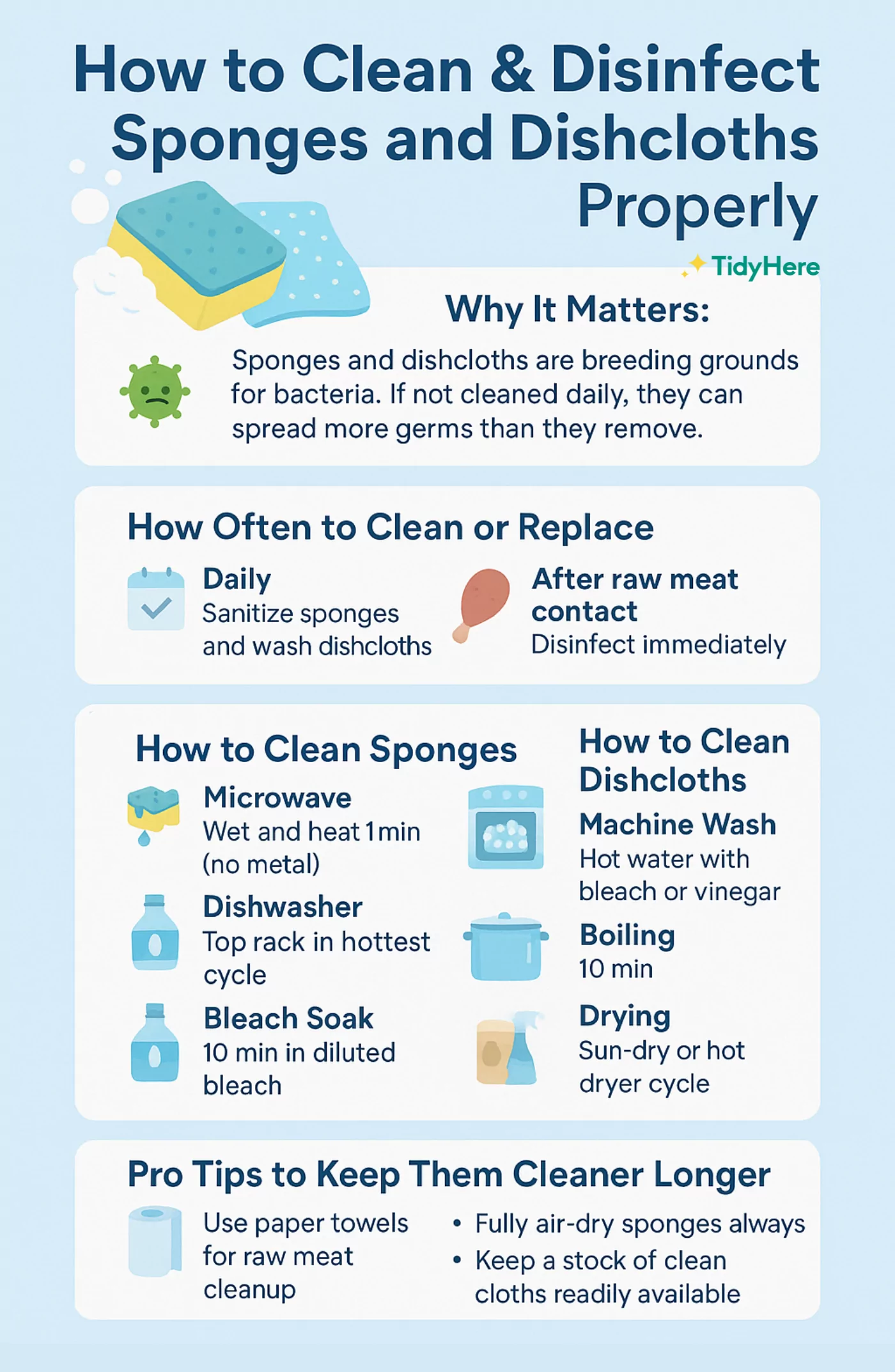
Kitchen sponges can trap odors and bacteria quickly. Soaking them in vinegar or microwaving when damp helps kill germs and remove smells. Regular cleaning keeps sponges fresh and safe for use.
Cleaning smelly kitchen sponges is crucial to maintaining a fresh and healthy kitchen environment. With a few simple techniques, you can easily rid your sponge of odors and bacteria. Let’s explore some effective cleaning methods that will leave your kitchen tools fresh and ready for use.
Microwave Sanitizing
Sanitizing your sponge in the microwave is quick and highly effective. Wet your sponge thoroughly, then place it in the microwave on high for about 1-2 minutes. Ensure it's wet to avoid any fire hazards, and be cautious as it will be hot. This method kills bacteria and eliminates odors swiftly. Have you ever noticed how much fresher your kitchen feels after a deep clean? This simple trick can bring that freshness back to your sponge.
Dishwasher Cleaning
Running your sponge through a dishwasher cycle is another easy way to clean it. Place the sponge in the top rack of your dishwasher and run it with your regular load. The combination of hot water and detergent works wonders in removing germs and smells. If you’re already running your dishwasher, why not toss in your sponge? It's an efficient way to tackle two tasks at once.
Soaking In Vinegar Or Bleach
Soaking your sponge can be a powerful method to eliminate stubborn bacteria and odors. You can choose between vinegar or bleach, depending on your preference. For vinegar, soak the sponge in a bowl with equal parts water and vinegar for about 5 minutes. For bleach, mix 3/4 cup of bleach in a gallon of water and soak for 5 minutes. Both methods are effective, but remember to rinse thoroughly with water afterward. Have you tried this method before? It's surprisingly simple and leaves your sponge smelling clean. With these methods, you can ensure your kitchen sponges are always fresh and ready to tackle any mess. Which method will you try today to keep your kitchen fresh?

Credit: sqwishful.com
Natural Deodorizing Tips
Kitchen sponges often trap odors from food and moisture. Natural deodorizing tips use simple household items to freshen sponges. These methods avoid harsh chemicals and keep your kitchen safe. You can reuse your sponges longer and reduce waste. Try these easy ways to remove bad smells naturally.
Lemon Juice Treatment
Lemon juice has natural antibacterial properties. It also leaves a fresh, clean scent on sponges.
- Soak the sponge in a bowl of lemon juice.
- Let it sit for 5 to 10 minutes.
- Rinse the sponge thoroughly with warm water.
- Dry the sponge in a sunny spot to boost freshness.
This treatment helps break down odors and kills some bacteria.
Baking Soda Scrub
Baking soda neutralizes bad smells and cleans effectively. It is gentle on sponges and easy to use.
- Sprinkle baking soda over the damp sponge.
- Rub the sponge gently to scrub away odor-causing dirt.
- Rinse the sponge well under running water.
- Allow it to dry fully before reuse.
This simple scrub refreshes your sponge and reduces smell quickly.
When To Replace Kitchen Sponges
Knowing when to replace kitchen sponges is essential for a clean and healthy kitchen. Sponges collect bacteria and odors over time. Using old sponges can spread germs and make cleaning less effective.
Regularly checking your sponge helps keep your kitchen fresh. Changing sponges at the right time prevents bad smells and keeps surfaces hygienic.
Signs Of Wear And Tear
- Sponges become hard or crumbly.
- They start to smell bad even after cleaning.
- Visible stains or discoloration appear.
- Pieces of sponge break off during use.
- The sponge loses its original texture and softness.
Recommended Replacement Frequency
Replace kitchen sponges every one to two weeks. More frequent changes are needed with heavy use. Sponges used for raw meat should be replaced sooner. Regular replacement stops bacteria buildup and bad odors. Keeping a schedule ensures your kitchen stays clean and safe.

Credit: household-tips.thefuntimesguide.com
Alternative Cleaning Tools
Smelly kitchen sponges are a common nuisance, but switching to alternative cleaning tools can make a big difference in keeping your kitchen fresh and hygienic. These tools often dry faster and resist bacteria better than traditional sponges. Have you ever wondered if you could cut down on kitchen odors simply by changing what you use to clean?
Reusable Cloths
Reusable cloths are a smart alternative to sponges because they dry quickly and can be washed easily. Made from materials like microfiber or cotton, they trap dirt and grease effectively without harboring as many bacteria.
You can toss them in the washing machine or boil them to sanitize. I once switched to reusable cloths and noticed my kitchen smelled cleaner within days. They also reduce waste since you can use them multiple times before replacing.
Try keeping a few cloths on hand—use one for dishes and another for wiping counters to avoid cross-contamination. Could this simple swap save you time and trouble in the long run?
Silicone Scrubbers
Silicone scrubbers offer a unique texture that scrubs away grime without scratching your cookware. Unlike sponges, they don’t absorb water or food particles, which helps prevent foul odors.
They dry rapidly and can be cleaned in the dishwasher or boiled for deep cleaning. Personally, I found silicone scrubbers to be a game-changer—they last longer and feel fresher even after weeks of use.
If you struggle with smelly sponges, consider giving silicone scrubbers a try. How much easier would your kitchen cleaning be if your tools stayed cleaner and smelled better?
Credit: tidyhere.com
Frequently Asked Questions
How Often Should I Clean Kitchen Sponges?
You should clean kitchen sponges every 1-2 days. Regular cleaning prevents bacteria buildup and bad odors. Frequent cleaning ensures sponges stay hygienic and safe for use. Replace sponges if they remain smelly after cleaning.
What Is The Best Way To Disinfect A Sponge?
Microwaving a damp sponge for 1-2 minutes disinfects it effectively. Alternatively, soak sponges in a bleach solution for 5 minutes. Both methods kill bacteria and remove unpleasant smells safely.
Can I Use Vinegar To Clean Kitchen Sponges?
Yes, soaking sponges in white vinegar for 5 minutes kills bacteria. Vinegar’s acidity helps eliminate odors and germs. It’s a natural, safe, and eco-friendly cleaning option.
How Do I Remove Bad Odors From Kitchen Sponges?
To remove odors, soak sponges in warm water with baking soda. Baking soda neutralizes smells and loosens grime. Rinse thoroughly and let sponges air dry completely.
Conclusion
Cleaning smelly kitchen sponges keeps your kitchen fresh and healthy. Regular washing stops germs and bad odors. Try simple methods like soaking in vinegar or microwaving damp sponges. Replace sponges often to avoid buildup of bacteria. Clean sponges help dishes stay clean and safe.
A small effort goes a long way in kitchen hygiene. Keep your kitchen sponge fresh with easy daily care. Smelly sponges don’t have to be a problem anymore.