
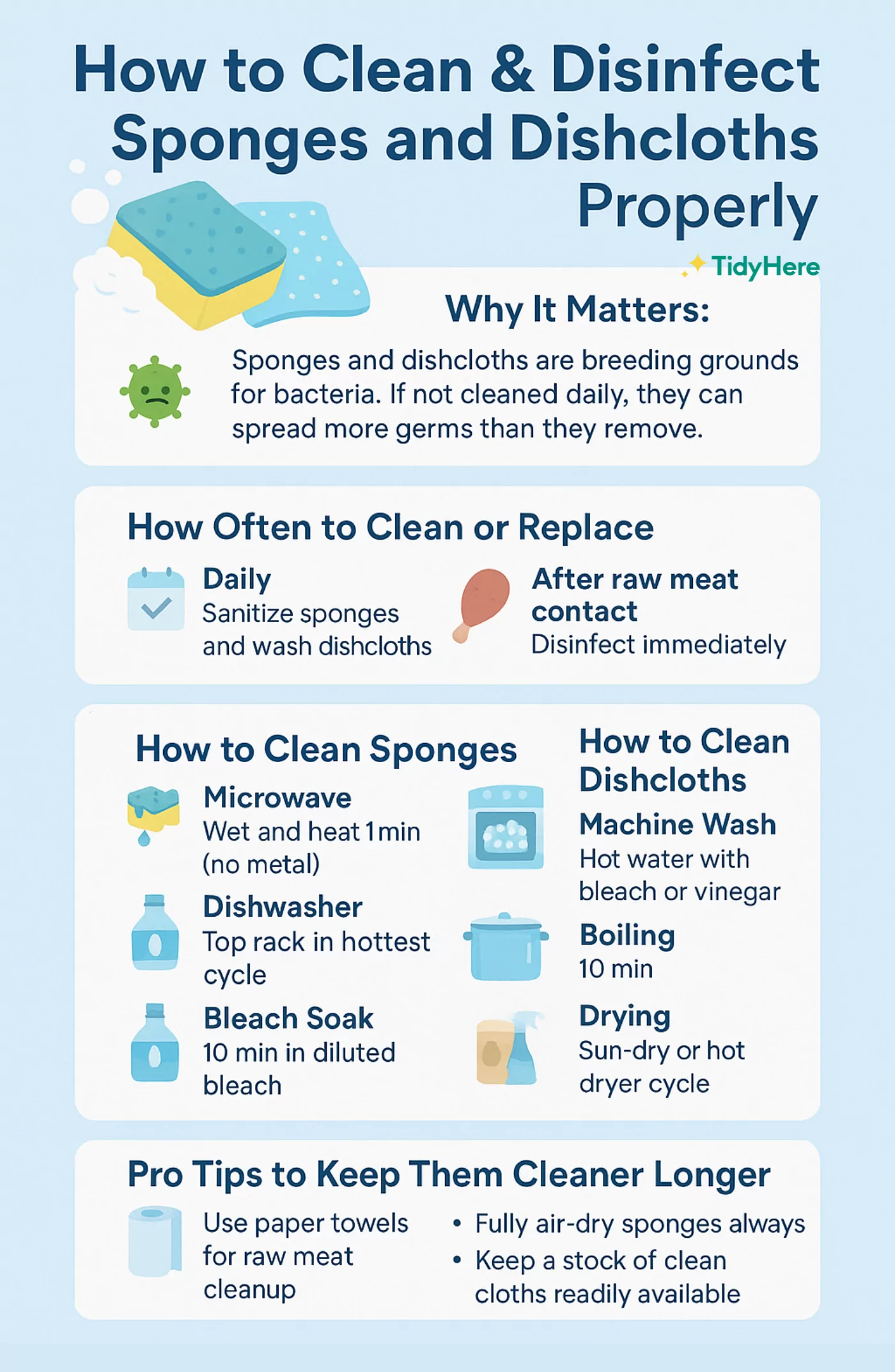
Your kitchen sponge is one of the dirtiest items in your home, yet you use it every day to clean your dishes and surfaces. If you don’t sanitize it properly, harmful bacteria can build up and put your health at risk.
But don’t worry—keeping your sponge clean is easier than you think. You’ll discover simple, effective ways to sanitize your kitchen sponge and keep your kitchen safe and fresh. Keep reading to protect yourself and your family with these quick tips!

Credit: tidyhere.com
Why Sanitize Kitchen Sponges
Kitchen sponges are used daily to clean dishes, counters, and spills. They soak up food particles and moisture, creating a perfect home for germs. Regular sanitizing stops these germs from multiplying and spreading. Clean sponges keep your kitchen safe and your family healthy.
Common Germs In Sponges
Sponges can carry many harmful germs, including:
- E. coli– from raw meat and vegetables
- Salmonella– often found on poultry and eggs
- Staphylococcus– from human skin and food contact
- Fungi and mold– grow in wet, warm environments
These germs survive because sponges stay damp and trap food bits. Germs multiply quickly, making sponges a major source of contamination.
Health Risks Of Dirty Sponges
Dirty sponges can cause food poisoning and infections. Germs spread to dishes, counters, and hands. This can lead to:
- Stomach cramps and diarrhea
- Vomiting and nausea
- Skin infections and rashes
- Respiratory problems from mold spores
Sanitizing sponges reduces these risks. It helps stop the spread of illness in your home.
Signs Your Sponge Needs Cleaning
Kitchen sponges are a breeding ground for germs and bacteria. Knowing when your sponge needs cleaning helps keep your kitchen safe. Certain signs show your sponge is dirty and needs attention.
Ignoring these signs can lead to cross-contamination and bad smells. Watch for these clear indicators to maintain hygiene.
Unpleasant Odors
A strong, bad smell from your sponge means bacteria are growing. Fresh sponges usually have no odor or a mild, clean scent. If your sponge smells sour or rotten, it needs immediate cleaning.
Odors often come from leftover food particles trapped inside the sponge. These particles rot and cause the foul smell. Regularly check your sponge for any strange smells.
Visible Wear And Tear
Look closely at your sponge’s surface for damage. Rips, holes, or frayed edges show it is worn out. A sponge with visible wear traps more dirt and germs.
Worn sponges lose their cleaning power and harbor bacteria more easily. Replace your sponge if it looks damaged or feels slimy. Keeping a sponge in good condition helps keep your kitchen clean.
Simple Methods To Sanitize Sponges
Sanitizing kitchen sponges helps keep germs away and your kitchen clean. Simply soak them in vinegar or microwave damp sponges for a minute to kill bacteria. Regular cleaning extends sponge life and ensures safe use.
Keeping your kitchen sponge clean is crucial for maintaining a healthy home environment. Sponges can harbor bacteria if not sanitized properly, but with a few simple methods, you can ensure they remain fresh and safe to use. Let's explore some effective ways to sanitize your kitchen sponge and keep those germs at bay.
Microwave Cleaning
Microwaving your sponge is a quick and effective method. Simply wet the sponge and place it in the microwave for about two minutes. The heat will kill most bacteria, but remember to let it cool before handling.
Dishwasher Sanitizing
Place your sponge in the dishwasher during a regular wash cycle. The hot water and detergent work together to sanitize the sponge. It's a hands-free method that fits easily into your routine.
Boiling Water Technique
Boiling your sponge is another powerful way to sanitize it. Submerge the sponge in boiling water for about five minutes. This method is particularly effective for killing bacteria and doesn't require any chemicals.
Bleach Solution Soak
A bleach soak is perfect for a deep clean. Mix a small amount of bleach with water and let the sponge soak for a few minutes. Rinse thoroughly afterwards to remove any bleach residue. Each of these methods can be easily integrated into your cleaning routine. By regularly sanitizing your sponges, you protect your family from potential germs. Which method will you try first to ensure a healthier kitchen?

Credit: www.walmart.com
Natural Alternatives For Sponge Cleaning
Cleaning your kitchen sponge naturally is a smart choice for maintaining hygiene without harsh chemicals. Natural alternatives can be just as effective and are often gentler on your skin and the environment. These simple ingredients, often found in your kitchen, can help keep your sponge fresh and bacteria-free.
Vinegar Soak
Vinegar is a powerful natural cleaner due to its acidity, which kills many types of bacteria. To use this method, soak your sponge in a bowl filled with equal parts white vinegar and water for about 5 to 10 minutes.
After soaking, rinse your sponge thoroughly with clean water. This process not only sanitizes but also helps remove unpleasant odors. Have you noticed how vinegar leaves a clean, fresh scent behind?
Lemon Juice Treatment
Lemon juice contains natural antibacterial properties and a pleasant citrus smell. Squeeze fresh lemon juice over your damp sponge and let it sit for 5 to 7 minutes before rinsing it off.
The acidity in lemon juice breaks down grime and disinfects the sponge effectively. Plus, the fresh lemon scent can brighten up your kitchen atmosphere. Could this be your new favorite cleaning hack?
Tips To Extend Sponge Lifespan
Extending the life of your kitchen sponge saves money and keeps your kitchen cleaner. A sponge lasts longer with simple habits. These tips help prevent bacteria growth and keep the sponge fresh.
Regular Drying Practices
Drying your sponge properly stops germs from growing. Always squeeze out water after use. Leave the sponge in a place with good air flow. Avoid leaving it in the sink or on a wet surface.
- Use a sponge holder that drains water well.
- Change the sponge’s position to dry all sides.
- Microwave damp sponge for 30 seconds to kill bacteria.
Proper Storage Ideas
Store your sponge where it can dry fast and stay clean. Avoid keeping it near the sink or on dirty surfaces. Keep it separate from other cleaning tools to stop cross-contamination.
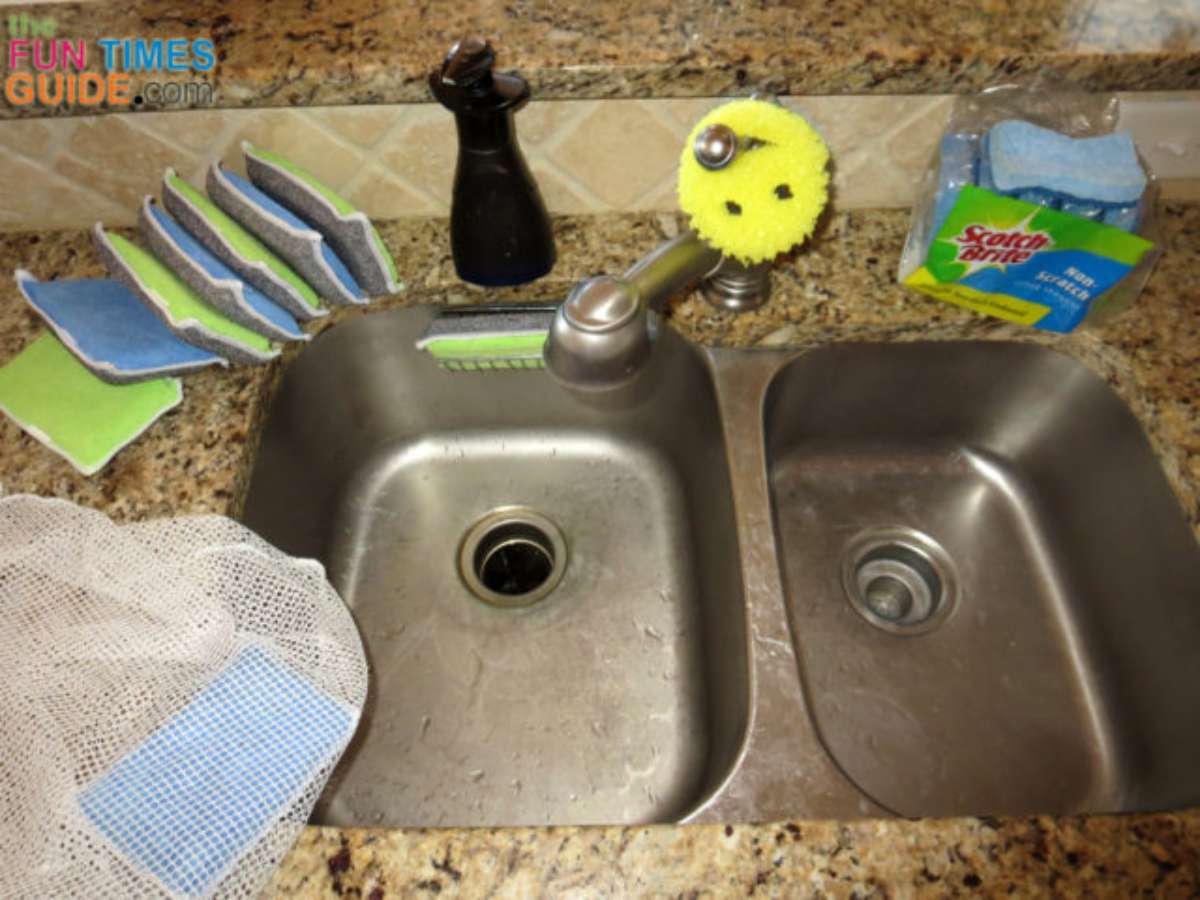
- Use a sponge caddy that allows air circulation.
- Keep sponge away from food prep areas.
- Replace sponge every 1–2 weeks, even with good care.
Credit: household-tips.thefuntimesguide.com
When To Replace Your Kitchen Sponge
Knowing when to replace your kitchen sponge is key for a clean and safe kitchen. Sponges can harbor bacteria even after cleaning. Regular replacement helps avoid germs and bad smells. Pay attention to signs that show your sponge needs changing. This keeps your kitchen hygienic and your dishes cleaner.
Frequency Recommendations
Replace kitchen sponges every one to two weeks. This short time prevents bacteria build-up. If you use the sponge heavily, change it more often. Signs like bad odor or discoloration mean replace it now. Keeping a schedule helps maintain kitchen cleanliness.
Choosing The Right Sponge
Pick sponges that dry quickly and resist bacteria. Look for antimicrobial options for longer use. Soft sponges clean delicate surfaces without damage. Scrubbing sponges work well on tough stains but replace often. Choose sponges that fit your cleaning needs and change them regularly.
Frequently Asked Questions
How Often Should I Sanitize My Kitchen Sponge?
Sanitize your kitchen sponge every 1 to 2 days to prevent bacteria buildup. Regular cleaning reduces odor and harmful germs, keeping your kitchen hygienic and safe.
What Is The Best Method To Sanitize A Kitchen Sponge?
Microwaving a damp sponge for 1-2 minutes or soaking it in a bleach solution effectively kills bacteria. Both methods are quick, simple, and highly effective for sponge sanitation.
Can I Sanitize Kitchen Sponges In A Dishwasher?
Yes, placing the sponge in the dishwasher’s top rack with a heated dry cycle sanitizes it well. This method uses high heat to eliminate germs safely and efficiently.
Does Boiling A Kitchen Sponge Sanitize It Properly?
Boiling a kitchen sponge for 5 minutes kills most bacteria and viruses. This is a natural, chemical-free way to sanitize your sponge and extend its usability.
Conclusion
Sanitizing your kitchen sponge keeps your kitchen clean and safe. Regular cleaning stops germs from spreading. Use simple methods like microwaving or soaking in vinegar. Replace sponges often to avoid bacteria build-up. Clean sponges help prevent food contamination and bad smells.
Small steps make a big difference in kitchen hygiene. Keep your sponge fresh and your kitchen healthier every day.