
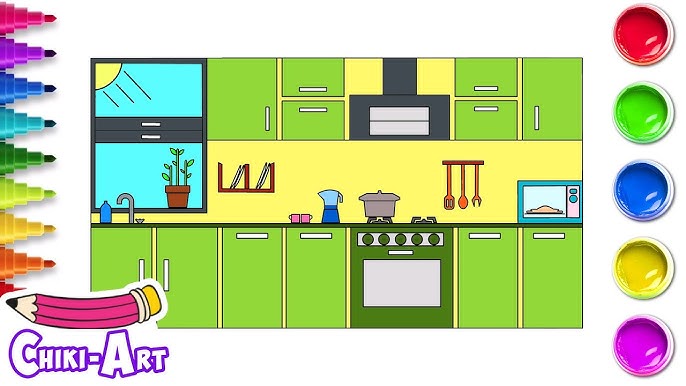
Are you ready to bring your kitchen ideas to life on paper? Drawing a simple kitchen might seem tricky, but with the right steps, you can create a clear and charming design that matches your vision.
This guide will walk you through each step, making the process easy and fun. By the end, you’ll have a kitchen sketch you can be proud of—whether for planning a remodel, sharing with friends, or just practicing your drawing skills.
Let’s get started and turn your kitchen dreams into a simple drawing you’ll love!

Credit: www.youtube.com
Gathering Materials
Before you put pencil to paper, getting your materials ready sets the tone for a smooth drawing experience. Having everything at hand keeps you focused and prevents frustrating interruptions. Think about what you really need to create a simple kitchen sketch that looks just right.
Choosing The Right Paper
Start with plain white drawing paper that’s easy to erase on. Avoid glossy or textured surfaces because they can make your lines smudge or appear uneven. A standard A4 sketch pad works well for beginners and fits easily on your desk.
Selecting Pencils
Pick a range of pencils from soft (like 2B or 4B) to hard (like HB or 2H). Softer pencils help you add shading and depth, while harder ones are great for clear outlines. I found that having at least two pencils makes switching between details and shading quicker and more precise.
Gathering Erasers And Sharpeners
An eraser is your best friend for fixing mistakes or lightening areas. A kneaded eraser offers flexibility because you can shape it to erase small spots. Don’t forget a sharpener to keep your pencils precise; a dull tip can ruin fine details.
Optional Tools To Enhance Your Drawing
- Ruler:Helps you draw straight lines, especially for cabinets and counters.
- Colored Pencils or Markers:Add a splash of color to bring your kitchen to life.
- Blending Stump:Useful for smooth shading to create shadows under shelves or appliances.
Have you ever started drawing only to realize you’re missing something essential? Preparing your materials first saves you from those moments. What’s your go-to tool that you always keep within reach when sketching?
Sketching The Kitchen Layout
Sketching the kitchen layout is the foundation of your drawing. It helps you visualize how everything will fit together before adding details. Starting with a clear plan makes the entire process smoother and more enjoyable.
Drawing The Room Shape
Begin by drawing the basic shape of your kitchen room. Use simple lines to form a rectangle or square, depending on your space. Keep your lines light so you can easily adjust if needed.
Think about the actual size of your kitchen. Are you drawing a compact space or a large, open area? This will guide how much detail you add later.
Don’t worry about perfection at this stage. The goal is to capture the overall shape and give yourself a working outline.
Adding Walls And Windows
Next, add the walls to your room shape. Mark where each wall begins and ends clearly. If your kitchen has an open wall or a half wall, show that with a break or thinner line.
Windows bring light and life into your kitchen drawing. Place windows on the walls where you want natural light to shine in. Think about their size and position—are they above the sink or near the dining area?
Adding these elements early helps you plan the layout more realistically. Imagine how the light affects your kitchen’s mood—can you see the difference windows make?
Drawing Basic Kitchen Fixtures
Start by sketching the basic shapes of kitchen fixtures like sinks, cabinets, and stoves. Focus on simple lines and proportions to create a clear kitchen layout. Gradually add details to make the drawing easy to follow and understand.
Drawing Basic Kitchen Fixtures Creating a simple kitchen drawing can be a fun and rewarding experience. With a few basic steps, you can sketch out the heart of the home. Let's focus on the essential fixtures like cabinets, shelves, sinks, and faucets to bring your kitchen to life.
Sketching Cabinets And Shelves
Begin by drawing the outline of your cabinets. Think about the layout you want—are they tall and slender or short and wide? Use straight lines to create the boxy shapes that represent the cabinets. Next, add some depth. Draw parallel lines along the sides to give them a 3D appearance. Don't forget to sketch in the shelves. They can be simple horizontal lines within the cabinets. Consider adding details like handles or knobs. These small touches can make your drawing more realistic. What kind of cabinet style do you prefer, modern or classic?
Adding The Sink And Faucet
Position the sink in a central spot on your countertop. Draw a rectangular or oval shape, depending on your preferred sink style. Add the faucet next. Start with a curved line to represent the spout. Then, add a small rectangle at the base to indicate the faucet's handle. Think about the functionality. Are there additional features like a spray nozzle or soap dispenser you want to include? These elements can make your kitchen drawing both practical and visually appealing. Remember, each part of your kitchen drawing tells a story. What story does your kitchen layout share?

Credit: www.youtube.com
Including Appliances
Including appliances in your kitchen drawing gives it life and realism. Appliances define the space and show how the kitchen functions. Start with basic shapes and add simple details to keep it clear and easy.
Drawing The Refrigerator
Begin with a tall rectangle for the fridge body. Divide it horizontally to separate the fridge and freezer compartments. Add two vertical lines to mark the doors. Draw simple handles on one side of each door. Use light shading to show depth and volume.
Sketching The Stove And Oven
Draw a rectangle for the stove base. Add small circles on top for burners. Sketch knobs below the burners to control heat. For the oven door, create a smaller rectangle within the base. Include a window by drawing a smaller rectangle inside the door. Add simple lines for the oven handle.
Adding Details And Accessories
Adding details and accessories brings your simple kitchen drawing to life. It transforms basic shapes into a cozy, lived-in space that tells a story. These finishing touches can show your personality and make your drawing more relatable.
Drawing Kitchen Utensils
Start by sketching small utensils like spoons, spatulas, and knives. Place them near the stove or in a container on the countertop to create a natural look.
Use simple lines and shapes—think circles for spoon heads and straight lines for handles. Don’t worry about perfect precision; slight imperfections add charm.
Consider adding a hanging rack for pots and pans. It’s a practical detail that adds depth and interest. Have you noticed how little things like a whisk or ladle make a kitchen feel more functional?
Adding Decorative Elements
Decorations make your kitchen feel personal and warm. Draw items like potted herbs on windowsills or a bowl of fruit on the table to introduce color and texture.
Try adding patterned curtains or a clock on the wall. These details might seem small but they create a welcoming atmosphere.
Think about your own kitchen—what little things catch your eye? Adding those elements can make your drawing truly unique and engaging.
Outlining And Refining
Outlining and refining your kitchen drawing is where your sketch truly starts to come alive. This stage transforms rough shapes into clear, confident lines. It’s a moment to focus on details that add personality and make your kitchen feel real.
Using Darker Lines
Choose a darker pencil or pen to go over the main lines of your kitchen. This makes the important parts stand out and gives your drawing structure. Think about which elements should catch the eye first—cabinets, countertops, or appliances.
Don’t rush this step. Take your time to trace carefully and steady your hand. If you feel unsure, pause and look at your sketch from a distance. What needs more emphasis? What can be simplified?
Erasing Guidelines
After reinforcing your outlines, gently erase the lighter construction lines. These guidelines helped you place everything correctly but can distract from the final image. Use a soft eraser to avoid smudging your drawing.
Erasing also gives you a chance to spot areas that need correction. Maybe a cabinet door isn’t quite straight or a countertop edge feels off. Fix these small issues now before adding any shading or color.
Coloring Your Drawing
Coloring your kitchen drawing brings it to life. It adds depth and makes your sketch more attractive. Using the right colors can make your kitchen look cozy and real. Keep colors simple for a neat and clear image.
Choosing A Color Palette
Select a few colors that go well together. Think about common kitchen colors like white, beige, light blue, or soft green. Use colors that match the style of your kitchen.
Limit your palette to 3-5 colors. This keeps the drawing clean and easy to understand. Pick colors for walls, cabinets, floor, and small details.
Applying Colors Neatly
Color inside the lines carefully. Use light strokes to avoid mistakes. Fill small areas with a fine tip or smaller brush.
Layer colors gently for shadows or highlights. Avoid coloring too hard to prevent paper damage. Take your time. Neat coloring makes your drawing look professional and inviting.
Final Touches
Final touches bring your simple kitchen drawing to life. They add depth and realism. These small details make your sketch look complete and polished.
Adding Shadows And Highlights
Shadows create depth and show where light hits the kitchen. Use a soft pencil or light shading to add shadows under counters and appliances. Highlights show shiny surfaces, like a sink or countertop.
- Shade areas that are farther from light sources.
- Use an eraser to create highlights on edges or smooth surfaces.
- Keep shadows soft for a natural look.
Shadows and highlights together give your drawing a three-dimensional feel. They make objects stand out and appear more real.
Reviewing And Adjusting
Step back and look at your drawing carefully. Check if all parts look balanced and clear. Fix any lines that seem too dark or out of place.
- Erase stray marks gently.
- Darken lines that need more definition.
- Make sure the kitchen layout feels simple and easy to understand.
Adjusting small details improves the overall quality. Your simple kitchen drawing will feel neat and ready to share.

Credit: www.youtube.com
Frequently Asked Questions
How Do I Start Drawing A Simple Kitchen?
Begin with a basic floor plan. Sketch the room’s shape and main appliances first. Use light lines to outline counters and cabinets.
What Are Essential Kitchen Elements To Include?
Include stove, sink, refrigerator, and cabinets. Add windows and lighting fixtures for realism. These features make your kitchen drawing complete.
How Can I Make My Kitchen Drawing Look Realistic?
Use perspective techniques and proper proportions. Add shading and textures to surfaces. Details like utensils and decor enhance realism.
What Tools Do I Need For Kitchen Drawing?
Use pencils, erasers, rulers, and sketch paper. Colored pencils or markers help add depth. A fine liner pen can define outlines.
Conclusion
Drawing a simple kitchen can be fun and relaxing. Step by step, you create a clear and neat picture. Practice helps you improve every time you draw. Use basic shapes and lines to keep it easy. Don’t rush; take your time with each part.
Soon, you will see your skills grow. Keep trying, and enjoy the process of drawing. Your simple kitchen will look great in no time. Just start now and keep drawing!