
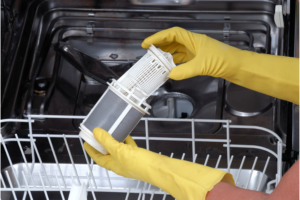
If your Kitchen Aid dishwasher isn’t cleaning dishes as well as it used to, the filter might be the culprit. Knowing how to clean your dishwasher filter can save you time, prevent odors, and keep your machine running smoothly.
In this guide, you’ll discover simple steps to get your filter spotless and your dishwasher working like new again. Keep reading—you’re just minutes away from a cleaner, fresher kitchen!
Locate The Dishwasher Filter
Locating the dishwasher filter in your KitchenAid model is the first step toward keeping your appliance running smoothly. Knowing exactly where it sits helps you clean it properly without any guesswork. Let’s dive into how you can find this essential component quickly and easily.
Find The Filter Position
The filter in KitchenAid dishwashers is usually located at the bottom of the tub. Open your dishwasher door and look near the spray arm at the base. You might see a circular or rectangular section that can be lifted out or twisted to remove.
If you don’t spot it immediately, check your user manual or look for a mesh screen covering the drain area. This part traps food particles, so it’s often tucked away near the drain to catch debris before water exits the machine.
Have you ever noticed water pooling at the bottom of your dishwasher? That’s often a sign the filter needs attention. Finding it is key to solving such issues.
Types Of Filters In Kitchenaid Dishwashers
KitchenAid dishwashers usually come with one of two filter types:
- Manual Clean Filters:These require you to remove and rinse the filter regularly. It’s a mesh or screen filter that traps food and debris.
- Self-Cleaning Filters:These use a grinder or impeller to break down particles, reducing maintenance. However, they still need occasional checks to avoid clogs.
Knowing which type your dishwasher has helps you decide how often and how to clean it. Have you ever wondered if your dishwasher’s filter is self-cleaning or manual? Identifying this can save you time and prevent future problems.
Credit: www.finishdishwashing.ca
Remove The Filter Safely
Removing the filter from your Kitchen Aid dishwasher is a task that needs a gentle touch and a bit of know-how. Doing it safely not only protects the filter but also keeps your dishwasher running smoothly. Let’s break down how you can take out the filter without any hassle or damage.
Unlocking The Filter
Start by opening your dishwasher door and pulling out the lower rack to give yourself some room. Look for the filter at the bottom center of the dishwasher tub—it usually has a handle or knob.
Turn the filter handle counterclockwise gently. If it feels stuck, don’t force it; instead, try wiggling it slightly while turning. This reduces the risk of breaking any plastic parts.
Have you noticed how small debris can sometimes make the filter hard to turn? A quick rinse of the area with warm water can loosen trapped bits and make unlocking easier.
Handling With Care
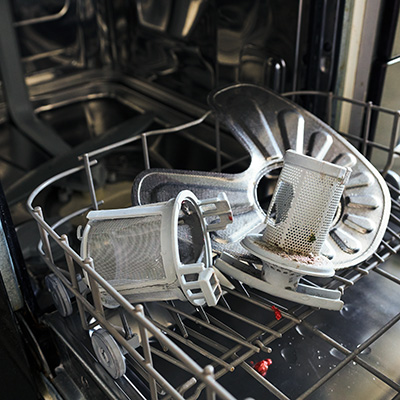
Once the filter is free, lift it straight up without twisting or bending. Filters are delicate and can crack if mishandled.
Place it on a clean, flat surface to avoid losing any small components or damaging the mesh. If you spot stubborn food particles, soak the filter in warm, soapy water before scrubbing gently.
Remember, your care now means fewer dishwasher problems later. How often do you check the filter before it causes an issue? Making filter removal a regular habit saves time and prevents clogs.
Clean The Filter Thoroughly
Remove the filter from your Kitchen Aid dishwasher and rinse it under warm water. Use a soft brush to scrub away food particles and grease gently. Make sure the filter is completely clean before putting it back in place.
Cleaning the filter of your KitchenAid dishwasher might seem like a mundane task, but doing it thoroughly can make a world of difference in your appliance's performance. A clean filter ensures optimal water flow and prevents food particles from redepositing on your dishes. When was the last time you rolled up your sleeves and gave your dishwasher filter the attention it deserves? Let’s dive into the steps to ensure your filter is spotless and your dishwasher runs like a charm.
Rinsing Under Warm Water
Start by removing the filter from your dishwasher. Make sure the water is warm, as this helps in loosening any grease or grime clinging to the filter. Hold the filter under the water, rotating it to ensure all sides get rinsed. Feel free to use your fingers to gently rub away any visible debris. Have you noticed how warm water can be a powerful ally against stubborn residues? It makes the cleaning process much simpler.
Using A Soft Brush
Once rinsed, a soft brush becomes your best friend. Use it to gently scrub away any remaining dirt or particles. A toothbrush works wonders here, reaching into the nooks and crannies of the filter. Remember, using a brush that's too hard might damage the filter, so ensure it's soft enough to avoid scratches. Ever tried cleaning with an old toothbrush? It's a handy tool that many overlook.
Removing Stubborn Debris
If stubborn debris refuses to budge, a bit of patience and persistence will help. You might need to soak the filter in a mixture of warm water and mild detergent for about 15 minutes. This can loosen those pesky particles that won't rinse away. After soaking, use your brush again to tackle the remaining debris. Isn't it satisfying to see those stubborn bits finally give way? It's a small victory that ensures your dishwasher works efficiently. By following these steps, you'll help prolong the life of your KitchenAid dishwasher and enjoy sparkling clean dishes every time. Happy cleaning!
Clean The Filter Housing
Cleaning the filter housing in your KitchenAid dishwasher is essential for smooth operation. This area collects food bits and debris over time. Regular maintenance keeps your dishwasher running efficiently and prevents odors.
Focus on removing grime and checking for hidden blockages. These small tasks improve water flow and cleaning power. A clean filter housing extends the life of your dishwasher.
Wiping The Area
Use a soft cloth or sponge to wipe the filter housing carefully. Avoid abrasive materials that may cause damage. Dampen the cloth with warm water to remove stuck-on food particles.
Pay attention to corners and edges where dirt tends to build up. Wipe until the surface looks clean and free of residue. This simple step helps maintain a hygienic dishwasher interior.
Checking For Blockages
Look inside the filter housing for any clogs or debris. Small bits of food can block water flow and reduce cleaning efficiency. Use a flashlight to see deep inside the housing.
Remove any visible blockages with your fingers or a soft brush. Do not push debris further inside. Ensuring the housing is clear prevents drainage problems and keeps dishes spotless.
Reinstall The Filter
After thoroughly cleaning your Kitchen Aid dishwasher filter, putting it back correctly is crucial. A properly reinstalled filter ensures your dishwasher runs smoothly and keeps your dishes spotless. Let’s focus on how to place and secure the filter so it works exactly as it should.
Positioning Correctly
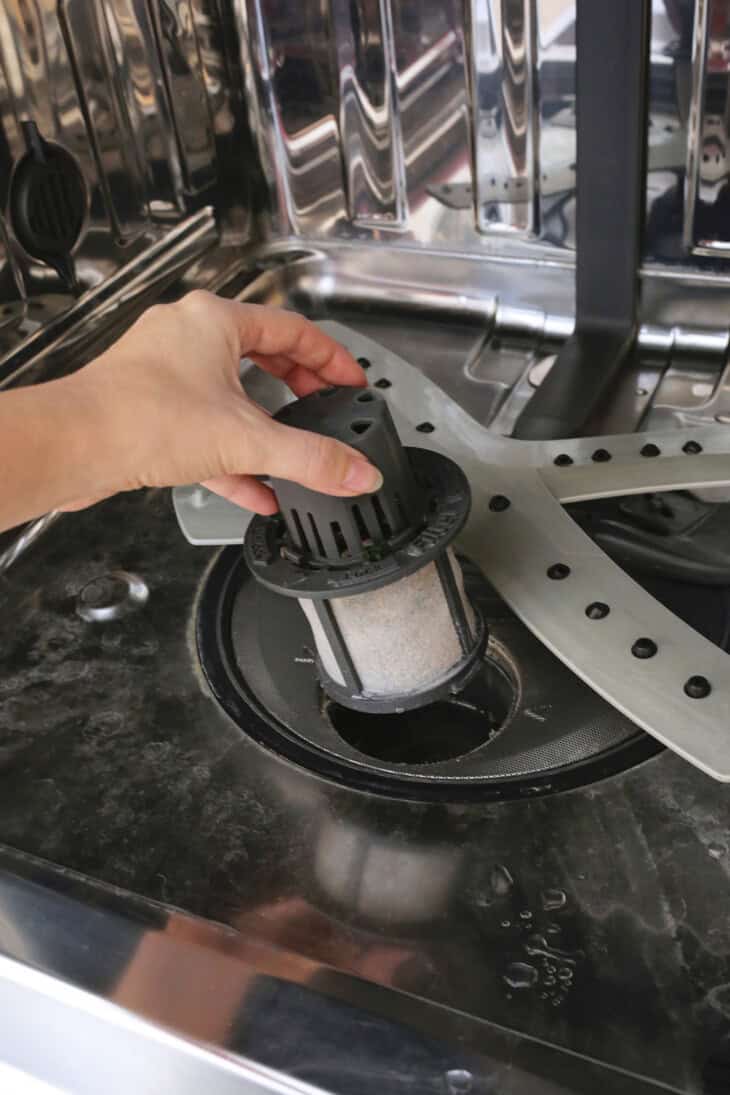
Start by aligning the filter with the dishwasher’s base slot. The filter usually has tabs or notches that fit into specific grooves, so look closely for these guides.
Gently place the filter into the slot without forcing it. If it doesn’t sit easily, double-check the orientation—forcing it might damage the filter or the dishwasher.
Have you ever tried to fit the filter and felt it was upside down? Taking a moment to observe its shape can save you frustration and prevent damage.
Securing The Filter
Once positioned, the filter needs to lock in place to prevent movement during cycles. Most Kitchen Aid filters twist or click to secure.
Turn the filter gently clockwise until you feel or hear it snap into place. This action ensures the filter is tightly sealed and won’t come loose.
If the filter doesn’t lock, check for leftover debris or misalignment. Even a small obstruction can stop the filter from securing properly.
Credit: ablissfulnest.com
Maintenance Tips For Filter Longevity
Keeping your KitchenAid dishwasher filter in top shape extends its life and ensures your dishes come out spotless every time. Filters trap food particles and debris, preventing clogs and damage to the dishwasher’s internal components. Simple habits and careful handling can make a big difference in how long your filter stays effective.
Regular Cleaning Schedule
Set a clear routine for cleaning your dishwasher filter. Depending on your usage, aim to clean it every two weeks or at least once a month. If you cook frequently or wash heavily soiled dishes, more frequent cleaning is better.
Keeping a calendar reminder helps you stay on track. When you clean regularly, you avoid buildup that can reduce water flow and cause odors. After cleaning, always check the filter for any tears or damage before putting it back.
Avoiding Common Mistakes
Many users overlook gentle handling of the filter, which can cause damage. Avoid using harsh brushes or sharp tools that could puncture or wear down the filter mesh. Instead, use a soft brush or sponge to remove debris.
Don’t forget to remove large food scraps from dishes before loading them in the dishwasher. This reduces strain on the filter and keeps it from clogging quickly. Also, avoid running the dishwasher without the filter in place—it’s essential for protecting your machine.
Have you noticed a strange smell or your dishes aren’t as clean? It might be time to inspect your filter and adjust your maintenance habits to keep your dishwasher running smoothly.

Credit: www.finishdishwashing.ca
Frequently Asked Questions
How Often Should I Clean My Kitchen Aid Dishwasher Filter?
You should clean your Kitchen Aid dishwasher filter every 1 to 3 months. Frequent cleaning prevents clogs and ensures optimal performance. If you use your dishwasher daily, clean it monthly. Regular maintenance extends the appliance’s life and keeps your dishes spotless.
What Tools Are Needed To Clean The Dishwasher Filter?
To clean the filter, you need warm water, mild dish soap, and a soft brush. Avoid harsh tools that can damage the filter. A toothbrush works well for scrubbing. These simple tools help remove food particles and grime effectively.
Can I Run The Dishwasher Without The Filter?
Running the dishwasher without the filter is not recommended. The filter traps debris that can clog the drain or damage the pump. Operating without it may lead to poor cleaning results and costly repairs. Always ensure the filter is properly installed before use.
How Do I Remove The Kitchen Aid Dishwasher Filter Safely?
Turn off the dishwasher and open the door fully. Locate the filter at the bottom and twist it counterclockwise to unlock. Gently lift the filter out. Follow your model’s manual for specific instructions to avoid damage and ensure safe removal.
Conclusion
Cleaning your Kitchen Aid dishwasher filter keeps your dishes fresh and clean. Regular care stops clogs and bad smells. Take out the filter, rinse it well, and remove any food bits. Doing this often saves time and prevents bigger problems later.
A clean filter helps your dishwasher work better and last longer. Small steps make a big difference in your kitchen’s hygiene. Keep your dishwasher in top shape with simple filter cleaning. Easy, quick, and worth the effort every few weeks.