
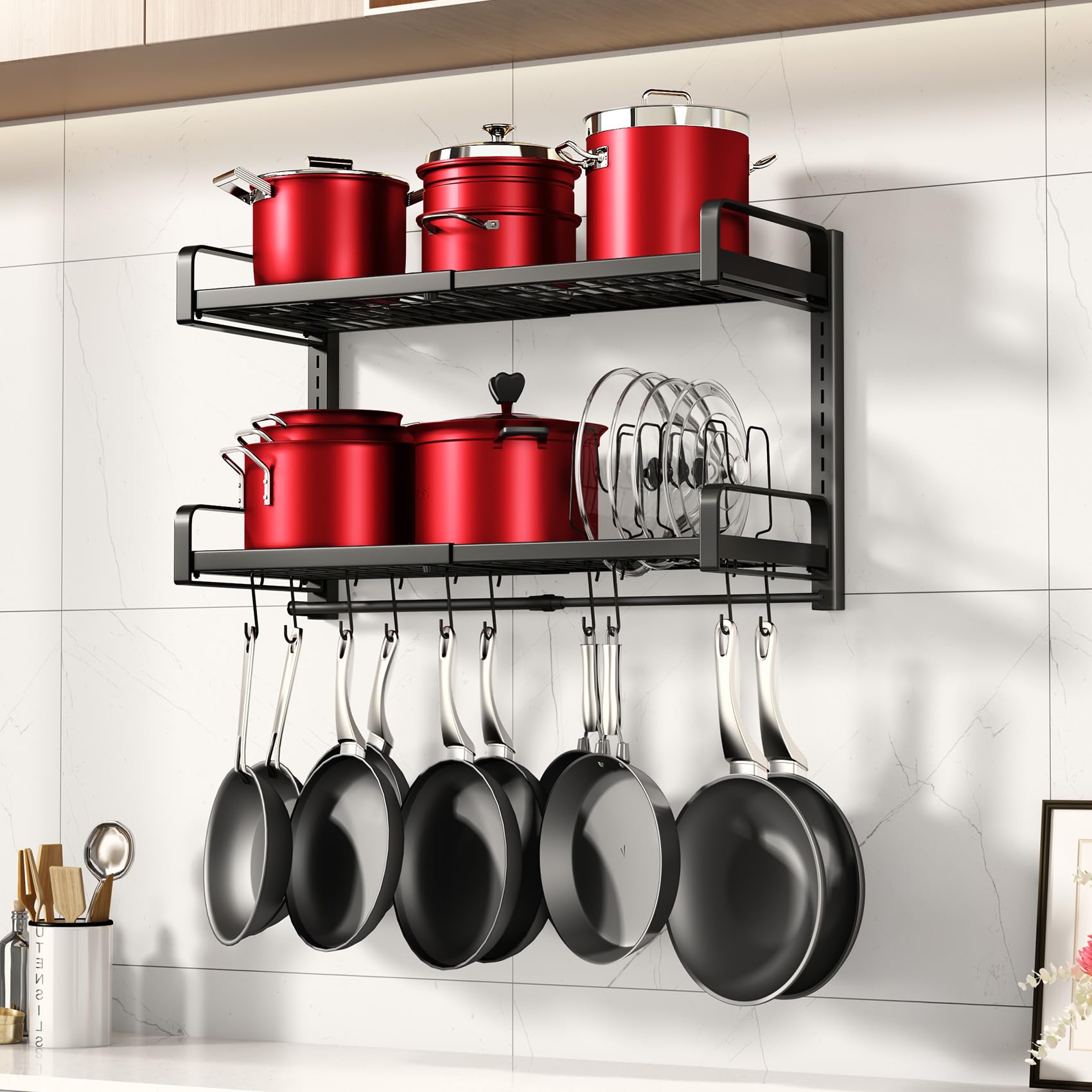
Are you tired of rummaging through cluttered cabinets in search of the right pot or pan? Imagine a kitchen where your cookware is not only accessible but also part of the decor.
A pots and pans hanging rack could be your game-changer. It’s more than just a storage solution; it's a way to elevate your kitchen's style and efficiency. You’ll discover how this simple addition can transform your cooking space, making meal prep smoother and more enjoyable.
Dive in to learn why a hanging rack might be the perfect fit for your kitchen and how it can help you reclaim both space and time.
Benefits Of Hanging Racks
Pots and pans hanging racks are more than just kitchen accessories. They offer practical and aesthetic benefits that enhance your culinary space. These racks transform your kitchen into an organized and stylish area. Let's explore the key benefits they bring.
Space Optimization
Hanging racks free up valuable counter space. They utilize vertical storage, which is often underused. This makes room for other kitchen essentials. With pots and pans off the counter, your kitchen feels less cluttered. Small kitchens benefit greatly from this space-saving solution.
Improved Accessibility
With a hanging rack, your cookware is always within reach. No more digging through cabinets to find the right pan. Everything you need is visible and accessible. This setup speeds up meal preparation. It makes cooking more enjoyable and efficient.
Aesthetic Appeal
Hanging racks add a unique charm to your kitchen. They create a rustic or modern look, depending on the design. Displaying your cookware can become a style statement. It reflects your taste and personality. A well-organized rack enhances the overall kitchen decor.
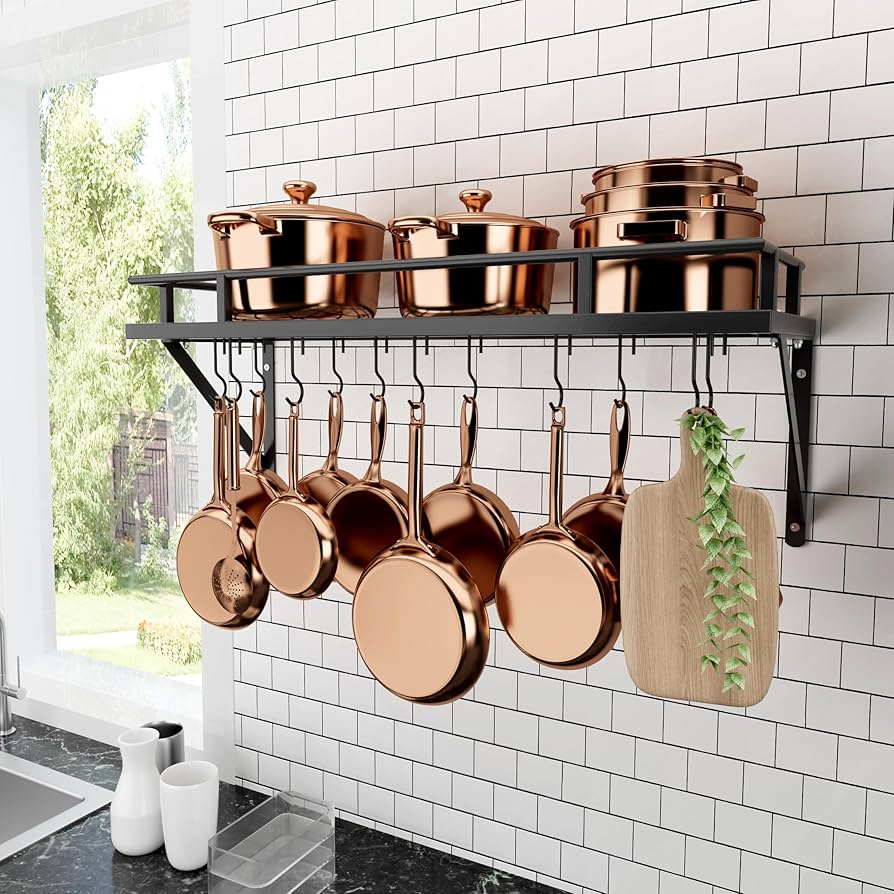
Credit: www.amazon.com
Types Of Hanging Racks
Various styles of pots and pans hanging racks enhance kitchen organization. Ceiling racks save space and add style. Wall-mounted options offer easy access and display cookware beautifully.
When it comes to organizing your kitchen, hanging racks for pots and pans are game-changers. They not only save valuable cabinet space but also add a touch of style to your cooking area. But with so many types to choose from, how do you know which is right for you? Let's dive into the different types of hanging racks to help you make an informed decision.
Wall-mounted Racks
Wall-mounted racks are perfect for those who want easy access to their cookware without taking up too much space. These racks are typically installed on a kitchen wall, freeing up your counter and cabinet space. Imagine walking into your kitchen and seeing all your beautiful pots and pans displayed like art. It's not just functional—it's a statement. A wall-mounted rack can hold everything from your trusty cast iron skillet to your favorite stainless steel saucepan.
Ceiling Racks
Ceiling racks are ideal if you have a bit more room and want to create a focal point in your kitchen. They hang from the ceiling, allowing you to utilize the vertical space you might otherwise overlook. Picture yourself reaching up for your favorite pot while cooking a family meal. The convenience and accessibility are unmatched. Ceiling racks can hold heavy cookware, making them a sturdy choice for serious chefs.
Freestanding Options
Freestanding racks are versatile and can be moved as needed, offering flexibility for those who like to rearrange their kitchen layout. They don't require wall or ceiling installation, making them a less permanent option. Do you enjoy changing your kitchen setup frequently? A freestanding rack might be your best bet. You can place it in a corner or even in the pantry for easy access and organization. Choosing the right type of hanging rack depends on your kitchen space and personal style. Consider how often you cook, the space you have available, and the aesthetic you want to achieve. Which type of hanging rack will make your kitchen more efficient and stylish?
Materials And Durability
Pots and pans hanging racks often utilize sturdy materials like stainless steel or wood for enhanced durability. These materials resist rust and wear, ensuring longevity and reliable support for your kitchenware.
Choosing the right materials for a pots and pans hanging rack is crucial for its durability and aesthetic appeal. You want a rack that not only holds your cookware securely but also enhances your kitchen's look. Consider how the materials interact with your space and how they affect the longevity of your rack.
Metal Options
Metal racks are popular for their strength and modern look. Stainless steel is a top choice because it resists rust and matches most kitchen appliances. Cast iron, though heavier, offers an industrial charm and can support heavier cookware. Aluminum is lightweight and affordable, but might not hold as much weight. Think about your kitchen's style and your cooking habits before deciding. Do you need a rack that can handle cast iron skillets, or will lightweight pots do just fine?
Wooden Choices
Wooden racks bring warmth and a rustic feel to your kitchen. Oak and maple are sturdy options that can bear the weight of multiple pots. They also add a natural touch that metal can't replicate. However, wood requires maintenance to prevent warping or rotting, especially in humid kitchens. Regular sealing can extend its life. Is the cozy, natural vibe worth the upkeep for you?
Combination Materials
Combining materials can offer the best of both worlds. A metal frame with wooden accents can provide durability and style. This mix can suit both modern and traditional kitchens. You might find racks with metal hooks on a wooden base, offering the strength of metal with the beauty of wood. Consider how this blend can complement other elements in your kitchen. Would a combination rack tie your kitchen together perfectly? Choosing the right material involves balancing aesthetics, durability, and maintenance. What’s your priority in a hanging rack?
Installation Tips
Consider the wall strength and available space before installing a pots and pans hanging rack. Use sturdy anchors for secure placement. Arrange pots and pans evenly to prevent imbalance and enhance kitchen aesthetics.
Installing a pots and pans hanging rack can transform your kitchen, making it both functional and stylish. It's not just about giving your cookware a new home; it's about making cooking more convenient and enjoyable. By following some simple installation tips, you can ensure that your rack is both safe and accessible. Let's dive into the essentials for setting up your hanging rack effectively.
Choosing The Right Location
Selecting the ideal spot for your hanging rack is crucial. Think about ease of access while cooking. Is the location near your stove or prep area? Consider your kitchen layout and traffic flow. The rack should complement your space, not hinder it. Also, ensure the wall or ceiling can support the weight of your pots and pans.
Tools Needed
Equipping yourself with the right tools will make installation a breeze. Typically, you'll need a drill, measuring tape, and a level. These tools help you measure accurately and secure the rack firmly. Don't forget screws and anchors that match your wall type—drywall, plaster, or wood. Having everything ready before you start saves time and reduces frustration.
Safety Considerations
Safety should be your top priority. Ensure the rack is securely anchored to avoid accidents. Are there electrical wires or plumbing pipes behind the installation area? If unsure, consult a professional to avoid costly mistakes. Remember to use a sturdy ladder or step stool for reaching high spots. A stable installation means peace of mind every time you reach for your cookware. Installing a pots and pans hanging rack is more than just a task—it's an opportunity to enhance your kitchen. Have you ever thought about how a simple change can boost your cooking experience? With these tips, you're not just hanging cookware; you're crafting a space that reflects your style and meets your needs.
Design Ideas
Choosing the right pots and pans hanging rack can transform your kitchen. It reflects your style and adds functionality. Explore different design ideas to enhance your space. Each style offers unique aesthetics and benefits. Discover modern minimalism, rustic charm, and industrial style.
Modern Minimalism
Embrace clean lines and sleek designs. Modern minimalism focuses on simplicity. Choose racks with stainless steel or chrome finishes. They complement a minimalist kitchen. Opt for geometric shapes and open spaces. These elements create a streamlined look. Enhance the area with neutral colors. Whites, greys, or blacks work well. Add subtle lighting for a sophisticated touch.
Rustic Charm
Rustic charm brings warmth to any kitchen. Use natural materials like wood and wrought iron. These add an inviting, earthy vibe. Choose racks with distressed finishes. They provide an aged appearance. Incorporate vintage elements for authenticity. Copper pots and pans enhance the rustic feel. Add greenery, like hanging plants, for a natural accent.
Industrial Style
Industrial style offers a bold, urban look. This design uses metal and exposed elements. Opt for racks with raw steel or iron finishes. They create a factory-inspired aesthetic. Use dark tones and rough textures. These add depth and character. Incorporate salvaged materials for uniqueness. Consider Edison bulbs for ambient lighting.
Maintenance And Care
Pots and pans hanging racks add style and function to kitchens. Proper care extends their life. Regular maintenance keeps them looking great. Simple cleaning and checks go a long way. Let's explore how to maintain them effectively.
Cleaning Techniques
Dust and grease can gather on racks. Use a damp cloth for regular cleaning. Avoid harsh chemicals. Mild soap and water work best. Dry the rack completely to prevent rust. For stubborn spots, use a soft brush. Regular cleaning keeps your rack shiny.
Regular Checks
Inspect the rack for loose screws or brackets. Tighten them as needed. Ensure hooks are secure. Check for signs of rust or damage. Early detection prevents bigger issues. Regular checks ensure safety and durability.
Handling Wear And Tear
Over time, racks may show wear and tear. Address scratches or dents promptly. Use touch-up paint for metal racks. For wooden racks, apply polish. This maintains their appearance. Replace worn parts to keep the rack functional.
Cost Considerations
Choosing a pots and pans hanging rack involves more than style. Cost plays a big role in decision-making. Whether you want to spend a little or a lot, there are options for every budget. Let's explore some choices that fit different price ranges.
Budget-friendly Options
For those who want a practical solution without spending much, budget-friendly racks are ideal. These racks often use materials like stainless steel or aluminum. They provide durability at a reasonable price. Many of these racks are easy to install and come with basic hardware. This makes them perfect for renters or those on a tight budget.
High-end Alternatives
High-end racks offer a touch of luxury and sophistication. These options often feature premium materials like wrought iron or polished wood. They provide not only function but also enhance kitchen aesthetics. High-end racks may include intricate designs or custom finishes. They are perfect for those who value craftsmanship and style. The investment in these racks often reflects in their long-lasting quality.
Diy Possibilities
For the creative and handy, DIY hanging racks can be a fun project. Using reclaimed wood or pipes, you can create a unique rack. This option allows for customization to fit any kitchen size or style. DIY projects often save money and offer a sense of personal achievement. Online tutorials and guides make it easier to get started. A DIY rack can be a charming and cost-effective solution.
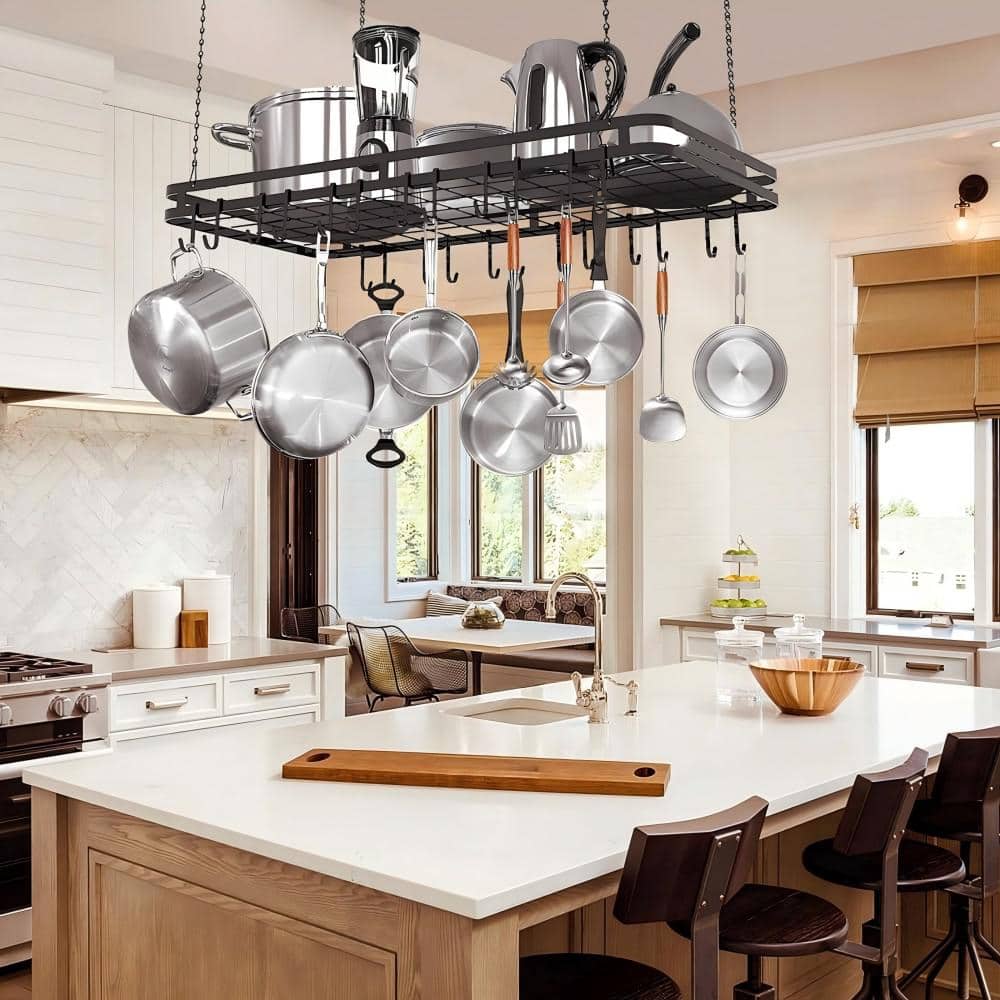
Credit: www.homedepot.com
:strip_icc()/pots-hanging-modern-rack-kitchen-24cf51d1-eb634007b8e8462fb321f8afc011f596.jpg)
Credit: www.bhg.com
Frequently Asked Questions
How Do I Install A Pots And Pans Rack?
Installing a pots and pans rack is straightforward. First, choose a sturdy wall or ceiling spot. Use a stud finder to ensure secure mounting. Then, drill holes and attach the rack with screws. Follow the manufacturer’s instructions for precise installation.
Ensure the rack can bear the weight of your cookware.
What Materials Are Pots And Pans Racks Made Of?
Pots and pans racks are typically made from metal, wood, or a combination. Metal racks, often stainless steel, offer durability and modern aesthetics. Wooden racks provide a rustic look and are equally sturdy. Consider the kitchen style when choosing materials.
Quality construction ensures long-term use and safety.
How Much Weight Can A Hanging Rack Hold?
The weight a hanging rack can hold depends on its design and materials. Generally, racks can support between 30 to 100 pounds. Check the manufacturer's specifications for exact weight limits. Distribute weight evenly to prevent strain on the rack. Always ensure secure mounting for safety.
Are Hanging Racks Suitable For Small Kitchens?
Yes, hanging racks are ideal for small kitchens. They utilize vertical space, freeing up cabinets and countertops. Select a compact design that fits your kitchen layout. Ensure easy access to your cookware without overcrowding. Hanging racks enhance organization and add style to small spaces.
Conclusion
A pots and pans hanging rack offers great kitchen organization. It saves counter space. Keeps cookware accessible. Easy to install and maintain. Stylish designs match any kitchen décor. Perfect for small kitchens. Maximizes vertical space. Choose sturdy materials. Consider rack size and weight capacity.
Hanging racks make cooking efficient. No more searching for pots. Enhance your kitchen's functionality. Simplify your cooking routine. A smart choice for every home chef. Start enjoying an uncluttered kitchen today. Make cooking a breeze with a hanging rack. Organize, simplify, and enjoy your kitchen space.