
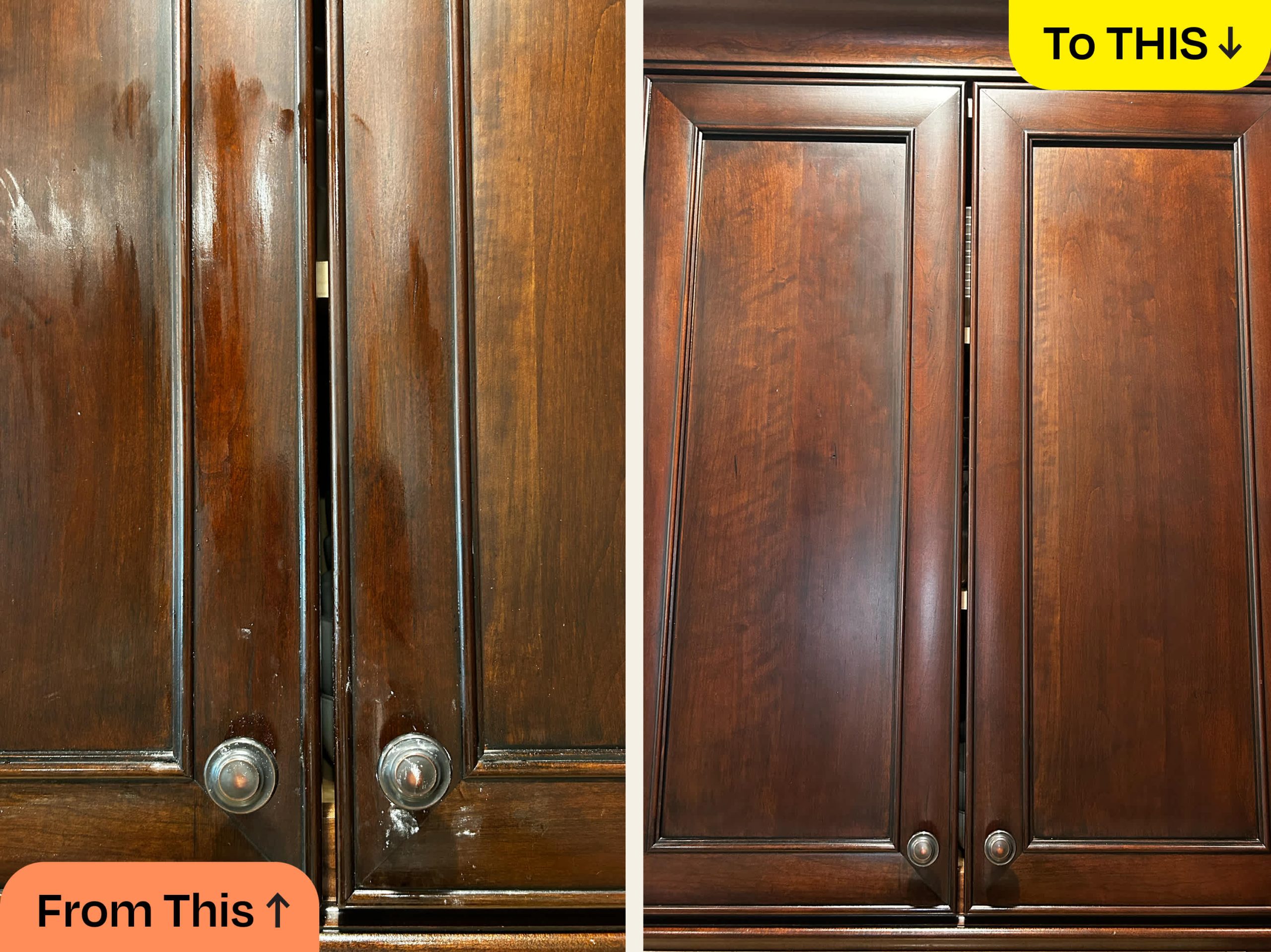
Are your white kitchen cabinets looking dull or stained? You want them to shine like new, but choosing the right cleaner can be confusing.
Using the wrong product might damage the finish or leave streaks behind. What if you had a simple, effective solution that keeps your cabinets spotless without any hassle? Keep reading to discover the best cleaner for your white kitchen cabinets—and learn how to make them look fresh and bright every day.

Credit: retique.com
Types Of White Kitchen Cabinets
White kitchen cabinets come in various types, each with unique materials and finishes. Understanding these types helps choose the right cleaner. Different surfaces require different cleaning methods to avoid damage and maintain their look.
Painted Cabinets
Painted cabinets have a smooth, solid color finish. They offer a classic, fresh look. These cabinets can chip or scratch easily, so gentle cleaners work best. Avoid harsh chemicals that might strip the paint.
Laminate Cabinets
Laminate cabinets have a thin plastic layer over particleboard. They resist stains and are easy to clean. Use mild soap and water to keep them shiny. Avoid abrasive scrubbers that can scratch the surface.
Thermofoil Cabinets
Thermofoil cabinets have a vinyl film heated onto MDF. This creates a smooth, durable finish. Use soft cloths and gentle cleaners. Avoid heat and water exposure to prevent peeling or warping.
Wood Veneer Cabinets
Wood veneer cabinets have a thin layer of real wood on plywood or MDF. They offer natural wood beauty at a lower cost. Clean with wood-safe products and avoid excess water to protect the veneer.
Common Stains And Issues
White kitchen cabinets add a bright and clean look to your cooking space, but keeping them spotless can be a real challenge. Over time, different types of stains and marks appear, each requiring a specific approach to clean effectively. Understanding these common issues can help you choose the best cleaner and maintain that fresh, white finish you love.
Grease And Oil Spots
Grease and oil spots are the toughest enemies of white cabinets. Cooking splatters often leave sticky, oily residues that attract dust and dirt, making your cabinets look grimy. Using a cleaner that cuts through grease without damaging the paint or finish is essential. Have you noticed how some cleaners only smear the oil around rather than removing it completely?
Water Marks And Stains
Water marks can appear as dull spots or rings, especially near sinks or on cabinet edges. These stains happen when water sits too long and leaves mineral deposits behind. Wiping spills immediately helps, but for stubborn marks, a gentle cleaner with mild acidity often works best. What’s your current method for dealing with these annoying water stains?
Fingerprints And Smudges
Fingerprints and smudges are daily annoyances, especially if you have kids or guests frequently in the kitchen. These marks can dull the crisp white look and make cabinets appear unclean. A cleaner that quickly lifts oils and dirt without leaving streaks makes all the difference. Ever tried a quick wipe with just water only to find the marks still linger?
Mold And Mildew
Mold and mildew can develop in damp or poorly ventilated kitchens, often hiding in cabinet corners or under handles. These growths not only discolor your cabinets but can also cause health issues. Using a cleaner with mold-fighting ingredients is crucial to eliminate these spots and prevent their return. Have you checked your cabinets lately for any hidden mold patches?
Popular Cleaning Products
Choosing the right cleaner for white kitchen cabinets is key to keeping them bright and fresh. Popular cleaning products vary widely. Each type targets different kinds of dirt and stains. Some work well on grease, while others are gentle on paint and finish. Knowing these options helps maintain your cabinets’ look and durability.
All-purpose Cleaners
All-purpose cleaners are handy for daily cleaning. They remove dust, light stains, and fingerprints easily. Most come in spray form for quick use. These cleaners are gentle enough for painted surfaces. They often contain mild detergents that do not damage cabinet finishes.
Degreasers
Degreasers are strong cleaners made for tough kitchen grime. They break down oil and sticky residues. This product is perfect for areas near the stove. Use degreasers carefully to avoid stripping paint. Many degreasers rinse off quickly, leaving no residue behind.
Natural Cleaners
Natural cleaners use simple ingredients like vinegar, baking soda, and lemon. They are safe for most cabinet finishes. These cleaners work well for light dirt and stains. Natural options avoid harsh chemicals, making them eco-friendly. They are easy to make at home and cost-effective.
Specialty Cabinet Cleaners
Specialty cabinet cleaners are designed specifically for kitchen cabinets. They clean without harming the finish or color. These products often contain protective elements to maintain shine. Some also help prevent future stains and wear. They offer a balance between power and gentleness for white cabinets.
Credit: www.cabinetdoors.com
Diy Cleaning Solutions
The best cleaner for white kitchen cabinets is a mix of vinegar and water. This solution effectively removes grime and brightens surfaces without harsh chemicals.
Keeping your white kitchen cabinets sparkling clean doesn't always require expensive commercial products. You can often find the best cleaning solutions right in your pantry. DIY cleaning solutions are not only cost-effective but also eco-friendly and safe for your family. Let's dive into some effective homemade concoctions that can keep your cabinets looking pristine.
Vinegar And Water Mix
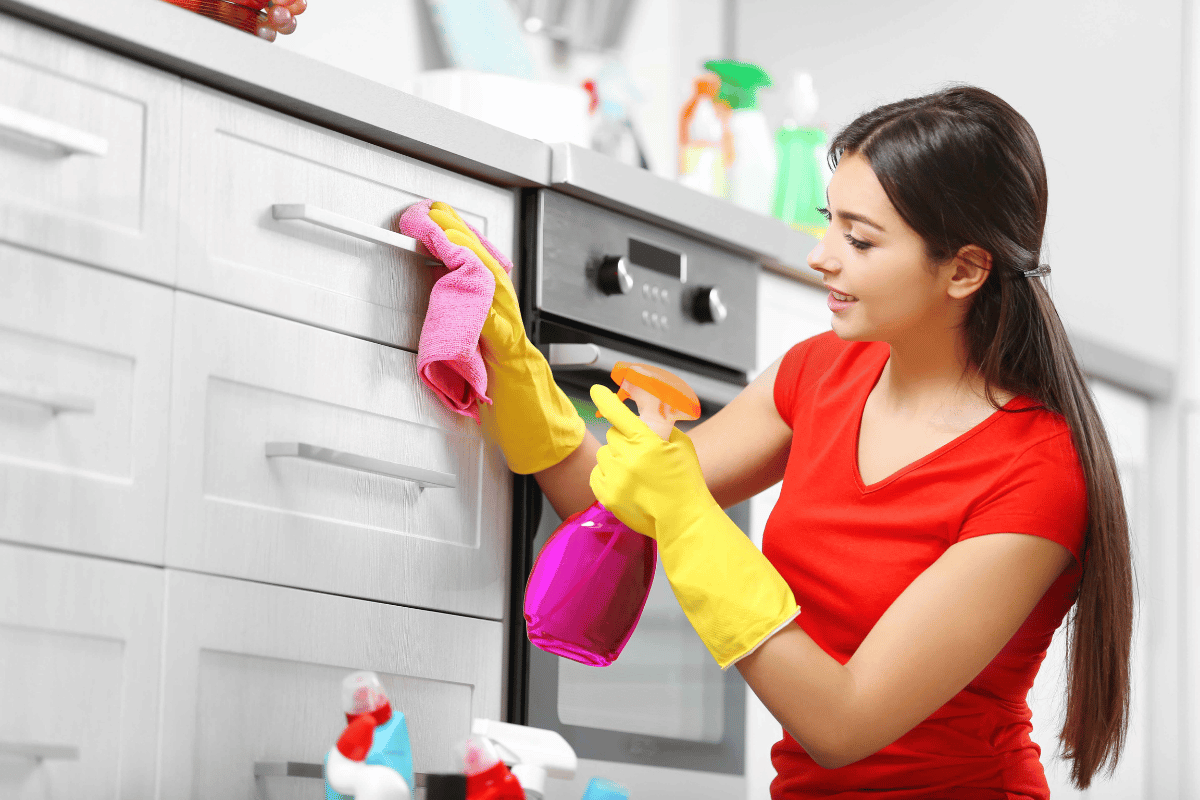
A simple yet powerful cleaner for white kitchen cabinets is a vinegar and water mix. Combine equal parts white vinegar and warm water in a spray bottle. Spray the solution onto a microfiber cloth and gently wipe the cabinet surfaces. Vinegar's natural acidity helps break down grease and grime. It's perfect for tackling those stubborn fingerprints around handles. Plus, there's a good chance you already have vinegar in your kitchen, making this a convenient go-to solution.
Baking Soda Paste
For tougher stains, a baking soda paste can work wonders. Mix a few tablespoons of baking soda with enough water to form a thick paste. Apply the paste to the stains using a cloth or sponge, and gently scrub the surface. Baking soda's gentle abrasiveness helps lift stains without scratching the paint. This method is especially useful for removing marks left by markers or pencils. After scrubbing, wipe the area with a damp cloth to remove any residue.
Lemon Juice Cleanser
Lemon juice is another natural cleaner that can refresh your white cabinets. Mix the juice of one lemon with a cup of warm water. Dip a soft cloth into the solution and wipe down the cabinets. The natural oils in lemon juice not only clean but also leave a fresh scent. This solution can help brighten your cabinets while cutting through grease. It's like giving your kitchen a mini makeover with a citrus twist.
Castile Soap Solution
Castile soap is an excellent gentle cleaner for maintaining the beauty of white cabinets. Mix a few drops of liquid Castile soap with warm water in a spray bottle. Spray lightly on the cabinets and wipe with a soft cloth. This soap is mild yet effective, making it ideal for regular cleaning. It's also versatile, as you can use it on other surfaces in your kitchen. If you love a natural approach to cleaning, Castile soap should be part of your cleaning arsenal. Which of these DIY solutions are you eager to try first? With just a little time and effort, your white kitchen cabinets can gleam like new, showcasing your kitchen's charm.
Tools For Effective Cleaning
Cleaning white kitchen cabinets needs the right tools. These tools help remove dirt without harming the surface. Using proper cleaning tools makes the job easier and faster. It also keeps your cabinets looking new for a long time.
Microfiber Cloths
Microfiber cloths are soft and gentle on white cabinets. They trap dust and dirt well without scratching. These cloths absorb moisture quickly, making them perfect for wiping spills. Use a dry microfiber cloth for dusting and a damp one for cleaning.
Soft Sponges
Soft sponges clean tough spots without damaging paint or finish. Choose sponges without rough sides to avoid scratches. They work well with gentle cleaners to remove grease and stains. Rinse sponges often to keep them clean during use.
Toothbrushes For Crevices
Old toothbrushes reach into small cracks and corners. Their soft bristles clean dirt from handles and edges easily. Use a toothbrush with mild soap to scrub tiny spaces carefully. It helps maintain cabinet details without harsh scrubbing.
Spray Bottles
Spray bottles help apply cleaners evenly and control the amount used. Fill bottles with homemade or store-bought gentle cleaning solutions. Spray lightly on cabinets to avoid soaking the wood. This tool makes cleaning less messy and more precise.
Credit: www.bonappetit.com
Cleaning Techniques
Cleaning white kitchen cabinets requires specific techniques to keep them bright and fresh. The right approach can prevent stains and maintain the cabinet's smooth finish. Different cleaning methods suit different types of dirt and grime. Using the correct technique ensures long-lasting beauty and function.
Routine Maintenance
Wipe cabinets with a soft, dry cloth daily to remove dust. Use a damp microfiber cloth for light dirt and fingerprints. Avoid harsh scrubbing to keep the paint or finish intact. Regular cleaning prevents buildup and keeps cabinets looking new.
Spot Cleaning
For small stains, use a mild soap mixed with warm water. Dip a soft cloth in the solution and gently rub the spot. Rinse with a clean damp cloth to remove soap residue. Dry immediately with a soft towel to avoid water marks.
Deep Cleaning Steps
- Prepare a gentle cleaner with warm water and dish soap.
- Use a soft sponge or cloth to clean the entire cabinet surface.
- Pay special attention to handles and corners where dirt collects.
- Rinse with a clean damp cloth to remove all soap.
- Dry cabinets thoroughly with a soft towel to prevent moisture damage.
Avoiding Damage
- Do not use abrasive scrubbers or steel wool on cabinets.
- Avoid strong chemicals like bleach or ammonia, which can discolor.
- Do not let water sit on cabinet surfaces for long periods.
- Test any new cleaner on a small hidden area first.
- Use gentle motions to avoid scratching or peeling the finish.
Tips For Maintaining White Cabinets
Maintaining white kitchen cabinets can feel like a constant battle against dirt, stains, and wear. However, with the right care habits, you can keep them looking bright and fresh for years. Here are some practical tips to help you protect your cabinets and extend their lifespan without stress.
Regular Dusting
Dust and grime settle quickly on white surfaces, making your cabinets look dull. Use a soft microfiber cloth to dust your cabinets at least once a week. This simple habit prevents buildup and reduces the need for heavy cleaning later.
Immediate Stain Removal
Spills and stains on white cabinets can become stubborn if left too long. Wipe off any splashes or spots as soon as you notice them using a gentle cleaner or a mixture of warm water and mild dish soap. Acting fast prevents permanent discoloration and keeps your cabinets spotless.
Proper Ventilation
Moisture and heat in the kitchen can damage cabinet surfaces over time. Ensure your kitchen has good airflow by using exhaust fans or opening windows while cooking. This reduces humidity, which helps avoid warping, peeling, or mold growth on your white cabinets.
Protective Coatings
Applying a protective finish, like a clear polyurethane or wax, can add a barrier against dirt and moisture. This extra layer makes cleaning easier and helps maintain the cabinet’s shine. If you’ve ever noticed your cabinets looking worn, this small step can make a big difference.
When To Call A Professional
Knowing when to call a professional for cleaning white kitchen cabinets saves time and protects your cabinets. Some problems need expert care beyond regular cleaning. Professionals have the right tools and skills to handle tough issues safely.
Persistent Stains
Stains that don’t come off with gentle cleaners need expert help. Professionals use special products that clean deeply without harming the cabinet finish. They can remove grease, ink, or food stains that seem permanent.
Cabinet Damage
Scratches, chips, or water damage can worsen if untreated. Experts can fix or minimize damage with proper techniques. Trying to repair these issues alone might cause more harm than good.
Refinishing Needs
When cabinets lose their shine or paint peels, refinishing is needed. Professionals strip old layers and apply new finishes evenly. This restores the cabinet’s fresh look and extends its life.
Frequently Asked Questions
What Is The Safest Cleaner For White Kitchen Cabinets?
The safest cleaner for white kitchen cabinets is a mild dish soap mixed with warm water. It effectively removes dirt without damaging the paint or finish. Avoid harsh chemicals to maintain the cabinet’s color and texture.
Can Vinegar Clean White Kitchen Cabinets Effectively?
Yes, vinegar diluted with water is an effective, natural cleaner for white kitchen cabinets. It cuts grease and grime without harsh chemicals. However, always test on a small area first to avoid potential damage to finishes.
How Often Should I Clean White Kitchen Cabinets?
White kitchen cabinets should be cleaned weekly to prevent dirt buildup. Regular cleaning keeps cabinets bright and prevents stains. For greasy spots, clean immediately to avoid permanent marks.
Are Commercial Cabinet Cleaners Better For White Cabinets?
Commercial cabinet cleaners can be effective but may contain harsh chemicals. Choose products labeled safe for painted or wood surfaces. Always follow instructions and test in an inconspicuous area first.
Conclusion
Choosing the right cleaner keeps white kitchen cabinets bright and fresh. Gentle, non-abrasive cleaners work best to avoid damage. Regular cleaning stops stains and dirt build-up. Avoid harsh chemicals that can fade or harm surfaces. Simple homemade solutions can be effective and safe.
Clean cabinets often for a neat, welcoming kitchen. A clean kitchen feels more comfortable and inviting. Keep your white cabinets shining with the right care. Small efforts lead to long-lasting beauty and cleanliness.