
How Do You Sanitize Kitchen Tools And Equipmen. Keeping your kitchen tools and equipment clean is more important than you might think. You use these items every day to prepare meals for yourself and your loved ones.
But do you know the right way to sanitize them? If not done properly, harmful bacteria can linger and make your food unsafe. You’ll discover simple, effective steps to sanitize your kitchen tools and equipment. By following these tips, you’ll protect your health and keep your kitchen sparkling clean.
Ready to learn how? Let’s dive in!
Credit: www.clorox.com
Importance Of Sanitizing Kitchen Tools
Sanitizing kitchen tools is more than just a routine chore—it’s a crucial step to keep your cooking environment safe and healthy. Germs and bacteria can easily hide on knives, cutting boards, and other utensils, risking food contamination. Paying attention to sanitizing helps you avoid foodborne illnesses and keeps your family safe.
Think about the last time you used a cutting board for raw chicken and then chopped vegetables on the same surface without proper cleaning. Cross-contamination like this can cause serious health issues. Sanitizing your tools stops this problem before it starts.
Have you ever noticed how some kitchen tools look clean but still cause stomach upset? That’s because visible dirt is not the only concern—germs invisible to the eye can thrive if you don’t sanitize properly. Keeping your tools sanitized gives you peace of mind every time you cook.
Prevents Foodborne Illnesses
Bacteria like Salmonella and E. coli can multiply quickly on unclean kitchen tools. These pathogens cause food poisoning, which can lead to severe symptoms or even hospitalization. Sanitizing kills these harmful microbes, protecting your health and your loved ones.
Maintains Tool Longevity
Regular sanitizing prevents rust and damage caused by leftover food residues. Clean tools last longer and perform better over time. Protecting your investment means fewer replacements and better kitchen efficiency.
Enhances Food Flavor And Quality
Residue buildup on tools can mix flavors in unwanted ways, affecting your meal’s taste. Clean and sanitized tools ensure each ingredient shines with its true flavor. Would you want your fresh herbs tasting like yesterday’s fish?
Supports Hygiene Standards
If you cook for others professionally or at home, maintaining hygiene shows respect and care. Sanitizing kitchen tools reflects your commitment to quality and safety. How important is it for you to build trust through cleanliness in your kitchen?
Common Kitchen Contaminants
Kitchen tools and equipment face constant exposure to various contaminants that can threaten your health. Understanding these common kitchen contaminants helps you sanitize effectively and keep your cooking environment safe. Do you know what hides on your cutting boards and utensils right now?
Food Residue And Grease
Leftover food particles and grease create a perfect breeding ground for bacteria. Even tiny crumbs stuck in knife grooves or on spatulas can harbor harmful germs. Washing alone might not remove all residues, so scrubbing and proper drying are crucial.
Bacteria And Viruses
Raw meats, poultry, and eggs introduce bacteria such as Salmonella and E. coli to your kitchen tools. Viruses like norovirus can also linger on surfaces after handling contaminated foods. These pathogens can cause serious illness if tools aren’t sanitized properly.
Cross-contamination Risks
Using the same knife for raw chicken and then vegetables without cleaning spreads bacteria fast. This cross-contamination is a leading cause of foodborne illnesses. Are you separating tools or cleaning them thoroughly between tasks?
Mold And Mildew
Moist environments encourage mold and mildew growth on sponges, cutting boards, and dishcloths. These fungi can cause allergic reactions and spoil food flavors. Keeping tools dry and sanitizing regularly prevents mold buildup.
Chemical Residues
Sometimes, leftover cleaning agents or detergents remain on kitchen tools. These chemicals can contaminate food and pose health risks. Rinsing tools well after washing is just as important as the sanitizing step itself.
Types Of Kitchen Tools To Sanitize
Sanitizing kitchen tools is key to keeping food safe. Different tools need different cleaning methods. Some tools hold more bacteria due to their use or material. Knowing which tools to sanitize helps prevent illness.
Cutting Boards
Cutting boards often carry bacteria from raw meat and vegetables. Plastic boards can go in the dishwasher. Wooden boards need gentle scrubbing and drying. Use a mild bleach solution to sanitize them.
Knives And Utensils
Knives and utensils touch many foods. Clean them right after use with hot, soapy water. Dry thoroughly to avoid rust. Some metal utensils can be put in a dishwasher for sanitizing.
Cookware And Bakeware
Cookware and bakeware collect food residue and oils. Wash with hot water and soap after each use. Oven-safe items can be cleaned with high heat. Non-stick surfaces need gentle cleaning to avoid damage.
Small Appliances
Small appliances like blenders and mixers need careful cleaning. Unplug before cleaning. Remove detachable parts and wash with warm, soapy water. Wipe the main body with a damp cloth. Avoid water inside electrical parts.
Credit: www.lemon8-app.com
Methods Of Sanitizing
Sanitize kitchen tools by washing with hot, soapy water, then rinsing well. Use a bleach solution or commercial sanitizer for extra safety. Air dry completely before storing to prevent bacteria growth.
Methods of sanitizing kitchen tools and equipment are essential for maintaining hygiene. Each method has its own advantages, ensuring cleanliness and safety in your kitchen.
Hot Water And Soap
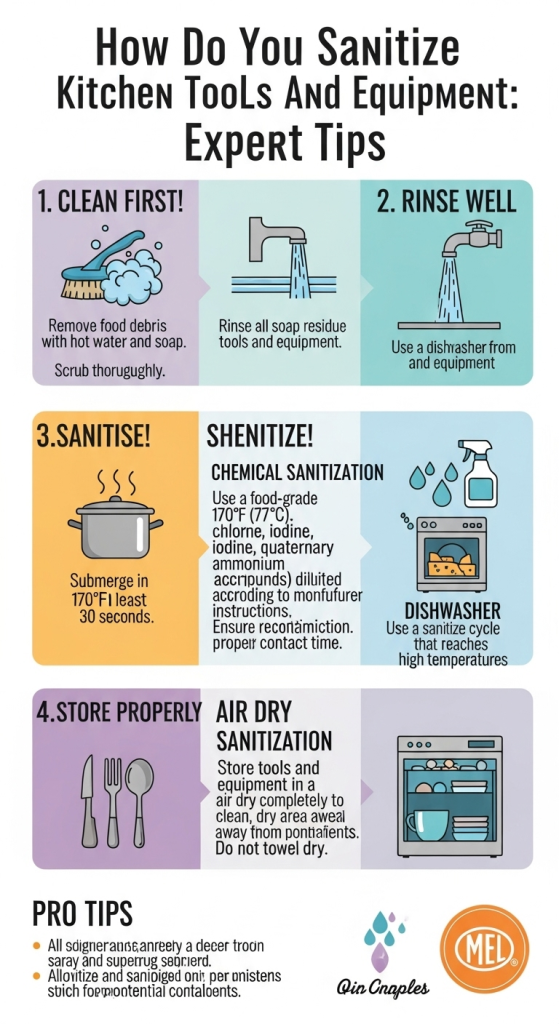
Hot water and soap effectively remove dirt and bacteria. Begin by rinsing your tools under warm water. Apply a generous amount of soap. Scrub with a brush or sponge. Rinse thoroughly with hot water. This method is simple yet effective.
Chemical Sanitizers
Chemical sanitizers kill germs on contact. Choose a sanitizer safe for kitchen use. Dilute it according to instructions. Soak the tools in the solution. Leave them for the recommended time. Rinse with clean water after soaking.
Steam Cleaning
Steam cleaning uses high-temperature steam to sanitize. Fill a steam cleaner with water. Direct the steam onto your kitchen tools. The heat kills bacteria quickly. It’s an eco-friendly option for sanitizing.
Dishwasher Use
Dishwashers sanitize efficiently with high heat. Place the tools in the dishwasher. Use the hottest setting available. The heat and detergent sanitize the items. Ensure tools are dishwasher safe before use.
Step-by-step Sanitizing Process
Sanitizing kitchen tools and equipment is vital for safe food preparation. The process removes harmful germs and prevents contamination. Follow this clear and simple step-by-step sanitizing process for clean and safe kitchen tools.
Pre-cleaning
Start by removing visible dirt and food particles. Use warm water and dish soap to wash each item thoroughly. Scrub hard-to-reach spots with a brush or sponge. Rinse tools well with clean water to remove soap residues. This step prepares the tools for effective sanitizing.
Applying Sanitizer
Choose a food-safe sanitizer like diluted bleach or commercial kitchen sanitizer. Follow the product’s instructions for mixing and contact time. Apply the sanitizer evenly on all surfaces using a spray bottle or clean cloth. Allow the sanitizer to sit for the recommended time to kill germs.
Rinsing And Drying
Rinse the tools with clean water if the sanitizer requires it. Some sanitizers are no-rinse, so check the label. Dry tools completely using a clean towel or air dry. Store them in a dry, clean place to avoid recontamination. Proper drying helps maintain hygiene and tool longevity.
Sanitizing Tips For Different Materials
Sanitizing kitchen tools requires different care depending on the material. Each type has unique properties that affect cleaning methods. Using the right technique keeps tools safe and lasting longer.
Wooden Tools
Wood absorbs water, so avoid soaking. Wash with warm, soapy water quickly. Rinse and dry immediately with a towel. To sanitize, use a vinegar solution (one part vinegar, four parts water). Wipe wooden tools with the solution and let air dry. Avoid harsh chemicals or dishwasher use, as they can crack or warp the wood. Regular oiling with food-safe mineral oil helps maintain wood and prevent cracks.
Plastic And Silicone
Plastic and silicone tools can handle water well. Wash with hot, soapy water to remove grease and food bits. Rinse thoroughly to remove soap residue. To sanitize, soak tools in a bleach solution (one tablespoon bleach per gallon of water) for a few minutes. Rinse well afterward. Many plastic and silicone items are dishwasher safe. Use the top rack and a high-temperature setting for extra sanitation.
Metal Items
Metal tools, like stainless steel, resist stains and rust. Clean with hot, soapy water and a sponge or cloth. Avoid steel wool or abrasive pads that may scratch. Rinse and dry immediately to prevent rust spots. To sanitize, boil metal tools in water for a few minutes or use a diluted bleach solution. Dry thoroughly to avoid corrosion. Polishing metal tools regularly keeps them shiny and clean.
Frequency Of Sanitizing Kitchen Tools
Keeping your kitchen tools and equipment sanitized is essential to prevent foodborne illnesses and maintain a clean cooking environment. But how often should you sanitize these items to ensure safety without wasting time or effort? Understanding the right frequency can save you from potential health risks and keep your kitchen running smoothly.
Sanitize After Each Use
Some kitchen tools, especially those that come into direct contact with raw meat, eggs, or seafood, need sanitizing immediately after every use. This includes knives, cutting boards, and mixing bowls. If you skip this step, you risk cross-contamination that could lead to serious food poisoning.
Daily Sanitizing For Frequently Used Items
Utensils and equipment that you use multiple times a day, like spatulas, ladles, and measuring cups, should be sanitized at least once daily. Even if they don’t touch raw food, germs can build up from repeated use. A quick wipe with a sanitizer or a soak in a sanitizing solution can keep them safe.
Weekly Deep Cleaning For Less Used Tools
Items such as blenders, food processors, or stand mixers that don’t see daily action require thorough sanitizing once a week. Dust and bacteria can accumulate in hard-to-reach spots, so take the time to disassemble and sanitize these tools properly. This prevents build-up and keeps your equipment in good condition.
Sanitize After Handling Allergenic Foods
Have you ever thought about how often you sanitize after handling allergenic foods like nuts, shellfish, or gluten-containing ingredients? It’s crucial to sanitize your tools immediately after to avoid triggering allergic reactions in others who use the same kitchen. This step is non-negotiable for shared kitchens.
Adjust Frequency Based On Usage And Environment
Your kitchen’s traffic and environment affect how often you should sanitize. A busy household or professional kitchen demands more frequent sanitizing than a single-person home kitchen. Notice signs like lingering odors or visible residue—these are clues that your tools need immediate cleaning.
Common Mistakes To Avoid
Sanitizing kitchen tools and equipment is crucial for food safety, but many people unknowingly make mistakes that reduce the effectiveness of their cleaning efforts. These errors can leave harmful bacteria behind or even damage your tools over time. Understanding what to avoid will help you keep your kitchen truly clean and safe.
Using Hot Water Without Soap
Relying on hot water alone might seem like a quick way to clean, but it doesn’t kill all bacteria or remove grease properly. Soap breaks down oils and food residues, making it easier to wash away germs. Have you ever noticed greasy spots lingering after rinsing with just hot water? That’s a sign your cleaning isn’t complete.
Skipping The Drying Step
Many people wash tools and then leave them wet, thinking that’s enough. However, moisture encourages bacterial growth and mold. Always dry your utensils and equipment thoroughly with a clean towel or air dry them in a clean space to prevent this.
Using The Same Sponge Or Cloth For Everything
Sponges and cloths can harbor bacteria if not cleaned or replaced regularly. Using one cloth for multiple tasks spreads germs instead of removing them. Consider dedicating separate cloths for different kitchen zones and replace sponges often to maintain hygiene.
Ignoring Manufacturer’s Cleaning Instructions
Kitchen tools and equipment often come with specific cleaning guidelines. Ignoring these can lead to damage or ineffective sanitizing. For example, some knives lose their sharpness if washed in a dishwasher, and certain plastic containers may warp with high heat. Are you following the care instructions to keep your tools in top shape?
Not Sanitizing After Cleaning
Washing removes dirt, but sanitizing kills remaining bacteria. Skipping sanitizing means some germs survive on your tools. Use a proper sanitizing solution or dishwasher cycle to ensure your kitchen equipment is safe for use.
Maintaining A Hygienic Kitchen Environment
Sanitize kitchen tools by washing them with hot, soapy water to remove food and grease. Use a disinfectant or a bleach solution to kill bacteria and germs on surfaces. Allow tools to air dry completely before storing to keep the kitchen safe and clean.
Maintaining a hygienic kitchen environment is crucial for your health and well-being. A clean kitchen not only prevents foodborne illnesses but also makes cooking more enjoyable. Imagine a space where you can confidently prepare meals, knowing every tool and surface is spotless and safe.
Proper Storage
Proper storage of kitchen tools and equipment is your first line of defense against contamination. Make sure all utensils are dry before storing them to prevent bacterial growth. Use dedicated shelves or drawers for different items, ensuring everything has its place and is easily accessible. Think about using clear containers to keep similar items together. This not only keeps your kitchen tidy but also reduces the risk of cross-contamination. Magnetic strips or pegboards can be great for storing knives and other metal tools, keeping them within reach yet out of harm's way.
Regular Cleaning Schedules
Establishing regular cleaning schedules is essential for a hygienic kitchen. Designate specific days for deep cleaning tasks like scrubbing the oven or sanitizing the refrigerator. Daily tasks should include wiping down countertops, washing dishes, and disinfecting frequently touched surfaces. Consider creating a checklist to keep track of cleaning tasks, ensuring nothing is overlooked. Encourage everyone in your household to participate, making cleanliness a shared responsibility. Remember, consistency is key to maintaining a spotless kitchen environment.
Personal Hygiene
Personal hygiene is just as important as cleaning your kitchen tools and equipment. Always wash your hands thoroughly with soap and water before and after handling food. Keep your nails short and clean to avoid harboring bacteria. If you're feeling unwell, let someone else handle the cooking to prevent spreading germs. Wearing an apron can protect your clothes from spills and help you stay tidy. Simple habits like these can make a big difference in ensuring your kitchen remains a safe space for meal preparation. Have you ever noticed how a clean kitchen makes cooking feel more enjoyable? Taking these steps not only safeguards your health but also enhances your culinary experience.
Credit: cogenthygiene.com
Frequently Asked Questions
How Often Should Kitchen Tools Be Sanitized?
Kitchen tools should be sanitized after each use to prevent bacterial growth. Regular sanitizing reduces contamination risks and ensures food safety. Always clean tools thoroughly before sanitizing for best results.
What Is The Best Method To Sanitize Kitchen Equipment?
The best method is using hot water and a food-safe sanitizer. Soak tools in the solution for at least one minute. Air dry completely before reuse to maintain cleanliness.
Can Kitchen Tools Be Sanitized In A Dishwasher?
Yes, most kitchen tools can be sanitized in a dishwasher. Use the hottest water setting with a heated dry cycle. Check manufacturer instructions to avoid damage to delicate items.
What Household Products Effectively Sanitize Kitchen Tools?
Bleach solutions and vinegar are common household sanitizers. Use diluted bleach (1 tablespoon per gallon) for effective sanitizing. Avoid mixing chemicals and rinse tools well after sanitizing.
Conclusion
Sanitizing kitchen tools keeps your food safe and your kitchen clean. Use hot water, soap, and a sanitizer solution for best results. Clean tools quickly after use to stop germs from spreading. Dry items well to avoid bacteria growth. Regular care helps prevent illness and keeps your kitchen fresh.
Small steps make a big difference in kitchen safety. Stay consistent and protect your family every day.