

How to Fix Kitchen Drawer off Track: Is your kitchen drawer stuck or sliding awkwardly? When a drawer goes off track, it can be frustrating and slow you down while cooking or organizing.
But don’t worry—you don’t need to call a professional or buy a new cabinet. You can fix it yourself quickly and easily. In this guide, you’ll learn simple steps to get your kitchen drawer sliding smoothly again. Keep reading, and by the end, you’ll have your drawer working like new.
Identify The Problem
Identifying the problem is the first step to fixing a kitchen drawer that is off track. Before making any repairs, take time to understand what causes the drawer to misalign. This helps avoid repeated issues and ensures smooth operation.
Careful examination can reveal simple fixes or more complex problems. Look closely at how the drawer moves, what parts might be damaged, and if anything blocks its path. A clear understanding saves time and effort during repair.
Check Drawer Alignment
Start by pulling the drawer out slowly. Notice if it moves straight or tilts to one side. Uneven movement often means the drawer is not aligned properly with the cabinet.
Check if the drawer front sits flush with the cabinet frame. A misaligned drawer front may indicate loose screws or warped wood. Tighten any loose parts and adjust the position to improve alignment.
Inspect Drawer Slides
Look at the metal or plastic slides on the sides or bottom of the drawer. Slides should be securely attached and free from damage. Bent, broken, or rusty slides cause the drawer to go off track.
Test the slides by moving the drawer gently. Listen for grinding noises or feel resistance. These signs show the slides need cleaning, lubrication, or replacement.
Look For Obstructions
Check inside the cabinet and along the drawer path for objects blocking movement. Small items, dirt, or debris can cause the drawer to jam or shift off track.
Remove any obstacles found. Clean the drawer channel and slide area thoroughly. Keeping the path clear ensures smooth drawer operation every time.

Credit: www.reddit.com
Gather Necessary Tools
Gather a screwdriver, replacement screws, and a pair of pliers before starting. Having these tools ready makes fixing the drawer smoother and faster. Keep a flashlight nearby to see inside the drawer tracks clearly.
Before diving into the task of fixing a kitchen drawer that's gone off track, it's essential to gather all the necessary tools. This step sets the foundation for a smooth repair process. Having the right tools at your disposal can make the difference between a quick fix and a frustrating afternoon.
List Of Common Tools
To get started, make sure you have the following tools ready:
- Screwdriver Set:Both flathead and Phillips screwdrivers are typically needed.
- Hammer:Useful for gently tapping misaligned components back into place.
- Level:Ensures your drawer sits perfectly horizontal once repaired.
- Wood Glue:Handy for reinforcing any weak spots you discover.
- Measuring Tape:Helps in assessing any realignment needs.
Having these tools on hand can significantly streamline the repair process. Have you ever started a project only to stop midway for a missing tool? It's a common frustration easily avoided by proper preparation.
Safety Precautions
Safety should always be your top priority when handling tools. Before you begin, consider these precautions:
- Wear Protective Gear:Safety goggles and gloves can prevent injuries from flying debris or sharp edges.
- Clear Your Workspace:Remove any clutter to avoid tripping hazards and create a safer environment.
- Ensure Proper Lighting:Good visibility can prevent mistakes and accidents.
By taking these simple steps, you reduce the risk of injury and ensure a more efficient repair. Does your workspace meet these safety standards? If not, take a moment to set it up correctly. Starting with the right tools and a safe environment will set you up for success in fixing that kitchen drawer. Ready to tackle the task with confidence? Let's make sure everything is in order before moving forward.
Remove The Drawer
Removing a kitchen drawer is the first step to fix it when it goes off track. This lets you check the runner and other parts closely. Careful removal keeps the drawer safe and ready for repair.
Unlocking Drawer Mechanism
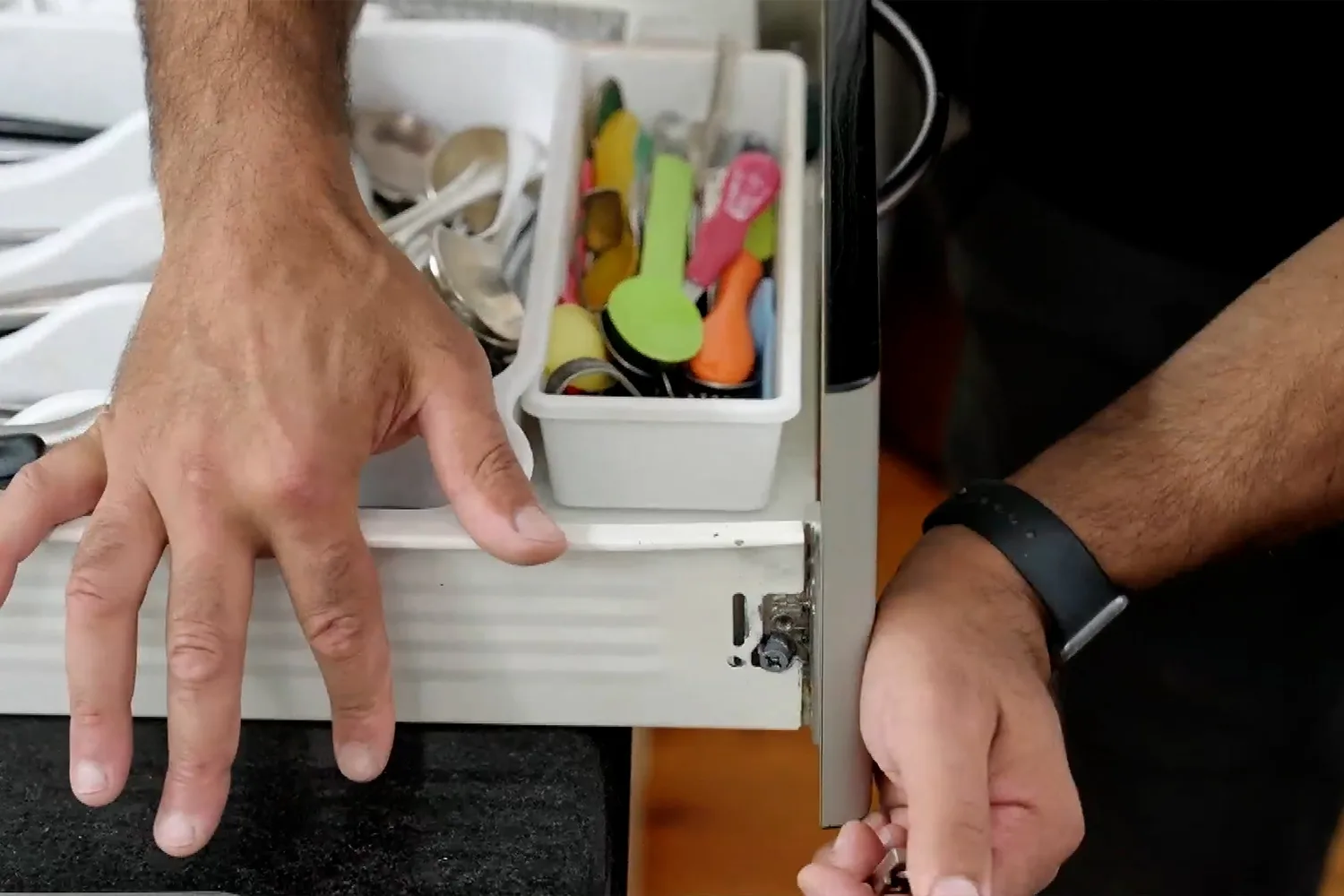
Most drawers have a locking system to hold them in place. Find the clips or levers under the drawer sides. Press or lift these locks gently. This releases the drawer from the rail without damage.
Sometimes the lock is a small plastic tab or metal catch. Use your fingers or a flat tool to unlock it. Avoid forcing the drawer out as it may break the mechanism.
Lifting Out The Drawer
After unlocking, grasp the drawer firmly on both sides. Pull it straight out slowly. If it feels stuck, check for any hidden catches you missed.
Lift the drawer slightly at the front edge if needed. This helps clear the runners and slide it free. Place the drawer on a clean surface to avoid dirt getting inside.
:strip_icc()/bhg-kitchen-drawer-slides_8pmLpaOPqRL84F5AQsbK3g-c0889a5c5ff04b5eafdc8bcd9018236c.jpg)
Credit: www.bhg.com
Fix Bent Or Damaged Tracks
Bent or damaged kitchen drawer tracks can cause your drawers to stick, jam, or even fall off completely. Fixing these tracks can save you from the hassle of replacing the entire drawer system. With a little patience and the right tools, you can get your drawer sliding smoothly again.
Straightening Metal Tracks
If the metal tracks are bent but not broken, you can often straighten them yourself. Start by removing the drawer and carefully inspecting the tracks for any bends or warps.
Use a pair of pliers or a flathead screwdriver to gently bend the metal back into shape. Work slowly and check frequently to avoid over-bending.
Have you noticed how even a small bend can throw off the entire drawer’s movement? Fixing these tiny imperfections can make a big difference.
Replacing Broken Parts
Sometimes, the damage is beyond repair. If the tracks are cracked, severely bent, or missing components, replacement is the best choice.
Measure the length and width of the existing tracks before shopping for new ones to ensure a perfect fit. Many hardware stores and online shops offer replacement parts for standard drawer tracks.
Installing new tracks is straightforward: unscrew the old pieces, align the new ones carefully, and screw them in place. Testing the drawer after installation helps ensure everything is aligned correctly.
Clean And Lubricate Slides
Cleaning and lubricating your kitchen drawer slides is a simple yet effective way to fix drawers that have gone off track. Over time, dirt, crumbs, and grease build up inside the slides, causing them to stick or misalign. By removing this buildup and applying the right lubricant, you can restore smooth movement and extend the life of your drawer slides.
Removing Dirt And Debris
Start by pulling the drawer out as far as it will go and gently lifting it off the slides if possible. Use a vacuum with a narrow nozzle or a soft brush to clear out dust, crumbs, and any loose debris inside the tracks.
Next, wipe the slides with a damp cloth or a mild cleaner to remove grease and sticky residues. Avoid soaking the slides; a lightly damp cloth is enough. Pay special attention to corners and crevices where dirt tends to hide.
Have you noticed how even a small crumb can cause your drawer to jam? Cleaning thoroughly can often be the key to fixing this irritating problem without replacing parts.
Applying Lubricant
Once the slides are clean and dry, choose a lubricant designed for drawer slides—silicone-based sprays or dry lubricants work best. Avoid heavy oils or grease that can attract more dirt over time.
Apply the lubricant sparingly along the entire length of the metal tracks. Use a cloth or a cotton swab to spread it evenly, ensuring the lubricant reaches the moving parts.
After lubricating, move the drawer back and forth several times to distribute the lubricant evenly and check for smooth operation. You’ll likely feel an immediate difference in how easily the drawer opens and closes.
Reinstall The Drawer
Reinstalling your kitchen drawer after fixing an off-track issue is the moment of truth. This step ensures your hard work pays off with a smoothly sliding drawer that fits perfectly back into place. Pay close attention to the alignment and movement to avoid repeating the problem.
Aligning Slides Correctly
Start by checking the drawer slides on both the drawer and the cabinet. They should be clean and free from any debris that might block the track. Align the slides so they face each other perfectly; even a slight misalignment can cause the drawer to derail again.
Gently position the drawer slides into the cabinet rails. You might feel a slight snap or click when they lock into place, signaling proper engagement. Take your time—forcing the drawer can bend the slides and cause future issues.
Testing Smooth Movement
Once the drawer is in place, pull it out slowly to test its movement. It should glide smoothly without sticking or wobbling. If you notice resistance, push it back and check the alignment again.
Try opening and closing the drawer several times. Do you hear any unusual sounds or feel uneven movement? These signs mean you need to realign the slides or clear any obstacles before securing everything firmly.
Prevent Future Issues
Preventing your kitchen drawer from going off track again starts with simple habits you can easily adopt. Small changes in how you treat your drawers can save you time and frustration later. Let’s look at practical steps to keep your drawers sliding smoothly for years.
Regular Maintenance Tips
Check your drawer tracks regularly for dust and debris. Even a little buildup can cause the drawer to stick or come off track. Wiping the rails with a damp cloth every few weeks keeps them clean and functioning well.
Lubricate the tracks occasionally with a small amount of silicone spray or a dry lubricant. Avoid oily or greasy substances as they attract dirt. This simple step helps your drawer glide effortlessly.
Inspect the screws and brackets holding your drawer in place. Loose parts can misalign the drawer and cause problems. Tighten any loose screws you find to keep everything secure.
Avoid Overloading Drawers
Think about how much weight your drawers can realistically hold. Stuffing them full with heavy pots, pans, or too many utensils puts stress on the slides and can pull the drawer off track.
- Sort through your drawer contents regularly and remove items you rarely use.
- Distribute weight evenly, avoiding heavy items on one side.
- Use organizers or dividers to keep things balanced and prevent shifting.
Have you ever noticed a drawer start to feel difficult to open? That’s often a sign it’s carrying too much weight. Lightening the load not only protects your drawer but also makes your kitchen more user-friendly.
Credit: www.bhg.com.au
Frequently Asked Questions
How Do I Know If My Kitchen Drawer Is Off Track?
If your drawer sticks, jams, or tilts when opening, it’s likely off track. Check for uneven gaps or misaligned rails.
What Tools Are Needed To Fix A Drawer Off Track?
You typically need a screwdriver, pliers, and sometimes replacement drawer slides. A flashlight helps inspect the drawer tracks clearly.
Can I Fix A Kitchen Drawer Off Track Myself?
Yes, most drawer track issues can be fixed easily. Realign the tracks, tighten screws, or replace damaged parts.
How Do I Prevent Kitchen Drawers From Going Off Track?
Avoid overloading drawers and open them gently. Regularly clean and lubricate drawer slides to maintain smooth operation.
Conclusion
Fixing a kitchen drawer off track is easier than you think. Start with simple steps and check the tracks carefully. Small adjustments often solve the problem quickly. Keep your tools handy for faster repairs. A smooth drawer makes your kitchen work better.
Regular checks prevent future issues. Take your time and work patiently. You will enjoy a neat, functional kitchen drawer soon. Simple fixes bring big comfort.